
Spain Joins Portugal And More As Canary Islands Offer Warm December Escapes For Winter Travellers
Spain Joins Portugal And More As Canary Islands Offer Warm December Escapes For Winter Travellers

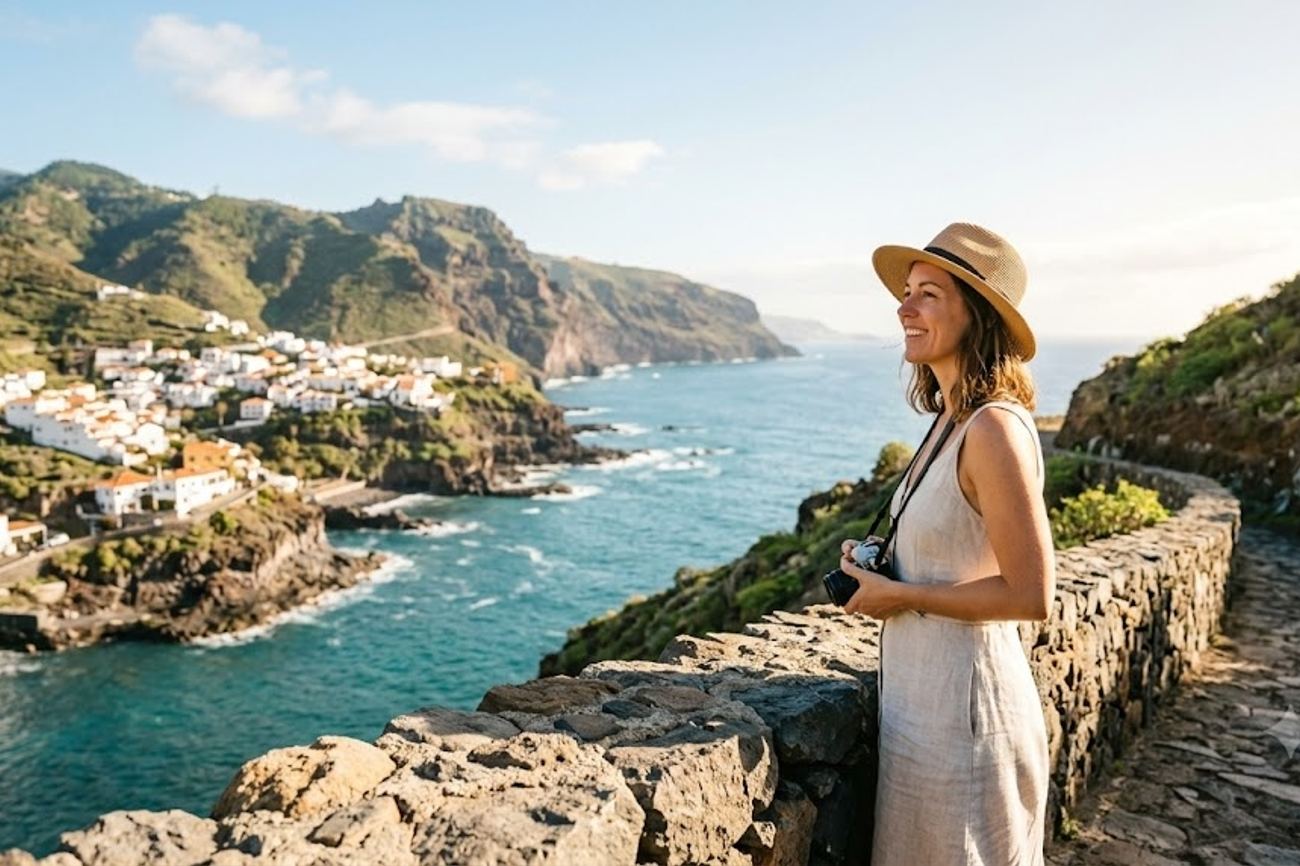
Image generated by AI
[Santa Cruz de Tenerife, December 2024] — European travelers are increasingly shifting winter holiday bookings toward the Canary Islands as a strategic alternative to long-haul tropical flights during the December cold snap. The Spanish archipelago is seeing a surge in demand from tourists seeking "extended spring" conditions, with daytime temperatures consistently holding between 20°C and 23°C while mainland Europe enters peak winter.
The movement is driven by the islands' subtropical positioning off the northwest coast of Africa. By leveraging a geographical location that moderates Atlantic trade winds and utilizes high-altitude mountain ranges to block cloud cover from southern coasts, the region provides a reliable climate sanctuary. This trend is particularly evident in the southern sectors of Gran Canaria and Tenerife, which act as weather shields for the rest of the archipelago.
The Subtropical Climate Engine
The ability of the Canary Islands to maintain mild temperatures in December is a result of specific atmospheric conditions and maritime influence. Unlike mainland Spain, the islands operate within a subtropical zone where the surrounding Atlantic waters act as a thermal regulator, preventing the sharp temperature drops seen in the Mediterranean.
A critical factor in the regional weather variance is the "rain shadow" effect created by the islands' volcanic topography. On Tenerife and Gran Canaria, the central mountain peaks intercept moisture-laden trade winds. This process forces clouds to congregate in the northern and highland regions, effectively leaving the southern coastal resorts dry and sunny. Consequently, a traveler's experience in December is dictated less by the date and more by their specific GPS coordinates on the island.
Regional Breakdown and Market Impact
The demand for December travel is distributed across four primary islands, each catering to a different traveler profile. The following data outlines the typical climate patterns and primary draws for the current winter season:
| Island | Avg. December Day Temp | Avg. December Night Temp | Primary Market Appeal |
|---|---|---|---|
| Gran Canaria | 21–23°C | 15–17°C | Diverse landscapes, Maspalomas dunes |
| Tenerife | 20–22°C | 15–16°C | Volcanic nature, southern resort hubs |
| Fuerteventura | 20–22°C | 14–16°C | Wind sports, expansive sandy beaches |
| Lanzarote | 20–22°C | 14–15°C | Volcanic craters, arid sightseeing |
Gran Canaria: The Versatility Hub
Gran Canaria is currently positioning itself as the most flexible option for December visitors. The southern and southwestern regions—specifically Maspalomas, Puerto Rico, and Puerto de Mogán—are the primary beneficiaries of the winter sun. With sea temperatures hovering around 20°C, the island remains viable for swimming. The market here is split between luxury beach-goers and those seeking inland mountain excursions.
Tenerife: The Contrast Market
Tenerife presents the most extreme internal weather variance. The northern coast remains green and humid, whereas the southern hubs of Costa Adeje, Los Cristianos, and Playa de las Américas maintain the 20–22°C daytime average. A significant point of friction for travelers is the altitude shift; those visiting Teide National Park must prepare for freezing conditions that contrast sharply with the coastal resorts.
Fuerteventura: The Adventure Sector
Fuerteventura is targeting the active traveler. Because the island lacks the high peaks of its neighbors, it is more exposed to Atlantic winds, making it a global magnet for kiteboarding and surfing in December. The Jandía Peninsula remains the most sheltered zone for those prioritizing warmth over wind sports.
Lanzarote: The Sightseeing Niche
Lanzarote is leveraging its arid, volcanic identity to attract tourists who prefer exploration over lounging. The low angle of the December sun is being marketed as an ideal condition for photographing the lava fields of Timanfaya National Park. Southern areas like Playa Blanca continue to be the preferred base for those seeking the most stable winter temperatures.
Practical Traveler Advisory and Strategic Insights
For those booking travel through carriers like Iberia or Binter Canarias, the "winter sun" shift creates several practical implications:
1. Strategic Accommodation Placement Booking a hotel in the "North" versus the "South" of an island is no longer a matter of preference, but a matter of climate. In December, staying on the northern coast of Tenerife or Gran Canaria significantly increases the likelihood of encountering rain and cloud cover. Travelers should prioritize southern coastal resorts to guarantee the 20°C+ experience.
2. Packing for Thermal Extremes The "Canary Islands are warm" narrative is a half-truth. While the beaches are mild, the volcanic interiors are cold. Anyone planning a trip to the highlands or Teide National Park must pack winter gear, as temperatures drop precipitously with altitude.
3. Activity Planning December is the peak window for wind-based sports in Fuerteventura. Travelers should expect higher winds than they would in summer, which is a benefit for surfers but a deterrent for those seeking still air.
Logistics and Regulatory Oversight
Travel to the archipelago is managed under the aviation safety standards of the Spanish Aviation Safety and Security Agency (AESA), ensuring that the increased winter flight frequency is handled with strict safety protocols. As European carriers increase capacity to these routes to meet December demand, airport infrastructure at Tenerife South (TFS) and Gran Canaria (LPA) is operating at high utilization.
The shift toward these islands also reduces the carbon footprint for European travelers compared to flights to the Caribbean or Southeast Asia, making the Canary Islands a "near-shore" alternative for sustainable winter escapes.
FAQ: Canary Islands Winter Travel 2024
Is it actually warm enough to swim in December? Yes, but it depends on your tolerance. Sea temperatures average around 20°C. While not "tropical," it is significantly warmer than the Mediterranean or North Atlantic, making swimming possible for most travelers.
Which island is the sunniest in December? Gran Canaria and Tenerife generally offer the most reliable sunshine, provided you stay in the southern regions. These areas are shielded by mountain ranges that block winter weather systems.
Do I need a rental car to see the volcanic sites? Yes. Sites like Timanfaya in Lanzarote or Teide in Tenerife are located far from the southern resort hubs. A rental car is essential for navigating the altitude changes and reaching these landmarks.
What is the biggest weather risk in December? The primary risk is the "microclimate" effect. You can experience a sunny beach in the south and a rainstorm or freezing temperatures in the north or mountains on the same day.
Pack for two different seasons; the volcano doesn't care about your beach towel.
Related Travel Guides
Disclaimer
This article is for informational and educational purposes only. It does not constitute legal, financial, or professional advice. While we strive to provide accurate and up-to-date information, travel policies, regulations, and conditions change rapidly. Always verify information with official sources before making travel decisions. Nomad Lawyer makes no representations about the accuracy, reliability, completeness, or suitability of the information provided. Readers should consult qualified professionals for advice specific to their circumstances. The views expressed in this article are those of the author and do not necessarily reflect the views of Nomad Lawyer.
Raushan Kumar
Founder & Lead Developer
Full-stack developer with 11+ years of experience and a passionate traveller. Raushan built Nomad Lawyer from the ground up with a vision to create the best travel and law experience on the web.
Learn more about our team →