
Indonesia’s Raja Ampat Drives Sustainable Tourism Growth with Sorong Gateway and Waisai Marine Experiences
Indonesia’s Raja Ampat Drives Sustainable Tourism Growth with Sorong Gateway and Waisai Marine Experiences

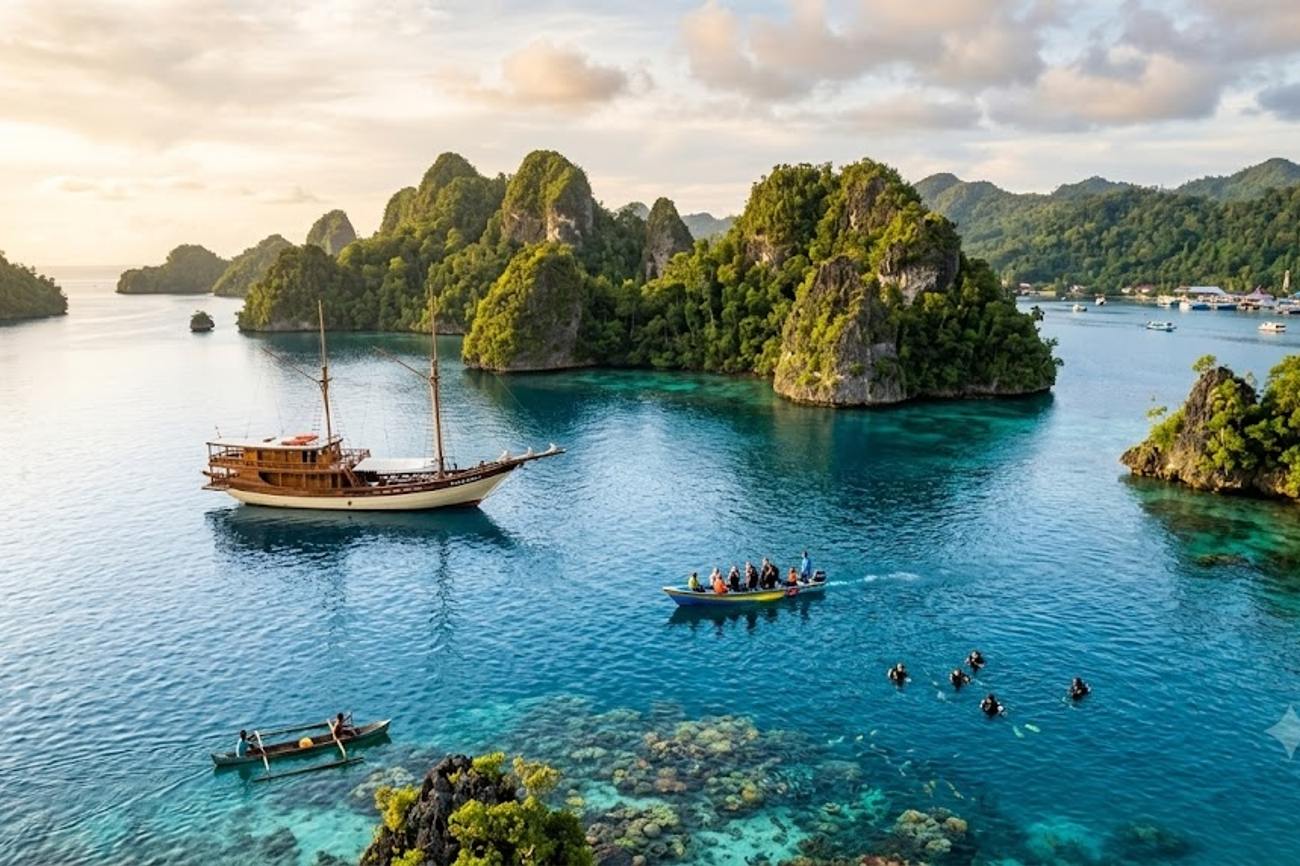
Image generated by AI
1,500 islands, reefs, and coastal ecosystems define the geographic scale of Raja Ampat, a region now pivoting from a volume-based tourism model to a high-value conservation economy. This strategic realignment seeks to decouple economic growth from visitor numbers, focusing instead on a demographic of travelers who stay longer and spend more to fund the preservation of one of the planet's most biodiverse marine environments.
The Architecture of a Conservation Economy
Raja Ampat, situated in Southwest Papua, is no longer being marketed as a mere diving destination but as a living laboratory for marine biodiversity. With a biological inventory boasting over 1,000 fish species and hundreds of coral varieties, the region is transitioning toward a "conservation-led luxury" model. This shift is a calculated response to the fragility of the ecosystem; by targeting the premium travel segment, the Indonesian government aims to generate higher revenue per capita while reducing the physical footprint of the average tourist.
The operational logic here is simple: scarcity creates value. By limiting the scale of development and focusing on high-end, low-impact offerings, Raja Ampat avoids the "mass tourism trap" that has plagued other tropical archipelagos. This transition is supported by the Ministry of Tourism and Creative Economy of Indonesia, which has categorized the region as a priority destination for sustainable development. The goal is to transform the act of visiting into an act of preservation, where the cost of entry and the price of luxury services directly subsidize the protection of the reef.
The Logistic Chain: Sorong and Waisai
The traveler's journey into this remote archipelago is dictated by a two-tier gateway system that manages the flow of people from international hubs into the sensitive core of the islands.
The Primary Gateway: Sorong Sorong serves as the indispensable logistical anchor. All international and domestic arrivals must first pass through Domine Eduard Osok Airport. This city is not merely a transit point but the primary supply chain hub for the entire region. From Sorong, the movement of people shifts from air to sea, utilizing ferry links and private charters to bridge the gap between the mainland and the islands. For the travel industry, Sorong is the critical node where logistics, accommodation, and maritime transport converge.
The Operational Hub: Waisai Once visitors leave Sorong, they arrive at Waisai on Waigeo Island. As the administrative capital of the Raja Ampat Regency, Waisai functions as the "filter" for the destination. It is here that visitor coordination, permit management, and sustainable tourism planning are executed. Waisai acts as the staging ground for expeditions into the deeper archipelago, ensuring that those entering the marine protected areas are registered and briefed on conservation protocols.
Indonesia's Raja Ampat is driving sustainable tourism growth with the development of Sorong Gateway, which serves as the primary entry point for visitors. The [Sorong Airport](https://www(angkasa-pura1.co.id/en/airport/sorong.htm) is a key infrastructure component, offering flights from major Indonesian cities and facilitating the arrival of international tourists. As the region's tourism industry continues to expand, the Indonesian government is implementing measures to ensure that growth is managed in an environmentally responsible manner.
| Infrastructure Node | Primary Function | Traveler Impact |
|---|---|---|
| Domine Eduard Osok Airport | International/Domestic Entry | First point of arrival; logistical hub |
| Sorong Maritime Port | Inter-island Transfer | Gateway to the archipelago via ferry/boat |
| Waisai Administrative Center | Destination Governance | Permit processing and activity coordination |
| Waigeo Island Base | Operational Launchpad | Access to remote diving and community sites |
Expert Analysis: The Economics of Scarcity
For the modern nomad or high-net-worth traveler, the shift toward a conservation economy means that Raja Ampat is becoming an "exclusive" destination—not necessarily through gated access, but through pricing and logistical complexity. The direct consequence of the National Tourism Destination Master Plan 2024–2044 is the intentional creation of a high-barrier-to-entry market.
The pricing pressure created by this model is designed to filter for a specific type of traveler: the "conservationist tourist." By prioritizing liveaboards and boutique island resorts over large-scale hotel developments, Indonesia is effectively capping the number of beds available in the region. When supply is artificially constrained to protect the environment, prices naturally rise. This ensures that the revenue generated per visitor is maximized, allowing for the funding of marine patrols and community-based conservation programs without needing to increase the total headcount of tourists.
Furthermore, the integration of community-based tourism means that local populations are being transitioned from traditional fishing economies to service-based economies. This is a critical geopolitical move; by making the local community the primary beneficiaries of luxury tourism, the government reduces the incentive for illegal fishing or destructive harvesting practices. The "value" of a live shark or a pristine coral reef now exceeds the short-term gain of its extraction. For the traveler, this translates to a more authentic, guided experience where the local knowledge is a premium asset.
The Waisai Marine Experiences are a major draw for visitors to Raja Ampat, with snorkeling and diving opportunities showcasing the region's incredible marine biodiversity. To plan their trip, tourists can visit the official Indonesian Ministry of Tourism website, which provides information on travel requirements, accommodation options, and activities available in the area. By supporting sustainable tourism initiatives in Raja Ampat, visitors can help contribute to the long-term conservation of the region's unique natural heritage.
Key Takeaways
- Shift to High-Value Model: Raja Ampat is moving away from mass tourism to a model focusing on longer stays and higher spending per visitor to protect its 1,000+ fish species.
- Logistical Sequence: Travel is strictly sequenced through Domine Eduard Osok Airport (Sorong) $\rightarrow$ Maritime Transfer $\rightarrow$ Waisai (Waigeo Island).
- 20-Year Strategic Roadmap: The National Tourism Destination Master Plan 2024–2044 provides the legal and infrastructure framework to balance growth with environmental sensitivity.
- Luxury Segment Growth: The market is expanding specifically in liveaboard journeys, boutique resorts, and specialized underwater photography expeditions.
- Community Integration: Tourism is being used as a tool for economic transition, moving local communities toward conservation-based livelihoods.
FAQ: Raja Ampat Travel 2024-2044
How do I get to the islands of Raja Ampat? You must fly into Domine Eduard Osok Airport in Sorong. From there, you take a ferry or private boat to Waisai, the administrative hub, before proceeding to your specific resort or liveaboard vessel.
Is Raja Ampat only for experienced divers? While luxury diving is the core driver, the region is expanding into "conservation tourism." This includes marine exploration, community-based cultural visits, and photography, making it accessible to non-divers interested in biodiversity.
What is the "Master Plan 2024–2044"? It is a long-term government framework designed to manage infrastructure, environmental protection, and investment. It ensures that tourism growth does not destroy the marine ecosystems that make the destination valuable.
Why are prices higher in Raja Ampat than in other Indonesian destinations? The region employs a "controlled growth strategy." By limiting the number of visitors and focusing on low-impact, luxury experiences, the destination maintains its exclusivity and funds essential conservation efforts.
The future of Raja Ampat suggests a world where the most pristine places on earth are preserved not by closing them off, but by pricing them as the rarest luxuries of all.
Tags: Raja Ampat 2024, Southwest Papua Tourism, Domine Eduard Osok Airport, Marine Conservation Economy, Indonesia Tourism Master Plan 2044, Waisai Sustainable Hub
Related Travel Guides
Disclaimer
This article is for informational and educational purposes only. It does not constitute legal, financial, or professional advice. While we strive to provide accurate and up-to-date information, travel policies, regulations, and conditions change rapidly. Always verify information with official sources before making travel decisions. Nomad Lawyer makes no representations about the accuracy, reliability, completeness, or suitability of the information provided. Readers should consult qualified professionals for advice specific to their circumstances. The views expressed in this article are those of the author and do not necessarily reflect the views of Nomad Lawyer.
Naina Thakur
Contributor & Travel Specialist
Travel enthusiast and legal writer covering visa regulations, responsible tourism, and cultural journeys across global destinations.
Learn more about our team →