
Bermuda’s 180-Day US Travel Privilege: The Complete Exemption and Transit Guide 2026

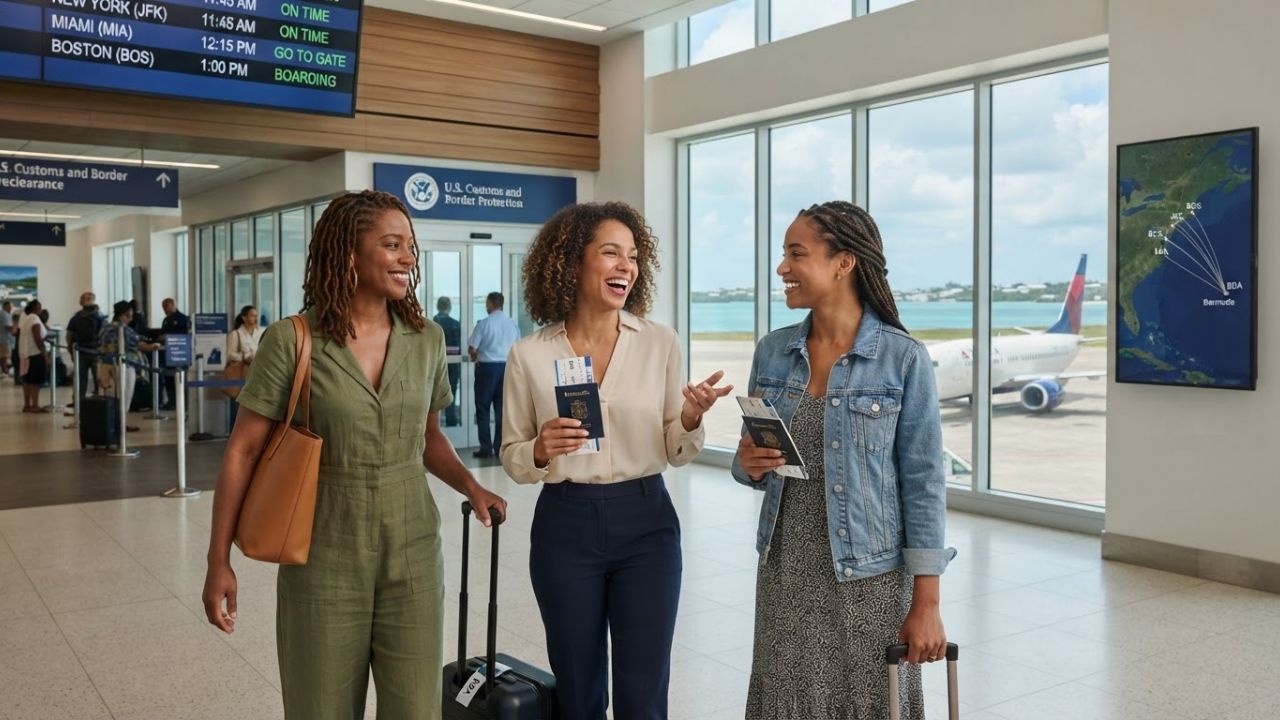
While citizens of the world’s most powerful economies entering the United States under the Visa Waiver Program must pay digital processing fees, register through ESTA, and depart within 90 days, eligible holders of a Bermuda passport enjoy a unique privilege found nowhere else in the British Commonwealth. Under a specialized statutory exemption codified directly into United States federal immigration regulations, qualifying Bermudians can enter America for up to 180 days—a full six months—without obtaining a visa, without filing an ESTA application, and without paying pre-travel authorization surcharges.
Resting approximately 1,000 miles off the East Coast of the United States, this hook-shaped volcanic territory in the mid-Atlantic has maintained deep commercial, educational, and familial ties with North America since the 17th century. Yet, despite its long history, travelers on both sides of the Gulf Stream frequently misunderstand the legal mechanics of this entry privilege. It is not an extension of British citizenship, nor is it a bilateral treaty; it is an autonomous exemption granted by federal authorities that turns the journey between Bermuda and American coastal gateways into one of the smoothest international transit corridors in the Western Hemisphere.
The Mid-Atlantic Privilege: Decoding Bermuda’s 180-Day U.S. Exemption
The legal architecture governing Bermudian entry into the United States is frequently conflated with the Visa Waiver Program (VWP). However, the two systems operate under entirely distinct legal authorities. The Visa Waiver Program permits nationals of 41 participating nations to enter for leisure or business for a maximum of 90 days, requiring prior digital clearance through the Electronic System for Travel Authorization (ESTA).
By contrast, Bermuda’s access is established under specific federal immigration provisions administered by U.S. Customs and Border Protection. Under this exemption, eligible Bermudian passport holders visiting for tourism, business meetings, medical care, or personal visits can remain in the United States for up to 180 days—double the duration permitted to standard ESTA travelers. No ESTA application is filed, no digital pre-travel authorization fees are collected, and no embassy appointment is required.
Crucially, U.S. immigration authorities emphasize that this privilege does not stem from a bilateral treaty between Washington and Hamilton or a diplomatic convention with London. Instead, it exists purely as a matter of U.S. federal immigration policy. Because it is established by federal administrative regulation, American authorities retain sovereign discretion to modify, audit, or restrict entry conditions based on national security and border integrity considerations.
Eligibility requires strict adherence to passport issuance standards. To claim visa-free entry, a traveler cannot simply present a standard British Citizen passport. The document presented at the border must be an authentic British passport issued specifically for Bermuda, fulfilling four non-negotiable criteria:
- The front cover must bear the embossed imprint "Government of Bermuda";
- The holder’s nationality must be explicitly recorded as either a "British Overseas Territory Citizen" (BOTC) or a "British Dependent Territories Citizen";
- The passport must contain an official endorsement confirming the bearer possesses registered Bermudian status;
- The passport must be fully valid for the duration of the intended stay.
Travelers presenting standard British Citizen passports issued in the United Kingdom do not qualify for this 180-day exemption. Unless they possess the official Bermudian status endorsement, standard British passport holders must follow regular Visa Waiver Program procedures, including mandatory ESTA registration and the strict 90-day departure cap.
Defining the Limits: Who Must Still Obtain a Visa
While the statutory exemption offers remarkable mobility, it is not a blanket waiver for all purposes. U.S. immigration law defines explicit boundaries where the 180-day privilege ceases to apply, requiring travelers to obtain formal non-immigrant visas before boarding a flight.
First, the duration rule is rigid. Anyone intending to reside in the United States for longer than 180 days cannot enter under the exemption and must apply for a visa matching their specific stay. Second, any traveler with a history of U.S. immigration violations, past overstays, deportations, or criminal ineligibility loses the right to visa-free admission and must apply for a formal consular visa or an administrative waiver of ineligibility.
Third, specialized professional and legal categories require dedicated visa classes:
- Foreign government officials traveling on official business require A visas;
- Employees and representatives of international organizations require G visas;
- Fiancés of U.S. citizens require K-1 visas, and their children require K-2 visas;
- Spouses completing permanent residency processes require K-3 visas, and children require K-4 visas;
- Witnesses or informants providing critical evidence on organized crime or counter-terrorism require S-5 or S-6 visas.
For academic pursuits, however, Bermuda citizens receive another rare dispensation. While students from around the world must complete rigorous consular interviews to secure an F-1 student visa, eligible Bermudian students entering certified American colleges or universities can generally enter without an F-1 visa. To enter lawfully, the student must present a valid Bermuda BOTC passport, an authentic Form I-20 issued by the educational institution, official SEVIS fee payment confirmation, and documented proof of adequate financial resources to cover tuition and living expenses.
What Makes Bermuda’s Transatlantic Lifeline Unique
Bermuda's relationship with the United States is anchored by an extraordinary operational convenience: U.S. Customs and Border Protection Preclearance at L.F. Wade International Airport (BDA). Established decades ago, this facility allows departing passengers to complete U.S. immigration, customs inspection, and agriculture screening on Bermudian soil before boarding their flight.
When a flight from Bermuda touches down at New York JFK, Boston Logan, Miami, Charlotte, or Atlanta, it arrives at a domestic gate. Travelers collect their luggage and walk directly out of the terminal without clearing airport immigration, bypassing long international customs queues entirely.
This geographical and regulatory intimacy mirrors Bermuda’s unique character. Isolated in the North Atlantic, the archipelago features charming pastel-washed cottages, pristine pink coral sands, and a blend of British colonial decorum with vibrant Caribbean warmth. Bermuda shorts paired with knee-high socks, a navy blazer, and a silk tie remain the undisputed uniform of corporate boardrooms in Hamilton, highlighting a culture that cherishes its distinct identity while maintaining seamless connectivity with global financial hubs.
Visitor Insider Tips
Experiencing Bermuda or navigating the U.S.–Bermuda air corridor requires an appreciation of island traditions and transport rules.
First, master terminal timing at L.F. Wade International Airport. Because all departing travelers to the United States must clear U.S. CBP Preclearance before gate access, arrive at least three hours before departure. Ensure your Bermuda BOTC passport, proof of onward return travel, and documentation of local accommodation or student paperwork are kept in your hand luggage.
Second, understand island transportation limitations. Visitors cannot rent traditional passenger cars in Bermuda—a strict policy enacted to protect local roads from congestion. Instead, explore the island by renting silent electric mini-cars (Twizys), riding mopeds, or utilizing the iconic pink-and-blue public buses and scenic passenger ferries that crisscross Great Sound between Hamilton and the Royal Naval Dockyard.
Third, respect traditional local etiquette. Island manners are deeply rooted in courtesy. Always offer a warm "Good morning" or "Good afternoon" before asking for directions or making a purchase. In public dining rooms, banks, and urban shops, beachwear is strictly forbidden; cover-ups and shirts are mandatory once stepping away from the sand.
Fourth, sample quintessential Bermudian cuisine. Begin your Sunday morning with a traditional Bermudian codfish breakfast, served alongside boiled potatoes, sweet bananas, hard-boiled eggs, and savory tomato-onion sauce or avocado slices. For lunch, order a bowl of Bermuda fish chowder, seasoned at the table with Goslings Black Seal rum and spiced sherry peppers.
Cultural and Environmental Context
Bermuda's architectural and maritime history stands among the most celebrated in the Atlantic. The historic Town of St. George and its surrounding coastal fortifications are inscribed on the UNESCO World Heritage list, representing the earliest surviving English urban settlement in the Americas. The town’s narrow cobblestone lanes, 17th-century stone churches like St. Peter's, and defensive bastions reflect four centuries of transatlantic maritime history.
Environmental preservation in Bermuda is a matter of survival. Lacking freshwater rivers or natural mountain reservoirs, every home on the island relies on a brilliant historical engineering solution: stepped white limestone roofs. Designed to slow down torrential Atlantic rains, purify precipitation, and funnel water into subterranean tanks, these gleaming white rooftops ensure self-sufficient freshwater supplies for every household.
Beneath the waves, the Bermuda Tourism Authority champions conservation across the world’s northernmost coral reef system. The territory strictly enforces environmental protections covering fringing coral atolls, seagrass beds that nurture endangered green sea turtles, and breeding grounds for the pelagic Cahow (Bermuda petrel). By balancing forward-looking international mobility with deep environmental stewardship, Bermuda proves that an isolated island community can thrive on the global stage without compromising its delicate ecological heritage.
FAQ: Bermuda US Travel Exemption 2026
Can Bermuda citizens travel to the US without a visa or ESTA? Yes. Eligible citizens holding a Bermuda-issued British Overseas Territory Citizen (BOTC) passport with an official Bermudian status endorsement can enter the United States for up to 180 days without a visa or ESTA.
Does a standard British Citizen passport qualify for the 180-day US exemption? No. Standard British Citizen passports without the "Government of Bermuda" cover imprint and registered Bermudian status endorsement are subject to normal Visa Waiver Program rules, requiring ESTA approval and a 90-day limit.
Can Bermudian students attend US universities without an F-1 visa? Yes. Eligible Bermudian students can enter the US without an F-1 student visa provided they present their qualifying Bermuda passport, a valid Form I-20, SEVIS fee confirmation, and proof of financial support.
What is the best time of year to visit Bermuda? May through October provides ideal conditions for beach relaxation, sailing, and snorkeling, with water temperatures averaging 28°C (82°F) and vibrant cultural festivals occurring across the island.
Across a thousand miles of open ocean, a small island teaches the world that enduring trust is the greatest passport of all.
Related Travel Guides
Disclaimer
This article is for informational and educational purposes only. It does not constitute legal, financial, or professional advice. While we strive to provide accurate and up-to-date information, travel policies, regulations, and conditions change rapidly. Always verify information with official sources before making travel decisions. Nomad Lawyer makes no representations about the accuracy, reliability, completeness, or suitability of the information provided. Readers should consult qualified professionals for advice specific to their circumstances. The views expressed in this article are those of the author and do not necessarily reflect the views of Nomad Lawyer.
Raushan Kumar
Founder & Lead Developer
Full-stack developer with 11+ years of experience and a passionate traveller. Raushan built Nomad Lawyer from the ground up with a vision to create the best travel and law experience on the web.
Learn more about our team →