
Emirates Completes Historic First A380 Retrofit, Signaling Major Fleet Transformation Strategy
Breaking airline news and aviation industry updates for 2026.

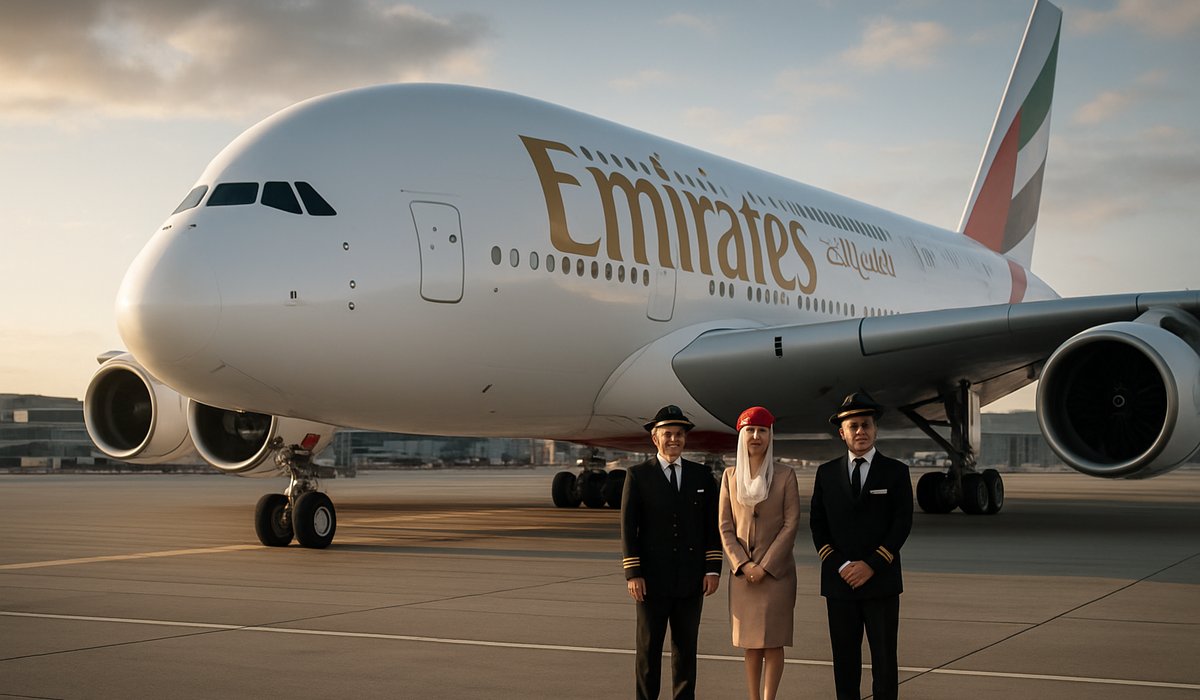
Image generated by AI
Emirates Completes Historic First A380 Retrofit, Signaling Major Fleet Transformation Strategy
The airline's groundbreaking reconfiguration of its flagship superjumbo marks a turning point in the aviation industry's capacity-driven competition
Landmark Achievement in Emirates' Multi-Billion Dollar Overhaul
Emirates has successfully completed the reconfiguration of its first Airbus A380 into a two-class cabin layout, the airline announced on May 20th, 2026. The milestone represents a pivotal moment in the carrier's expansive retrofit initiative, fundamentally reshaping how the world's largest commercial passenger aircraft operates within its fleet.
The redesignated A380, now operating as a 615-seat configuration, stands as the highest-capacity commercial aircraft currently in service. This reconfiguration reduces passenger density compared to the original three-class setup, reflecting broader industry shifts toward balancing capacity with revenue optimization and passenger experience improvements.
Strategic Implications for the Aviation Industry
The retrofit programme signals a significant strategic pivot for Emirates, one of the world's largest international carriers. By converting its superjumbos to two-class configurations, the airline is repositioning its flagship aircraft to compete more effectively on long-haul routes while maintaining premium service standards that command higher ticket prices.
This transformation comes amid industry-wide pressure from jet fuel price volatility and shifting demand patterns in international aviation. Airlines globally are reassessing cabin configurations to maximize profitability without sacrificing the premium travel experience that international carriers depend upon for revenue stability.
A Defining Moment for Fleet Modernization
Emirates' multi-billion dollar retrofit programme represents one of aviation's most ambitious fleet modernization efforts. The completion of the first aircraft suggests the airline is on track to systematically upgrade additional A380s, each tailored to meet contemporary market demands and passenger preferences.
The two-class layout preserves substantial business and first-class capacity while optimizing economy seating—a configuration designed to capture premium revenue streams on routes where demand justifies enhanced leisure and executive travel options.
What This Means for the Broader Sector
The successful retrofit demonstrates that even mature aircraft platforms can be economically refurbished to extend their commercial viability. As airlines face pressure to reduce fleet emissions and manage capital expenditure, upgrading existing aircraft proves increasingly attractive compared to wholesale fleet replacement.
For travelers and industry observers, Emirates' transformation underscores how global carriers are adapting operational strategies to navigate economic uncertainty, fluctuating fuel costs, and post-pandemic demand recovery.
Frequently Asked Questions
What is the new seating capacity of the retrofitted Emirates A380? The reconfigured aircraft now seats 615 passengers in a two-class cabin arrangement, making it the world's highest-capacity commercial aircraft in passenger service.
Why is Emirates converting its A380s from three-class to two-class cabins? The retrofit strategy allows Emirates to optimize revenue by increasing premium cabin capacity while reducing overall passenger density, balancing profitability with enhanced service delivery on international routes.
How much is Emirates investing in this retrofit programme? The airline's retrofit initiative represents a multi-billion dollar investment spanning multiple aircraft over several years.
When will other retrofitted A380s enter service? While Emirates has not announced a precise timeline, the successful completion of the first aircraft suggests additional conversions will follow progressively throughout the programme.
How does this affect airline fees and passenger pricing? The two-class configuration may influence ticket pricing structures, potentially supporting higher premium fares while moderating economy pricing across Emirates' long-haul network.
Related Travel Guides
Flight Delay Compensation Guide 2026
Understanding Airline Route Changes
Airport Security Process Updated (2026)
External Resources
Disclaimer
This article is for informational and educational purposes only. It does not constitute legal, financial, or professional advice. While we strive to provide accurate and up-to-date information, travel policies, regulations, and conditions change rapidly. Always verify information with official sources before making travel decisions. Nomad Lawyer makes no representations about the accuracy, reliability, completeness, or suitability of the information provided. Readers should consult qualified professionals for advice specific to their circumstances. The views expressed in this article are those of the author and do not necessarily reflect the views of Nomad Lawyer.
Raushan Kumar
Founder & Lead Developer
Full-stack developer with 11+ years of experience and a passionate traveller. Raushan built Nomad Lawyer from the ground up with a vision to create the best travel and law experience on the web.
Learn more about our team →