
America's Secret Supersonic Dream: Why the US Government Built—Then Abandoned—a Revolutionary Aircraft Before Takeoff
Breaking airline news and aviation industry updates for 2026.

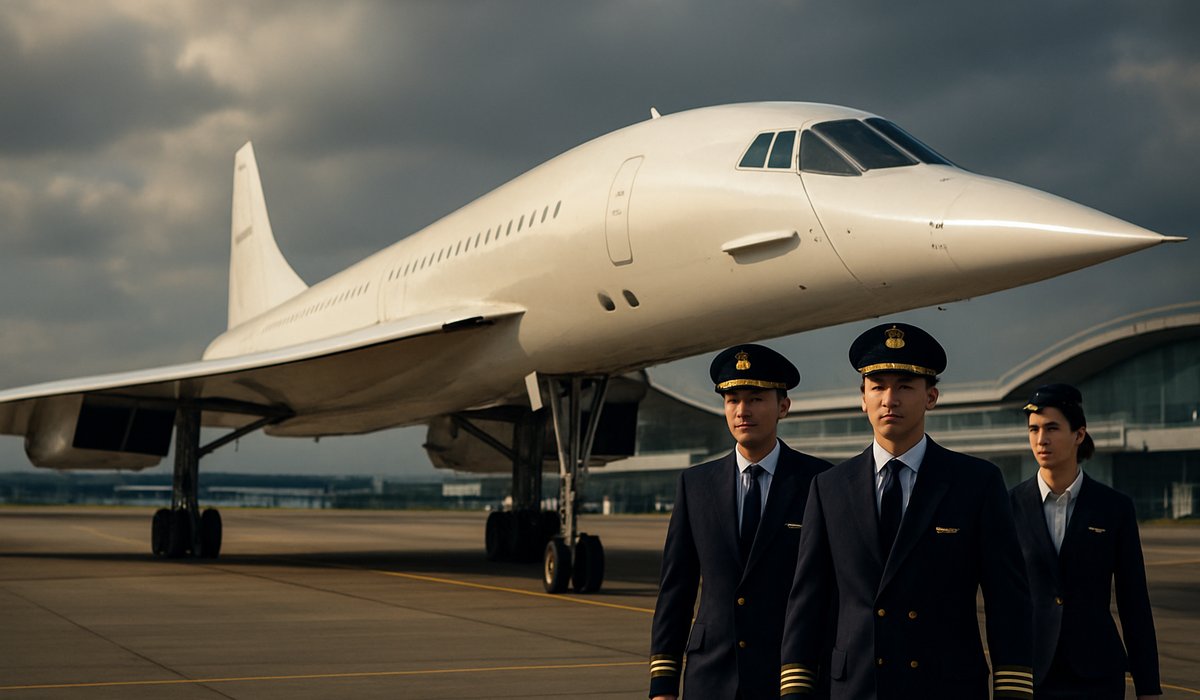
Image generated by AI
America's Secret Supersonic Dream: Why the US Government Built—Then Abandoned—a Revolutionary Aircraft Before Takeoff
The untold story of Cold War aerospace ambition, technological hubris, and the $1.4 billion program that never carried a single passenger
The Race for the Skies: How Geopolitical Rivalry Shaped Aviation History
When the United Kingdom and France formalized their partnership to develop the Concorde in 1962, alarm bells rang throughout Washington's corridors of power. Faced with the prospect of European aerospace dominance during the height of Cold War technological competition, the U.S. federal government responded swiftly and decisively: it launched the National Supersonic Transport (SST) initiative in 1963, determined to eclipse the Anglo-French venture with a superior alternative.
The underlying calculus was straightforward—and quintessentially American. Rather than merely matching the Concorde, the ambitious program aimed to engineer an aircraft that would dramatically outperform its European counterpart across virtually every metric: speed, capacity, range, and efficiency. What followed was one of aviation's most audacious—and ultimately tragic—tales of technological overreach.
A Blueprint for Dominance That Never Took Flight
The National Supersonic Transport program represented far more than a commercial aviation initiative. It embodied Cold War anxieties about technological supremacy and national prestige during an era when aerospace achievements symbolized geopolitical power. American engineers, buoyed by the success of the Apollo program and bolstered by seemingly limitless federal funding, set their sights on creating the world's most advanced commercial aircraft.
Yet despite remarkable engineering prowess and substantial financial commitments, the program faced mounting obstacles. Escalating development costs, environmental concerns regarding sonic booms and fuel consumption, and shifting political priorities ultimately conspired against the project. By the early 1970s, congressional opposition intensified as budget constraints tightened and public support waned.
The Cancellation: When Ambition Meets Reality
The program's termination marked a pivotal moment in American aviation history. The aircraft never progressed beyond the design and prototype phase—no paying passengers ever boarded, no transatlantic crossings materialized under the American flag. The Concorde, by contrast, would eventually enter service in 1976, securing its place in aviation mythology despite its own commercial struggles.
The SST cancellation demonstrated that even in an era of unbounded technological optimism, economic realities and political consensus ultimately determine an industry's trajectory. It remains a cautionary tale about the limits of government-sponsored megaprojects, particularly when divorced from clear market demand or sustainable operational economics.
FAQ: Understanding America's Supersonic Ambitions
What was the National Supersonic Transport program? Launched in 1963 as a direct response to Anglo-French Concorde development, the NST aimed to build a faster, larger supersonic passenger aircraft that would establish American dominance in commercial aviation.
Why did the U.S. government abandon the SST program? Congressional opposition, escalating costs exceeding initial projections, environmental concerns about sonic boom pollution, fuel inefficiency, and shifting political priorities led to the program's cancellation before prototype completion.
How much did the failed supersonic program cost? The initiative consumed approximately $1.4 billion in 1960s-1970s funding—equivalent to over $10 billion in today's dollars—without producing a single commercial aircraft.
Did the Concorde succeed where the American SST failed? The Concorde entered transatlantic service in 1976 but struggled commercially, never achieving profitability due to limited passenger demand, operational costs, and noise restrictions.
What lessons did the aviation industry learn from the SST cancellation? The program's failure underscored the importance of market viability assessments, cost containment discipline, and regulatory alignment in large-scale aerospace development projects.
Related Travel Guides
Flight Delay Compensation Guide 2026
Understanding Airline Route Changes
Airport Security Process Updated (2026)
External Resources
Disclaimer
This article is for informational and educational purposes only. It does not constitute legal, financial, or professional advice. While we strive to provide accurate and up-to-date information, travel policies, regulations, and conditions change rapidly. Always verify information with official sources before making travel decisions. Nomad Lawyer makes no representations about the accuracy, reliability, completeness, or suitability of the information provided. Readers should consult qualified professionals for advice specific to their circumstances. The views expressed in this article are those of the author and do not necessarily reflect the views of Nomad Lawyer.
Kunal K Choudhary
Co-Founder & Contributor
A passionate traveller and tech enthusiast. Kunal contributes to the vision and growth of Nomad Lawyer, bringing fresh perspectives and driving the community forward.
Learn more about our team →