
Bangkok Airport Flood Warning 2026: Transit Disruptions at Don Mueang and Suvarnabhumi
Severe monsoon flooding in Bangkok has triggered urgent travel warnings for Don Mueang and Suvarnabhumi airports, forcing passengers to shift to rail alternatives to avoid ground gridlock.

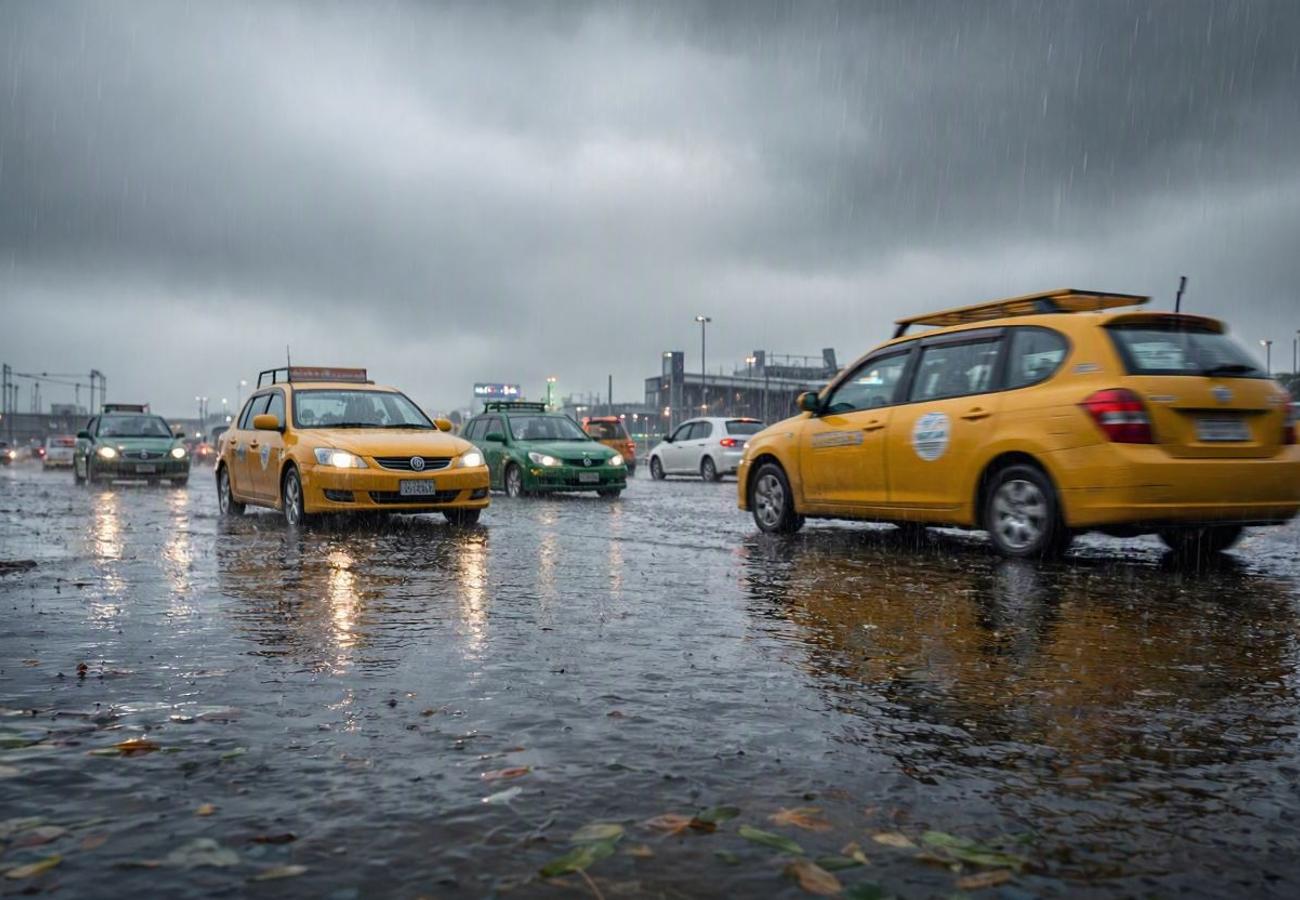
Image generated by AI
10 centimeters of standing water at the terminal access lanes of Don Mueang International Airport serves as the primary indicator of a wider systemic failure in Bangkok's surface drainage during the current monsoon surge. A low-pressure system stationed over the Central Plains has triggered torrential rainfall, leading to significant flooding across major highways and arterial roads serving the city's two primary aviation hubs. While the Airports of Thailand (AOT) confirms that all scheduled flights remain operational, the logistical challenge has shifted from the tarmac to the tarmac's approach.
Monsoon Gridlock and Ground Logistics
The current weather crisis has created a bifurcated transit environment. While flight operations are stable, the ground infrastructure is struggling. Municipal teams are currently deploying high-capacity pumps and clearing storm drains to mitigate the "barrivastation" of standing water on key routes. For the average traveler, this translates to unpredictable commute times and a high risk of missing connections if relying on traditional road transport.
The Ministry of Transport has activated an Emergency Flood Response Operations Centre to synchronize efforts between road, rail, and air agencies. This centralized command is specifically monitoring the southern taxiway at Don Mueang, which experienced brief water runoff, though the Civil Aviation Authority of Thailand (CAAT) reports that these incidents have not disrupted take-offs or landings.
Comparative Transit Resilience Data
For travelers currently in Bangkok, the choice of transport is no longer about convenience but about viability. Surface taxis and buses are currently the highest-risk options.
| Transport Mode | Target Airport | Status | Strategic Guidance |
|---|---|---|---|
| SRT Red Line | Don Mueang (DMK) | Operational | Use the elevated Skywalk for terminal access |
| Airport Rail Link | Suvarnabhumi (BKK) | Operational | Primary method to bypass surface floods |
| Don Mueang Tollway | Don Mueang (DMK) | Open | Bypass Vibhavadi Rangsit Road lanes 3, 5, 6, 7 |
| Motorway No. 7 | Suvarnabhumi (BKK) | Operational | Preferred route; avoid Lat Krabang area |
| Burapha Withi Exp. | Suvarnabhumi (BKK) | Operational | Use elevated lanes to avoid low-lying roads |
| Surface Taxis/Buses | Both DMK & BKK | Delayed | Add 2-3 hours to travel time |
Expert Analysis: The "Last Mile" Vulnerability
The current situation highlights a critical vulnerability in Bangkok's aviation logistics: the "last mile" connectivity. While the airports themselves are engineered for extreme weather, the access roads are not. For travelers booking flights through these hubs, the direct consequence is a mandatory shift in time-management.
The pricing pressure this creates is subtle but real. As ride-hailing services face surged demand and lengthened pickup times, passengers are forced toward rail. For those insisting on road travel, the reliance on the Utraphimukh Elevated Tollway and Motorway No. 7 creates bottlenecks at toll plazas.
From a legal and passenger rights perspective, the International Air Transport Association (IATA) guidelines generally categorize weather-related ground traffic as the passenger's responsibility. However, the CAAT has indicated that participating airlines are introducing flexible rebooking policies. This is a significant shift; travelers unable to reach the airport due to flooding may be able to secure travel credits or rebook without the standard penalty, provided they consult their carrier's specific terms.
Key Takeaways
- Time Buffer: Add a minimum of 2 to 3 additional hours to any airport commute.
- Rail Priority: Use the SRT Red Line for Don Mueang and the Airport Rail Link for Suvarnabhumi to avoid surface flooding.
- Route Avoidance: Avoid Vibhavadi Rangsit Road (specifically lanes 3, 5, 6, and 7) and the Lat Krabang area.
- Digital Check-in: Complete all check-ins via mobile apps to minimize time spent in terminal queues.
- Carrier Updates: Malaysia Airlines and other carriers recommend arriving 3 hours early and updating contact details via "My Booking" tools for instant alerts.
FAQ: Bangkok Airport Floods 2026
Are flights cancelled due to the flooding? No. Both Don Mueang and Suvarnabhumi airports are operating all scheduled flights. The disruptions are limited to the roads leading to the terminals.
What is the best way to reach Don Mueang right now? The SRT Red Line is the most reliable option. It features a covered elevated Skywalk that connects the station directly to the passenger terminals, bypassing flooded streets.
Can I get a refund if I miss my flight due to road floods? While not guaranteed, some airlines are offering flexible rebooking or travel credits. Check with your airline's customer service immediately to see if your ticket qualifies under the current emergency policies.
Which roads should I avoid when going to Suvarnabhumi? Avoid surface routes near Lat Krabang. Instead, use Motorway No. 7 or the Burapha Withi Expressway to stay above the water-logged arterial roads.
Plan for the worst, rail for the best.
Related Travel Guides
Disclaimer
This article is for informational and educational purposes only. It does not constitute legal, financial, or professional advice. While we strive to provide accurate and up-to-date information, travel policies, regulations, and conditions change rapidly. Always verify information with official sources before making travel decisions. Nomad Lawyer makes no representations about the accuracy, reliability, completeness, or suitability of the information provided. Readers should consult qualified professionals for advice specific to their circumstances. The views expressed in this article are those of the author and do not necessarily reflect the views of Nomad Lawyer.
Raushan Kumar
Founder & Lead Developer
Full-stack developer with 11+ years of experience and a passionate traveller. Raushan built Nomad Lawyer from the ground up with a vision to create the best travel and law experience on the web.
Learn more about our team →