
Mount Etna Ash Clouds Ground Catania Flights: Sicily Transit, Passenger Rights, and Travel Guide 2026

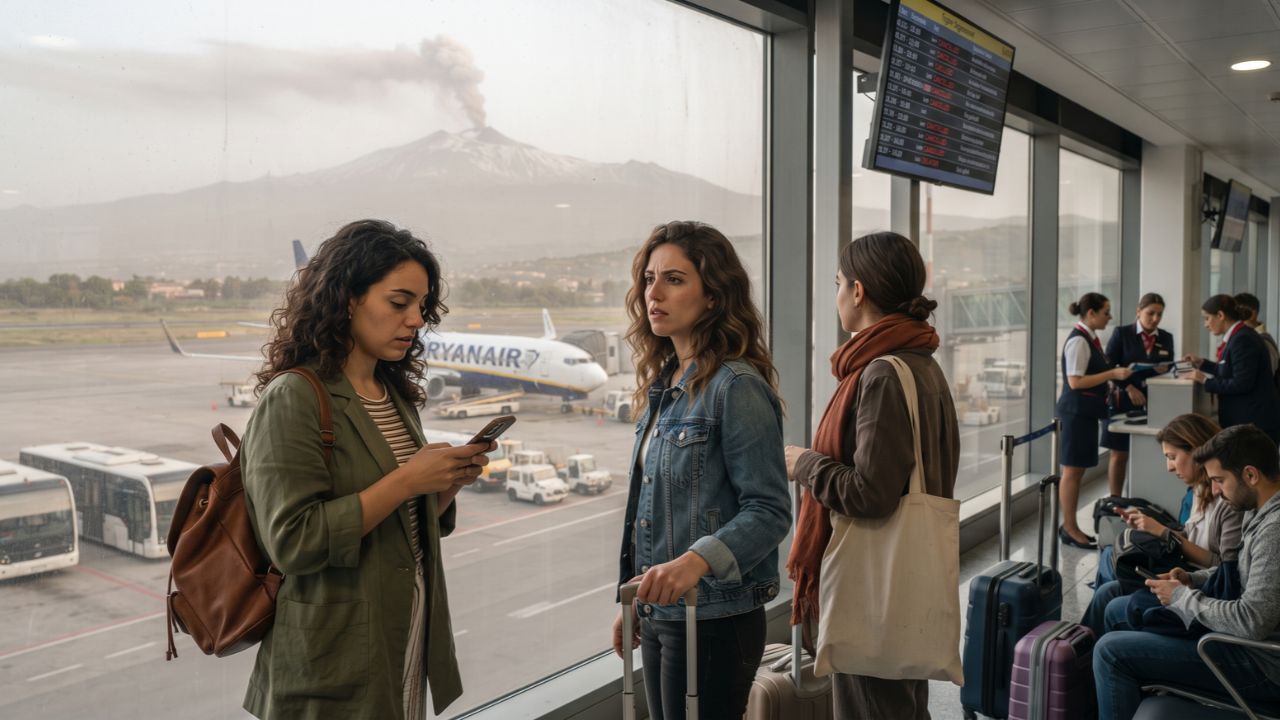
When Mount Etna—Europe’s most active stratovolcano—spews volcanic ash and lapilli into the Ionian airspace, even microscopic airborne glass particulates force air traffic controllers to shut down runway sectors in minutes. Following sustained summit eruptions on September 26 and 27, 2026, Catania–Fontanarossa Airport recorded 91 flight cancellations and five major flight delays, stranding thousands of international travelers bound for eastern Sicily’s premier destinations.
As the primary aviation gateway for Taormina, Syracuse (Siracusa), Noto, and the volcanic slopes of Mount Etna itself, Catania Airport operates at the intersection of booming Mediterranean tourism and unpredictable volcanic geology. While volcanic airspace closures present immediate transit hurdles, savvy travelers who understand European passenger protection regulations and regional ground transit corridors can navigate unexpected airport diversions smoothly.
Volcanic Airspace Closures and Airport Disruption Dynamics
The September 2026 ash plume prompted the emergency crisis unit at Aeroporto di Catania to restrict operations across air navigation sectors. Volcanic ash poses severe hazards to jet turbine engines, melting into abrasive glass upon contact with combustion chambers and scratching aircraft cockpit windshields.
On September 27, official tracking confirmed:
- Flight Cancellations: 91 scheduled arrivals and departures canceled across domestic and international carriers.
- Flight Delays: Five extended ground delays as runway sweeping teams deployed industrial sweeper trucks to clear ash deposits from tarmac surfaces.
- Flight Diversions: Inbound commercial aircraft were redirected to alternate Sicilian and southern Italian airfields, including Palermo Falcone-Borsellino Airport (PMO), Comiso Airport (CIY), and Trapani-Birgi Airport (TPS).
This disruption coincides with sustained tourism growth across Sicily. Regional government reports released in February 2026 revealed that tourist arrivals climbed 2.8% year-over-year while total overnight stays rose 0.24%, driven by strategic campaigns promoting spring and autumn travel. As international visitation expands into shoulder seasons, knowing how to handle sudden volcanic disruptions is essential for every Sicily itinerary.
Understanding Passenger Rights Under EU Regulation 261/2004
When volcanic ash forces flight delays or diversions, airlines frequently cite "extraordinary circumstances" to exempt themselves from paying fixed statutory compensation. However, under European Commission Passenger Rights governed by Regulation (EC) No 261/2004, airlines maintain strict legal obligations to provide immediate duty of care and onward transport:
- Mandatory Ground Transfer: If an airline diverts a flight to an alternate airport (such as landing in Palermo instead of Catania), the carrier is legally required to arrange and finance ground transportation—by coach, chartered bus, or train—to bring passengers to their booked destination airport or an agreed nearby transit hub.
- Duty of Care: Regardless of weather or volcanic causes, airlines must provide stranded passengers with complimentary meals, refreshment vouchers, and access to telecommunications. If a cancellation necessitates an overnight stay, the carrier must provide free hotel lodging and round-trip transfers.
- Document Everything: If an airline fails to provide transport vouchers at the diversion airport, retain all original boarding passes, text notifications, and itemized receipts for buses, trains, and modest hotel rooms to claim reimbursement later.
What Makes Sicily’s Overland Rail and Bus Corridors Distinct
When volcanic activity temporarily halts aviation along the eastern coast, Sicily’s ground transport network provides scenic overland alternatives promoted by Visit Sicily:
The central rail corridor operated by Trenitalia connects Catania Airport via the dedicated Catania Airlink rail stop directly into Catania Centrale station. From Catania Centrale, high-frequency regional trains head north along the dramatic Ionian coastline past the Cyclopean Isles to Taormina-Giardini (45 minutes) and Messina, or south toward the ancient Greek ruins of Syracuse and the Baroque UNESCO centers of the Val di Noto (one hour).
If diverted to Palermo Airport on the opposite side of the island, express coach services operated by SAIS Autolinee run direct routes across the scenic interior hills along the A19 highway, connecting Palermo to central Catania in approximately two hours and 30 minutes.
Visitor Insider Tips
Navigating volcanic travel interruptions across eastern Sicily requires practical local strategies:
- Check Airport Status Before Leaving Your Hotel: Never travel to Catania Airport during an active eruption without verifying your flight status directly on your airline's mobile app. Airport departures halls become severely congested during runway sweep operations.
- Keep Essentials in Carry-On Luggage: Pack critical medications, travel documents, phone chargers, and a change of clothing in your hand luggage. If an aircraft is diverted to Comiso or Palermo, checked luggage delivery can face multi-hour processing delays.
- Notify Hotels and Car Rental Desks Immediately: If your flight is diverted or canceled, send immediate written messages to your hotel reception and car rental supplier in Catania or Taormina to avoid being classified as a "no-show" and forfeiting your booking.
- Explore Alternative Rail Routes: If roads surrounding Mount Etna experience fine ash accumulation requiring reduced vehicular speed limits (typically 30 km/h), regional electric trains remain unaffected and provide the most dependable intercity transit.
- Sample Regional Volcanic Delicacies: If delayed in Catania, visit the historic Pescheria fish market or sit at an outdoor café along Via Etnea to savor freshly fried arancini, pasta alla Norma with salted ricotta, and crisp cannoli siciliani.
Cultural and Environmental Context
Mount Etna (Mungibeddu in the Sicilian dialect) is not merely a geographic landmark; it is the living heart of eastern Sicily’s identity. The volcano’s volcanic mineral ash enriches surrounding soils, nourishing world-class volcanic vineyards (Etna DOC), blood orange groves, and Bronte pistachio orchards.
Local communities have coexisted with Etna’s rumblings for thousands of years, developing sophisticated civil defense and municipal cleanup protocols. Automated seismic monitoring stations operated by the National Institute of Geophysics and Volcanology (INGV) track subterranean magma movements around the clock. By understanding that volcanic activity is a natural rhythm of the island, travelers can embrace delays with patience, supporting local trattorias, taxi drivers, and family guesthouses while experiencing the raw power of Europe’s greatest volcano.
FAQ: Mount Etna Eruptions and Sicily Flight Travel 2026
Do airlines pay cash compensation for flights delayed by volcanic ash?
No. Volcanic eruptions are classified as "extraordinary circumstances" beyond airline control, exempting carriers from fixed compensation under EU261, though airlines must still provide meals, hotels, and onward transport.
What should I do if my flight is diverted to Palermo or Comiso?
Report immediately to your airline's customer service desk at the arrival airport to board organized replacement coach transfers to Catania.
How far is Palermo Airport from Catania?
Palermo Falcone-Borsellino Airport is approximately 250 kilometers west of Catania, requiring about a 2.5 to 3-hour journey by express coach or car.
Are trains running when Catania Airport is closed due to ash?
Yes, Trenitalia regional train services between Catania, Taormina, Messina, and Syracuse operate normally during volcanic ash events unless tracks face direct physical accumulation.
Beneath the towering plume of Mount Etna, Sicily reminds travelers that true adventure is defined by resilience, timeless hospitality, and the enduring rhythm of the earth.
Related Travel Guides
Disclaimer
This article is for informational and educational purposes only. It does not constitute legal, financial, or professional advice. While we strive to provide accurate and up-to-date information, travel policies, regulations, and conditions change rapidly. Always verify information with official sources before making travel decisions. Nomad Lawyer makes no representations about the accuracy, reliability, completeness, or suitability of the information provided. Readers should consult qualified professionals for advice specific to their circumstances. The views expressed in this article are those of the author and do not necessarily reflect the views of Nomad Lawyer.
Preeti Gunjan
Contributor & Community Manager
A passionate traveller and community builder. Preeti helps grow the Nomad Lawyer community, fostering engagement and bringing the reader experience to life.
Learn more about our team →