
Baguio City Tourism Crisis 2026: Landslides and Habagat Rains Disrupt Cordillera Travel
Severe landslides triggered by the Habagat monsoon and tropical cyclones have crippled infrastructure in Baguio City and Benguet, forcing road closures and tourism cancellations across the Cordillera region.

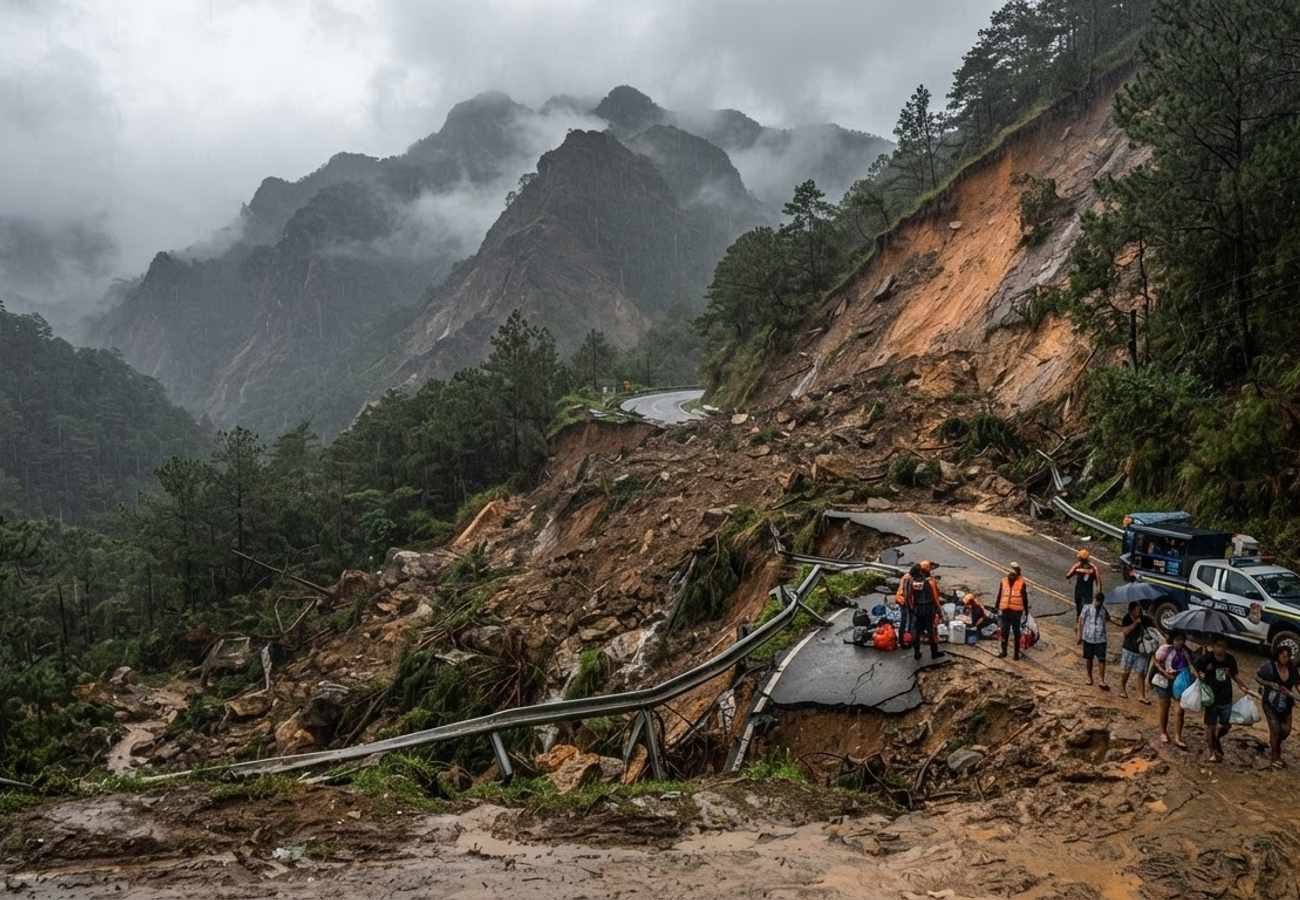
Image generated by AI
Extreme precipitation driven by the southwest monsoon (Habagat) and tropical cyclones has triggered widespread slope failures across the Cordillera mountain ranges, leaving Baguio City and Benguet in a state of geological instability.
The convergence of these meteorological events has led to critical soil saturation levels, resulting in severe ground movement and structural collapse. In Barangay Guisad Surong, significant slope failures have already damaged residential properties, prompting urgent search and rescue operations. The regional stability of these slopes is now deeply compromised, creating a high-risk environment for residents and tourists alike.
Logistics and Transit Disruptions
The regional transport network is currently failing. Major arterial roads and secondary routes have suffered structural damage, with debris and mudslides rendering several vital connections impassable.
- Atok Municipality: Large segments of the road network are completely blocked.
- Traffic Control: Authorities have enforced total closures or mandatory detours to prevent casualties.
- Tourist Impact: A surge in itinerary cancellations and postponements has hit the local hospitality sector as mountain transit becomes unpredictable and dangerous.
Critical Infrastructure Vulnerabilities
The Cordillera region's tourism recovery is being stalled by a recurring cycle of climate-induced degradation. Our analysis of the regional infrastructure indicates that physical decay accelerates rapidly whenever rainfall exceeds established norms.
The current crisis highlights a systemic gap: repair capacity is consistently outpaced by the scale of monsoon damage. This forces local governance to divert long-term development funds into immediate disaster response, creating a ceiling for the region's economic growth.
Regional Safety and Risk Mitigation
For those currently in or planning travel to the highlands, safety must supersede convenience. The following protocols are now in effect:
- Monitoring: Travelers must track official announcements from local government units (LGUs).
- Hazard Detection: Be alert for visible slope cracks or unusual acoustic signals from the terrain.
- Zone Avoidance: Strict avoidance of high-risk areas during active precipitation.
- Coordination: Maintain direct contact with local disaster risk reduction offices.
- Transport: Use only vetted, government-approved transportation routes.
Evolution of Disaster Policy
There has been a measurable shift in how the Philippines manages these highlands. Historically, the approach was reactive—focusing on clearing debris after a slide. Current strategies have pivoted toward proactive monitoring and integrated coordination between national and local agencies.
While engineering standards for new infrastructure have become more robust, the sheer volume of 2026 precipitation has tested the limits of these upgrades. The tension between sustainable regional development and a volatile climate remains the primary challenge for the Cordillera highlands.
Summary of Regional Impact
| Affected Area | Primary Issue | Current Status |
|---|---|---|
| Barangay Guisad Surong | Ground movement / Structural damage | Active Search & Rescue |
| Atok Municipality | Road network blockage | Total closures / Detours |
| Cordillera Range | Soil oversaturation | High risk of slope failure |
| Baguio City | Tourism disruption | Itinerary cancellations |
Why This Matters
From a logistical perspective, this crisis demonstrates that Baguio’s tourism model remains dangerously dependent on a fragile road network. For the travel industry, the "Habagat effect" is no longer just a seasonal inconvenience but a systemic risk to the regional economy.
When primary arteries in municipalities like Atok fail, the entire supply chain—from food delivery to tourist arrivals—collapses. This indicates that until the region moves from "reactive clearing" to "climate-resilient engineering," the tourism sector will continue to experience volatile swings in revenue and safety.
Industry Outlook
Expect a tightening of safety clearances for all infrastructure projects in the Benguet region. We anticipate a move toward more stringent zoning laws that may restrict tourism development in high-risk slope areas. Short-term travel to the Cordillera region will remain precarious until the soil saturation levels recede and structural integrity audits are completed on all primary access roads.
The battle between regional growth and geological volatility continues to define the Philippine highlands.
Related Travel Guides
Disclaimer
This article is for informational and educational purposes only. It does not constitute legal, financial, or professional advice. While we strive to provide accurate and up-to-date information, travel policies, regulations, and conditions change rapidly. Always verify information with official sources before making travel decisions. Nomad Lawyer makes no representations about the accuracy, reliability, completeness, or suitability of the information provided. Readers should consult qualified professionals for advice specific to their circumstances. The views expressed in this article are those of the author and do not necessarily reflect the views of Nomad Lawyer.
Preeti Gunjan
Contributor & Community Manager
A passionate traveller and community builder. Preeti helps grow the Nomad Lawyer community, fostering engagement and bringing the reader experience to life.
Learn more about our team →