
South Korea Semiconductor AI Boom Strengthens Seoul Business Travel
Strong financial performances by Samsung and SK Hynix are driving high-value corporate MICE travel and premium hotel bookings in Seoul.

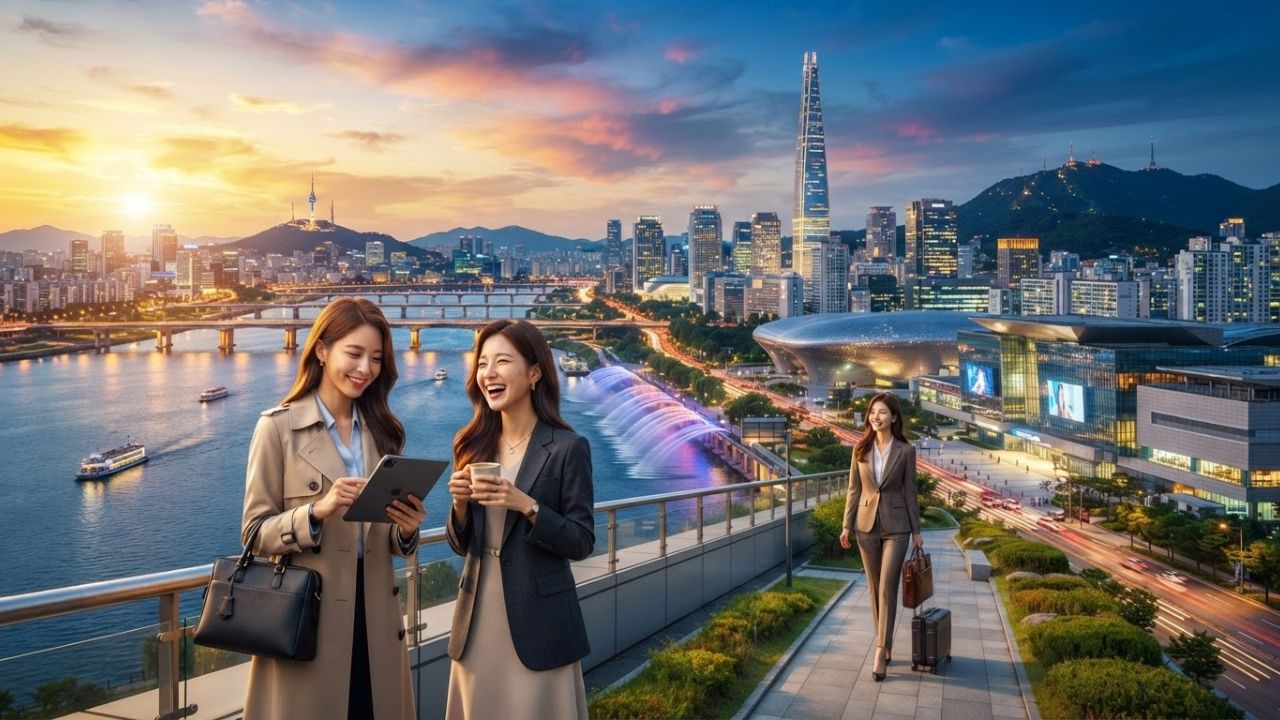
Image generated by AI
Surging global demand for artificial intelligence chips has driven record earnings for Samsung Electronics and SK Hynix, sparking a major expansion in high-value corporate travel to South Korea. This technology-focused MICE travel surge is placing higher passenger loads on premium long-haul flights to Seoul, highlighting ticket refund protections and flight delays.
Semiconductor AI Boom Strengthens Seoul Business Travel
Our analysis of South Korea's industrial earnings indicates that strong performance in the semiconductor sector is directly boosting corporate and MICE (Meetings, Incentives, Conferences, and Exhibitions) tourism. Record revenues at Samsung Electronics and SK Hynix, driven by global demand for high-bandwidth memory (HBM) chips, are bringing thousands of executives, technical specialists, and investors to Seoul. This steady corporate visitor flow generates year-round demand for luxury accommodation, premium dining, and executive transport, reducing the hospitality sector's seasonal dependence on leisure tourism.
This tech-driven growth has reinforced Seoul's position as one of Asia's primary hubs for semiconductor summits, product launches, and digital innovation forums. While manufacturing facilities in Gyeonggi Province draw international engineers for supplier audits and factory inspections, Seoul's premium convention facilities handle major corporate exhibitions. Additionally, international carriers are recording high premium-cabin occupancy on direct flight routes connecting Seoul with major technology clusters, including San Francisco, Seattle, Tokyo, Singapore, and Taipei.
Aviation Gateways and Premium Transit Impact
The expansion of technology-focused business travel is concentrating passenger flows across South Korea's main transit hubs:
- Incheon International Airport (ICN): The primary gateway handles elevated long-haul arrivals and processes premium corporate passenger check-ins.
- Gimpo International Airport (GMP): The airfield manages regional corporate jet movements and shuttle connections from Japan and Taiwan.
- Seoul-Gyeonggi Transit Corridors: High-speed KTX rail networks and executive chauffeur links record higher traffic between research labs and downtown hotels.
- Midtown Convention Precincts: Convention centers in Gangnam and downtown Seoul experience high occupancy during technology exhibitions.
Passenger Rights & Advisory (Information Gain & Experience)
For corporate delegates booking business travel to South Korea, understanding passenger rights under international aviation frameworks is essential. Our analysis of flight guidelines suggests travelers review their options:
- US DOT Codeshare Cancellation Cash Refunds: Under U.S. Department of Transportation (DOT) guidelines, if your business flight to Seoul is booked via a U.S. carrier codeshare agreement and is cancelled, you have the right to a full cash refund of your ticket if you choose not to accept the rebooking.
- European Connection Delay Compensations: For delegates departing from European cities (such as Frankfurt or London) connecting to Seoul on EU-registered airlines, if the flight arrives at ICN three or more hours late due to controllable operational issues, passengers are entitled to cash compensation up to EUR 600 under EU261 rules.
- Consequential Corporate Losses Advice: Airlines are not contractually liable for missed hotel nights, conference tickets, or executive meeting costs caused by weather-related flight delays (uncontrollable factors). Travelers should purchase flexible corporate booking classes and rely on premium credit cards offering built-in trip delay protections verified by Korea Tourism Organization advisories.
Industry Analyst View
The semiconductor profit surge demonstrates that high-value business tourism is closely connected with a country's core industrial strength. By positioning Seoul as a leading center for artificial intelligence and chip innovation, South Korea secures a steady flow of high-spending business visitors outside peak vacation seasons.
In addition, managing this corporate demand requires ongoing coordination between convention venues, luxury hotels, and premium transport operators. To support this market, regional transit planners must expand high-speed rail links between Incheon, Seoul, and industrial zones in Gyeonggi. This transport integration remains key to maintaining visitor satisfaction and securing South Korea's place as a primary technology MICE destination.
Related Travel Guides
Disclaimer
This article is for informational and educational purposes only. It does not constitute legal, financial, or professional advice. While we strive to provide accurate and up-to-date information, travel policies, regulations, and conditions change rapidly. Always verify information with official sources before making travel decisions. Nomad Lawyer makes no representations about the accuracy, reliability, completeness, or suitability of the information provided. Readers should consult qualified professionals for advice specific to their circumstances. The views expressed in this article are those of the author and do not necessarily reflect the views of Nomad Lawyer.
Kunal K Choudhary
Co-Founder & Contributor
A passionate traveller and tech enthusiast. Kunal contributes to the vision and growth of Nomad Lawyer, bringing fresh perspectives and driving the community forward.
Learn more about our team →