
Australia Telstra Network Outage 2026: V/Line Rail Halts and Digital Payment Failures Impact Tourism
A major Telstra network outage on July 8, 2026, paralyzed regional rail services and disrupted digital payments, exposing critical vulnerabilities in Australia's digitally dependent visitor economy.

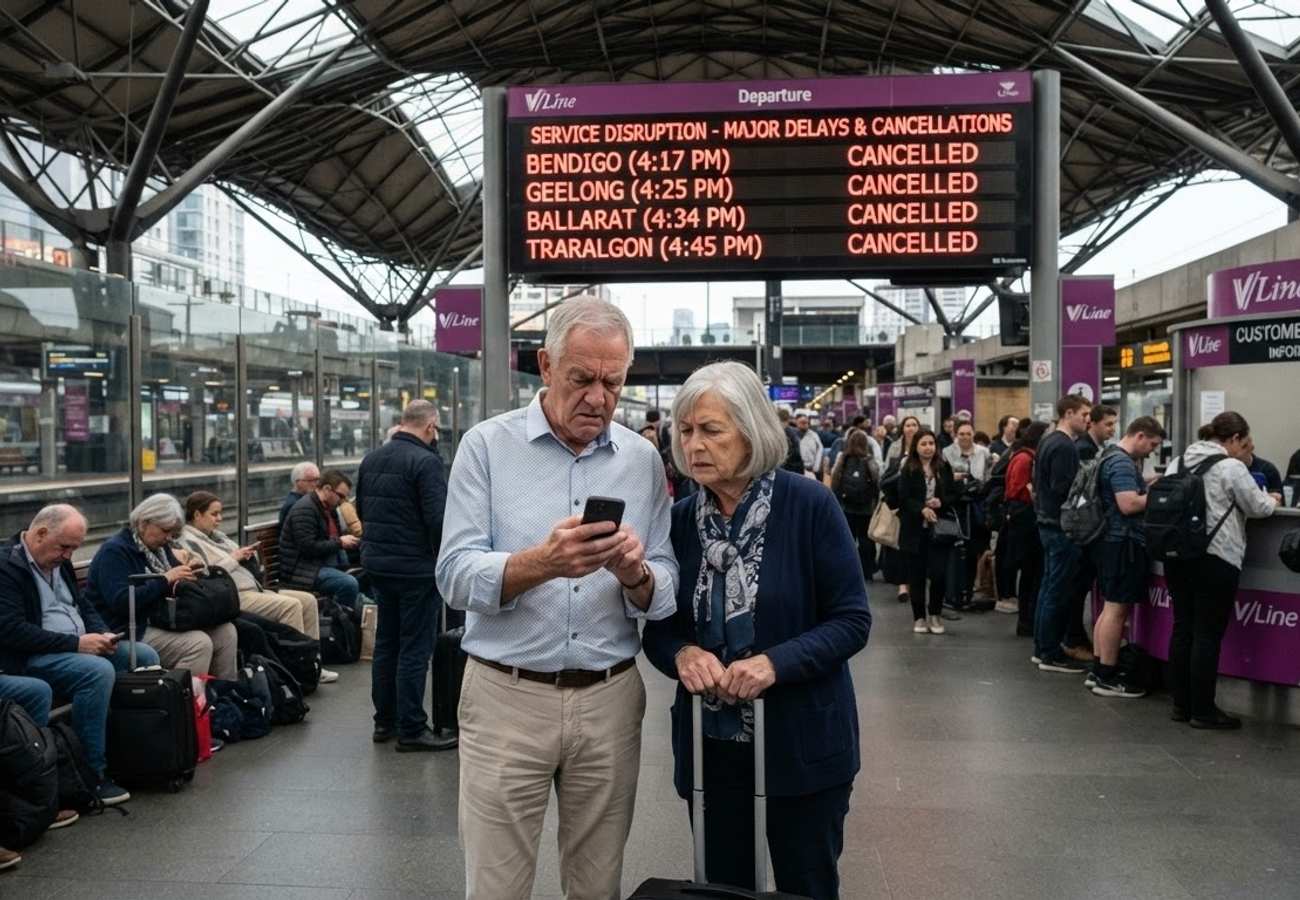
Image generated by AI
On July 8, 2026, a significant technical failure within Telstra’s mobile network evolved from a telecommunications glitch into a systemic operational risk for Australia’s travel and tourism sectors. The outage, which began around 4:30 am Australian Eastern Time, disrupted mobile voice and data services, paralyzed regional rail networks, and hindered contactless payment systems.
The incident centered on failures within network time-keeping nodes. While Telstra reported progress in service restoration by 1:00 pm, the lack of an immediate root-cause confirmation—and the ripple effect on public transport—highlighted the fragility of a visitor economy that relies almost exclusively on digital connectivity.
For travel operators, destination management companies (DMCs), and hotel groups, this event serves as a stark reminder that a single point of failure in telecom infrastructure can instantly disrupt the entire guest journey, from airport transfers to emergency communications.
Critical Infrastructure Failures and Passenger Impact
The most severe operational consequences were felt in Victoria, where the synergy between mobile connectivity and transport logistics failed. Transport Victoria confirmed that the outage directly impacted V/Line regional rail services, leading to a total suspension of trains across several key corridors.
The suspension affected the following lines:
- Bendigo
- Seymour
- Gippsland
- Geelong
- Ballarat
With very limited coach replacement services available, thousands of passengers were stranded or forced to defer travel. This disruption underscored that regional rail is not merely a transport service but a critical access point for regional tourism.
Simultaneously, the urban transit network in Melbourne faced friction. Many "tap and go" contactless payments on trams—which rely on mobile data for authorization—became unreliable. While myki card users remained largely unaffected, international visitors relying on digital wallets and foreign bank cards experienced significant payment hurdles.
Operational Breakdown: Telstra Outage Impact Matrix
| Operational Area | Recorded Impact | Relevance to Travel & Tourism |
|---|---|---|
| Mobile Voice & Data | Disruption to calls and data from 4:30 am | Loss of access to itinerary apps, ride-sharing, maps, and supplier contacts |
| Network Architecture | Failure of time-keeping nodes | Back-end technical faults causing front-line operational collapse |
| V/Line Regional Rail | All-lines suspension; trains held | Interruption of regional itineraries and staff commuting |
| Coach Replacements | Very limited availability | Requirement for tour operators to find emergency alternative transfers |
| Tram Payments | Contactless/Digital wallet disruptions | Payment friction for international visitors and non-myki users |
| Emergency Services | Limited Triple Zero (000) connectivity | Need for non-mobile emergency protocols and manual contact sheets |
| Public Obligations | Mandatory telco notification to government | Necessity for travel businesses to monitor official emergency channels |
The Economic Stakes of Digital Dependency
The scale of this disruption is magnified by the rapid recovery of Australia's international tourism sector. According to Tourism Research Australia, the year ending March 2026 saw 8.5 million international trips, a 10% increase over the previous year. Total spending reached A$57.6 billion, with international visitor spend alone hitting A$40.9 billion.
This surge in volume increases the commercial risk associated with telecom instability. Different visitor segments experience these outages with varying degrees of severity:
- Holiday Visitors (3.7M trips): Highly sensitive due to reliance on GPS, booking apps, and ride-hailing.
- Education Visitors (554K trips): High dependency on data for housing coordination and emergency contacts.
- Business & MICE (776K trips): Extremely low tolerance for failure; outages disrupt QR registrations, speaker timing, and corporate schedules.
- VFR (Visiting Friends & Relatives - 2.8M trips): Heavy reliance on mobile coordination with hosts.
Strategic Implications for Tourism Infrastructure
For the MICE (Meetings, Incentives, Conferences, and Exhibitions) sector, the Telstra outage represents a coordination nightmare. When corporate programs run on fixed, minute-by-minute schedules, the loss of mobile data halts shuttle tracking, exhibitor payments, and last-minute itinerary updates.
This incident aligns with the challenges facing the THRIVE 2030 strategy, which aims for A$230 billion in visitor spend by 2030, with A$95 billion targeted for regional areas. If regional access (via V/Line) and digital payments remain vulnerable to single-provider outages, the goal of regional growth faces a systemic bottleneck.
The event also raised urgent public safety concerns. The Australian Government noted that while the number of failed Triple Zero (000) calls was small, the inability to reach emergency services during a wide-scale outage creates a liability for tour operators and hotel providers who may not have analog backup communication systems.
The transition to a cashless, paperless travel ecosystem requires a parallel investment in network redundancy to prevent digital outages from becoming national travel crises.
Related Travel Guides
Disclaimer
This article is for informational and educational purposes only. It does not constitute legal, financial, or professional advice. While we strive to provide accurate and up-to-date information, travel policies, regulations, and conditions change rapidly. Always verify information with official sources before making travel decisions. Nomad Lawyer makes no representations about the accuracy, reliability, completeness, or suitability of the information provided. Readers should consult qualified professionals for advice specific to their circumstances. The views expressed in this article are those of the author and do not necessarily reflect the views of Nomad Lawyer.
Kunal K Choudhary
Co-Founder & Contributor
A passionate traveller and tech enthusiast. Kunal contributes to the vision and growth of Nomad Lawyer, bringing fresh perspectives and driving the community forward.
Learn more about our team →