
Australia's Caravan Tourism Surges Into a $12.6 Billion Economic Powerhouse
Australia's caravan and camping tourism sector is booming, contributing $12.6 billion to the domestic economy and driving regional recovery.

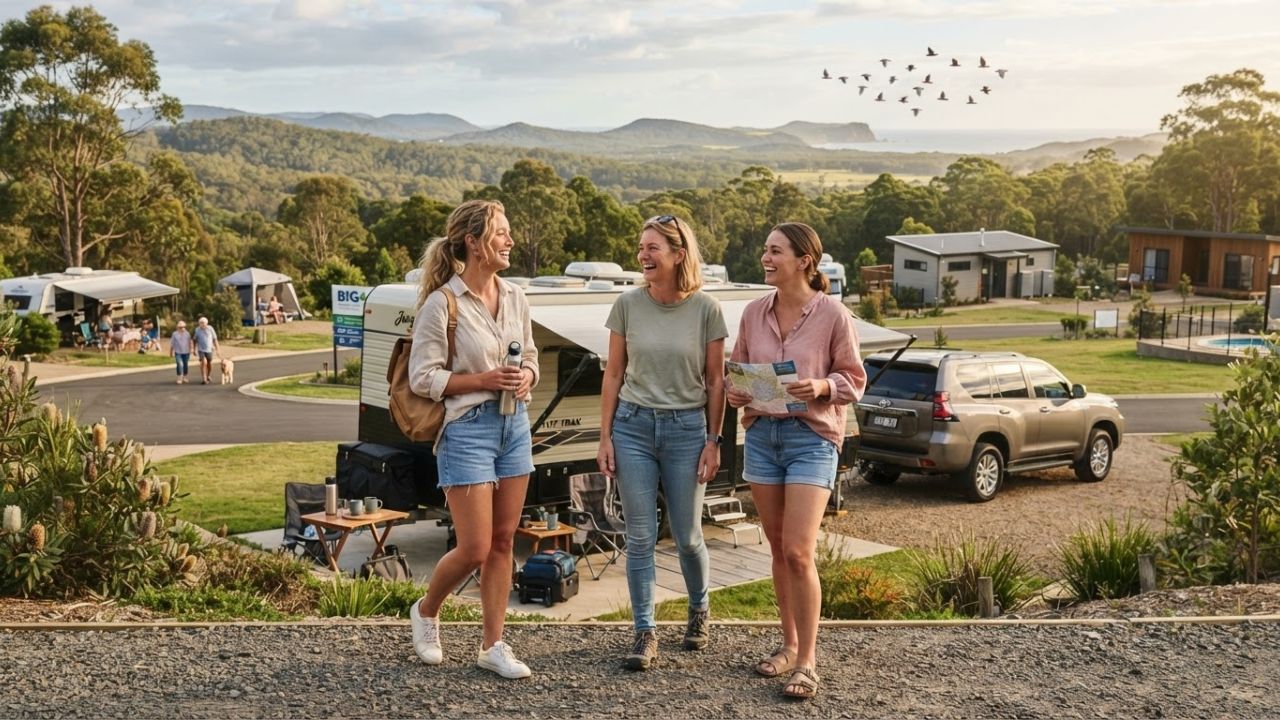
Image generated by AI
Caravan and camping tourism has surged into a record-breaking $12.6 billion economic engine in Australia, with domestic travelers taking 17.3 million overnight trips. Driven by a shift toward flexible, experience-based vacations, the road-trip revolution is channeling 87 per cent of visitor nights directly into regional communities.
The Modern Face of Australian Caravan and Camping Tourism
The tourism sector in Australia is experiencing a major transition as road-based travel establishes itself as a dominant economic driver. According to official figures from Tourism Research Australia (TRA), caravan and camping travel reached its highest level on record in 2025. This growth represents a structural change in how Australians spend their leisure time, moving the sector from a traditional retirement pastime into mainstream domestic travel.
The demographics of the modern road traveler have expanded. While retired couples enjoying extended road trips remain an important market segment, the sector is increasingly drawing full-time employed professionals, younger families, and higher-income households. These travelers are seeking flexible, value-driven vacations that allow them to explore coastal highways, national parks, and inland heritage towns at their own pace, combining outdoor recreation with remote work opportunities.
The Economic Scale of Road-Based Domestic Travel
The scale of this tourism trend is reflected in the record-breaking figures compiled by Tourism Research Australia. In the year ending December 2025, caravan and camping travelers took 17.3 million domestic overnight trips, spending 57.9 million nights away and contributing $12.6 billion to the national economy. This represents a 14 per cent increase in trips compared with the previous year, with caravan and camping holidays now accounting for almost one in every seven domestic overnight trips taken across the country.
This passenger volume is supported by a massive domestic fleet, with nearly 938,000 registered caravans and campervans in Australia. Commercial caravan parks and campgrounds serve as critical infrastructure for this movement, accounting for 67 per cent of all trips, 70 per cent of nights, and 75 per cent of visitor spending. The Caravan Industry Association of Australia reported in its 2026 State of the Industry Report that commercial holiday parks generated a record $3.3 billion in revenue during 2025, representing a 6.3 per cent increase compared with the previous year, demonstrating their value as professional accommodation providers.
Regional Communities as the Primary Economic Winners
A key benefit of this travel trend is the decentralized distribution of visitor spending. Unlike city-based hotel stays where tourism wealth remains concentrated in major metropolitan centers like Sydney, Melbourne, and Brisbane, caravan travelers spend their money across multiple regional points during a single journey.
According to government research, 87 per cent of caravan and camping visitor nights were spent in regional areas in 2025. Out of the $12.6 billion total expenditure, regional businesses captured $8.6 billion. This spending supports a wide network of regional operators, including fuel providers, local cafes, independent supermarkets, national park visitor centers, adventure operators, and farm-based attractions, providing a steady stream of income that helps communities maintain employment throughout the year.
New South Wales Leads the National Road Travel Market
New South Wales (NSW) continues to lead the country as the premier destination for caravan and camping holidays. The state attracts millions of road travelers annually, supported by its diverse regions that range from coastal beaches to alpine parklands and historic river corridors.
Popular NSW road-trip regions include the North Coast, celebrated for its family beach holidays and national parks; the South Coast, offering rugged coastal scenery and outdoor adventure; and the Murray, which attracts travelers seeking slow-paced riverboat experiences. The growth of this segment supports the NSW Government's visitor economy strategy, which aims to increase annual visitor expenditure to $91 billion by 2035 through targeted regional development and improved visitor facilities.
The Transformation of Holiday Parks and Premium Glamping
To meet the changing expectations of modern travelers, holiday parks across Australia are undergoing significant upgrades. Basic campsites are being replaced by premium tourism facilities that offer diverse accommodation options and family-focused recreation.
Modern holiday parks now provide high-quality cabins, luxury glamping tents, resort-style swimming pools, children's play zones, communal cooking areas, and high-speed Wi-Fi networks. This shift has allowed the industry to attract travelers who previously chose conventional hotels or resorts, blending the freedom of outdoor travel with the comforts of modern accommodation.
International Interest and Inbound Campervan Travel
While domestic travelers remain the core market, international visitors are increasingly exploring Australia via caravan and campervan rentals. In 2025, international caravan and camping visitation to NSW reached 86,000 visitors, who spent more than 801,500 nights in the state.
The United Kingdom, Germany, and New Zealand represent the strongest international source markets. Visitors from these countries are highly attracted to self-drive journeys along the Great Ocean Road or the Pacific Highway, combining long-distance travel with nature-based experiences, indigenous cultural tourism, and regional food and wine trails.
Visitor Guide: Route Planning, Towing Safety, and Outdoor Cuisine
Embarking on a caravan journey through Australia involves understanding route logistics, practicing towing safety, and preparing traditional campfire meals. By planning ahead, travelers can ensure a safe and memorable road trip.
When planning your itinerary, utilize digital camping applications. Use WikiCamps to search a user-generated database of campgrounds, amenities, and points of interest, or download the free CamperMate app for offline maps and locations of public dump stations. During peak holiday windows, such as the summer school breaks, Easter, and long weekends, popular coastal holiday parks experience high demand, so make reservations well in advance.
Practice essential towing safety by verifying your vehicle's weight distribution. Keep heavy cargo low and centered over the caravan's axles, and aim to place 10 per cent of the caravan's loaded weight on the tow ball. Install extension towing mirrors to maintain visibility along the sides of the caravan, cross your safety chains, and verify that all indicator and brake lights are functioning before departure. Maintain a safe following distance and adjust your speed to account for wind conditions and road surfaces.
Experience regional Australian culinary traditions during your road trip. Prepare traditional campfire Damper bread by mixing self-raising flour, salt, and water into a stiff dough, baking it in a pre-heated camp oven over hot coals until the bottom sounds hollow when tapped. Serve it warm with butter and golden syrup. If traveling along the East Coast, purchase fresh Moreton Bay bugs—a local slipper lobster prized for its sweet, firm tail meat—and grill them shell-side down on a barbecue with garlic butter for three to four minutes.
Observe sustainable camping practices to protect the environment. Follow "leave no trace" principles by using designated campsites, disposing of waste at certified dump stations, and minimizing campfire impact. Use biodegradable soaps and respect local wildlife boundaries, particularly in national parks.
Future Outlook: Sustainable Management and Balanced Infrastructure
The future expansion of Australia's caravan tourism industry relies on balancing visitor growth with environmental responsibility. As natural areas experience higher visitor volumes, municipal councils and national park authorities are focusing on sustainable infrastructure management.
To protect fragile coastal and alpine ecosystems, regional parks are introducing waste recycling programs, eco-friendly cabin upgrades, and solar-powered facilities. By coordinating infrastructure development with conservation initiatives, the tourism sector aims to preserve the natural assets that attract travelers, ensuring that Australia's road-trip tradition remains a viable, low-impact option for future generations.
Related Travel Guides
Disclaimer
This article is for informational and educational purposes only. It does not constitute legal, financial, or professional advice. While we strive to provide accurate and up-to-date information, travel policies, regulations, and conditions change rapidly. Always verify information with official sources before making travel decisions. Nomad Lawyer makes no representations about the accuracy, reliability, completeness, or suitability of the information provided. Readers should consult qualified professionals for advice specific to their circumstances. The views expressed in this article are those of the author and do not necessarily reflect the views of Nomad Lawyer.
Preeti Gunjan
Contributor & Community Manager
A passionate traveller and community builder. Preeti helps grow the Nomad Lawyer community, fostering engagement and bringing the reader experience to life.
Learn more about our team →