
Asia Air Travel Alert: 2,927 Delays and 584 Cancellations Hit Major Hubs

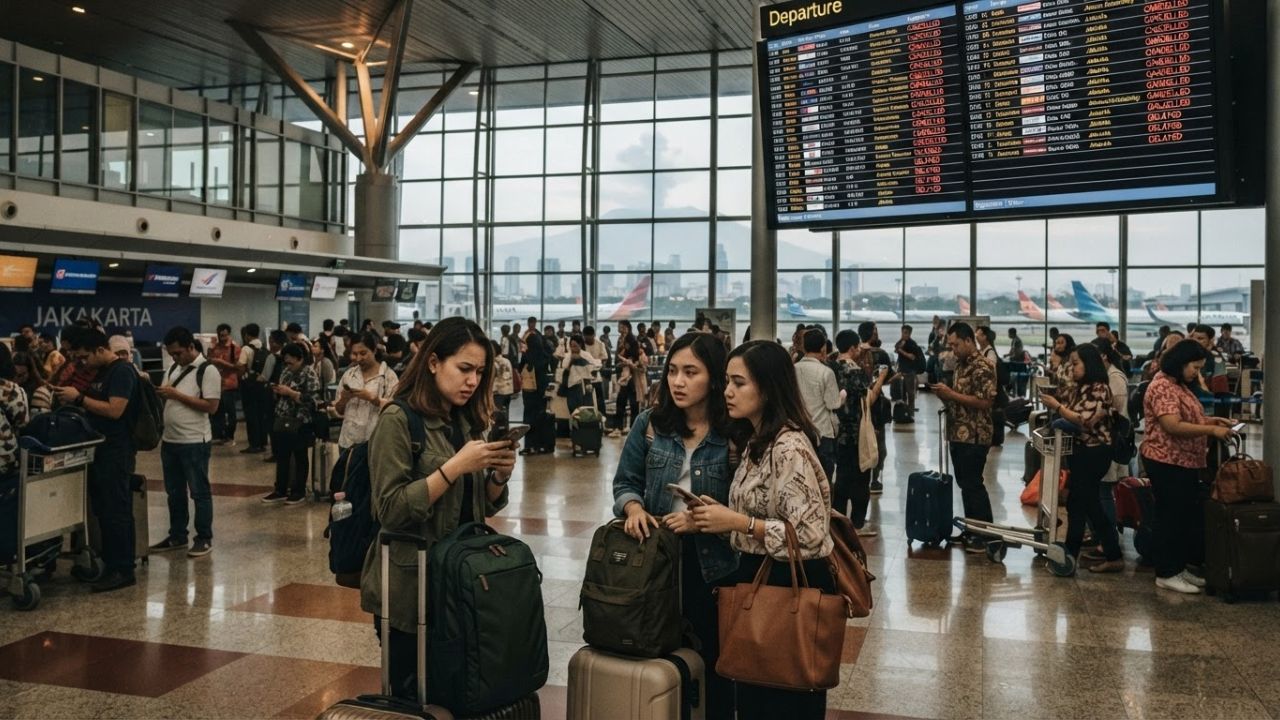
More than 2,927 flight delays and 584 cancellations disrupted air travel across Asia as volcanic ash plumes from Mount Anak Krakatau forced widespread ground restrictions across Indonesia, while congestion and operational bottlenecks rippled into Tokyo Haneda, Mumbai, New Delhi, and Shanghai. With Jakarta Soekarno-Hatta recording 207 cancellations and Haneda logging 394 delays, international travelers faced missed connections and extended terminal layovers across Southeast Asia and the Far East.
Aviation telemetry recorded on September 7, 2026, at 2:57 PM ET (September 8 at 2:01 AM Jakarta Time) reveals severe airspace friction extending across four major sub-regions. Eruptive activity in the Sunda Strait severed high-density domestic corridors in Java and Sumatra, while cascading crew-rotation shortages and network constraints compounded delays across India, Japan, China, and key Gulf transit hubs.
The Local Trend Revealed: Regional Epicenters of Asian Aviation Disruption
Flight operations across primary transcontinental gateways experienced acute schedule degradation:
- Indonesia Ground Zero for Cancellations: Driven by atmospheric ash advisories, Indonesia suffered the highest cancellation volume in the region:
- Jakarta Soekarno-Hatta International (CGK): Tracked 73 delays and 207 cancellations, reflecting an 18% cancellation rate for originating flights and 17% for inbound arrivals.
- Halim Perdanakusuma International (HLP): Logged 10 delays and 9 cancellations (19% originating and 22% destination cancellation rates).
- Juanda International in Surabaya (SUB): Recorded 87 delays and 15 cancellations (4% origin, 5% destination).
- Sultan Hasanuddin International (UPG): Logged 112 delays and 8 cancellations in Makassar.
- Kuala Namu International (KNO): Reported 24 delays and 13 cancellations in Medan (5% origin, 11% destination).
- Sepinggan International (BPN): Recorded 44 delays and 5 cancellations in Balikpapan.
- Regional Sumatra Feeder Hubs: Radin Inten II (TKG) saw 17% origin and 25% destination cancellations; Sultan Mahmud Badaruddin II (PLM) faced 16% origin cancellations; Hang Nadim (BTH) in Batam logged 10% origin and 9% destination cancellations; and Sultan Syarif Qasim II (PKU) recorded 6% origin cancellations.
- Japan’s Severe Delay Compression:
- Tokyo Haneda (HND): Ranked as the single most delayed airport in the entire dataset, recording 394 delays alongside 8 cancellations.
- Tokyo Narita (NRT): Recorded 127 delays and 11 cancellations (1% origin, 2% destination cancellations).
- India’s High-Volume Bottlenecks:
- Mumbai Chhatrapati Shivaji Maharaj (BOM): Absorbed 245 delays and 3 cancellations.
- Delhi Indira Gandhi International (DEL): Logged 177 delays and 4 cancellations.
- China’s Hub Constriction:
- Shanghai Pudong (PVG): Logged 178 delays and 8 cancellations.
- Beijing Capital (PEK): Reported 140 delays and 7 cancellations.
- Guangzhou Baiyun (CAN): Recorded 87 delays and 9 cancellations.
- Secondary Gateways: Minor schedule adjustments occurred across Chengdu Tianfu (TFU), Chongqing Jiangbei (CKG), and Xi'an Xianyang (XIY).
- Middle East Feeder Impacts:
- Dubai International (DXB): Absorbed 144 delays and 9 cancellations.
- Hamad International in Doha (DOH): Recorded 77 delays and 8 cancellations.
- Saudi Airfield Reductions: Regional airports faced sharp ground cancellations, including Gizan Regional (GIZ) with 66% origin and 71% destination cancellations, and Abha Regional (AHB) with 10% origin cancellations.
Airline Fleet Operations Across the Region
Carrier schedule tracking confirms deep operational challenges across regional flag carriers and low-cost airlines:
- Indonesian Carriers: Garuda Indonesia logged 54 cancellations (22% of scheduled flying) and 5 delays (2%). Batik Air recorded 27 cancellations (8%) and 62 delays (20%). Citilink posted 26 cancellations (9%) and 32 delays (11%). Indonesia AirAsia reported 13 cancellations (16%) and 3 delays (3%), while TransNusa saw 6 cancellations (9%) and 7 delays (10%).
- Japanese Carriers: Japan Airlines (JAL) absorbed 224 delays (28%) and 4 cancellations. All Nippon Airways (ANA) suffered 114 delays (20%) and 7 cancellations, while regional subsidiary ANA Wings logged 59 delays (16%) and 2 cancellations. Jetstar Japan recorded 36 delays (37%) and 3 cancellations.
- Chinese Carriers: China Eastern reported 198 delays (8%) and 18 cancellations. Air China logged 145 delays (8%) and 13 cancellations. China Southern recorded 113 delays (5%) and 5 cancellations. Spring Airlines logged 68 delays (11%) and 3 cancellations, while Shenzhen Airlines posted 44 delays (6%) and 2 cancellations, and XiamenAir logged 39 delays (6%) and 7 cancellations.
- Indian Carriers: IndiGo absorbed 258 delays (13%) and 9 cancellations across its domestic network. Air India recorded 114 delays (19%) and 2 cancellations. SpiceJet faced 36 delays (51%) and 1 cancellation, while Akasa Air posted 19 delays (11%) and 2 cancellations.
- Southeast Asian Carriers: Cebu Pacific recorded 59 delays (19%) and 1 cancellation. Philippines AirAsia absorbed 46 delays (71%) and 2 cancellations. AirAsia registered 43 delays (9%) and 9 cancellations. Malaysia Airlines logged 24 delays (8%) and 9 cancellations. Scoot posted 20 delays (10%) and 4 cancellations, while Singapore Airlines recorded 19 delays (5%) and 8 cancellations.
- Middle Eastern Operators: Saudia absorbed 47 delays (8%) and 29 cancellations. Qatar Airways tracked 79 delays (12%) and 7 cancellations. Etihad Airways experienced 54 delays (16%) and 1 cancellation. Emirates recorded 51 delays (9%) and 4 cancellations, while Flynas logged 23 delays (9%) and 1 cancellation.
Cultural & Environmental Value: Volcanic Preparedness in Asian Aviation
The extensive grounding of aircraft underscores the critical environmental reality of transiting Southeast Asia’s Pacific Ring of Fire:
- Protecting Aircraft Engines from Silicate Damage: Microscopic volcanic glass shards from Mount Anak Krakatau melt inside modern high-bypass jet engines, fusing onto turbine blades and inducing catastrophic engine failure. Grounding flights until upper-level plumes disperse is an environmental safety necessity that safeguards passenger lives.
- Community Transit Resilience in Indonesia: In Java, passengers diverted from regional airports utilize national railway infrastructure, such as PT Kereta Api Indonesia (KAI) executive rail services connecting Jakarta, Bandung, and Surabaya, reducing transport bottlenecks while keeping local commerce moving.
- Mitigating Urban Air Quality Impacts: Volcanic ash fall combined with seasonal monsoon humidity prompts regional health departments to distribute masks in coastal western Java and southern Sumatra, reminding travelers to take personal respiratory precautions during prolonged airport transits.
Visitor Insider Tips: Navigating Asia Air Delays
- Confirm Operating Status Before Airport Departure: Passengers holding departures out of Jakarta, Surabaya, Tokyo Haneda, Delhi, or Shanghai should never travel to the airport without active verification on their carrier’s official mobile app or verified FlightAware tracking.
- Leverage Free Volcano Waiver Policies: Airlines operating in Indonesia and connecting regional carriers offer emergency waiver codes permitting free flight date modifications, ticket re-routings via unimpacted airports (such as Singapore Changi or Kuala Lumpur), or full refunds credited to the original payment method.
- Tokyo Haneda Transit Protocol: If transiting through Haneda during heavy delay banks, monitor inter-terminal bus transit times between Terminal 3 (International) and Terminals 1/2 (Domestic). Allow at least 90 minutes between connecting flights when delays compress scheduled turnaround windows.
- Overland Alternatives in Java: Stranded travelers in Jakarta needing to reach West or East Java should consider the Whoosh high-speed train to Bandung or the Argo Bromo Anggrek express train from Gambir Station to Surabaya, which operates reliably independent of volcanic ash closures.
- Explore Authentic Airport Dining During Layover Delays: Rather than waiting at crowded gate areas, seek out authentic regional culinary options inside major terminals: enjoy hot soto ayam (spiced turmeric chicken noodle soup) at Jakarta Terminal 3, savor authentic steaming bowls of tonkotsu ramen in Haneda’s Edo Ko-Ji dining street, or enjoy fresh masala chai and hot samosas at Delhi T3.
Regional Aviation Outlook for Asia
As atmospheric tracking agencies monitor Anak Krakatau's ash dispersal across the Indian Ocean and major hubs clear backlog rotations, Asian carriers are realigning crew rosters. Maintaining flexible travel arrangements and closely monitoring airline rebooking portals remains paramount for travelers navigating transcontinental routes across the Asia-Pacific corridor.
Related Travel Guides
Disclaimer
This article is for informational and educational purposes only. It does not constitute legal, financial, or professional advice. While we strive to provide accurate and up-to-date information, travel policies, regulations, and conditions change rapidly. Always verify information with official sources before making travel decisions. Nomad Lawyer makes no representations about the accuracy, reliability, completeness, or suitability of the information provided. Readers should consult qualified professionals for advice specific to their circumstances. The views expressed in this article are those of the author and do not necessarily reflect the views of Nomad Lawyer.
Raushan Kumar
Founder & Lead Developer
Full-stack developer with 11+ years of experience and a passionate traveller. Raushan built Nomad Lawyer from the ground up with a vision to create the best travel and law experience on the web.
Learn more about our team →