
Asia Aviation Crisis 2026: Monsoons Trigger 6,639 Flight Delays and 212 Cancellations
Severe monsoon systems and Typhoon Dolphin have crippled Asian aviation hubs, resulting in 6,639 delays and 212 cancellations in a single day, exposing critical infrastructure fragility in Jakarta and Bangkok.

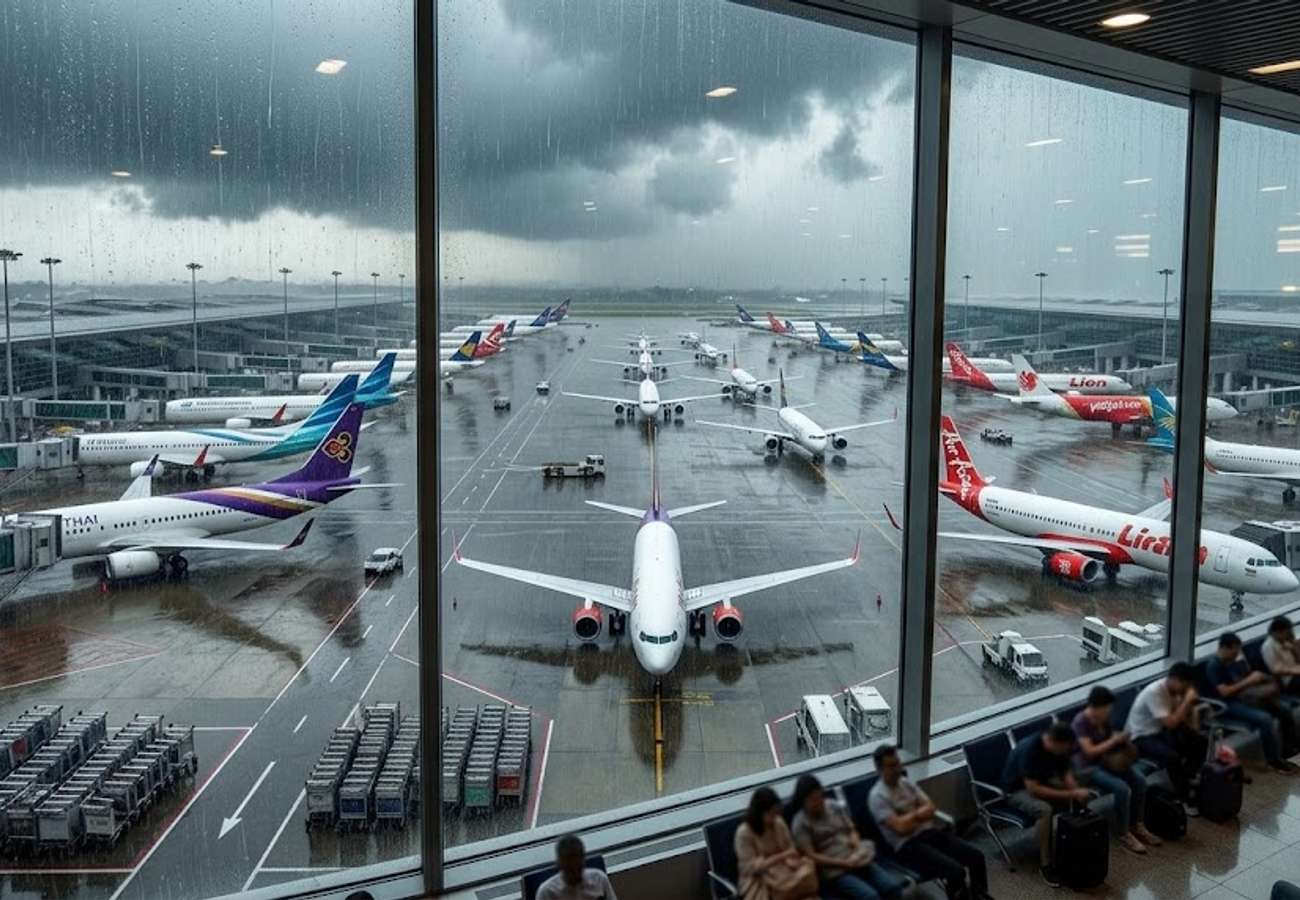
Image generated by AI
Heavy monsoon rains and storm systems across Asia have triggered 212 flight cancellations and 6,639 delays in a single day, placing extreme operational strain on hubs from Jakarta to Bangkok.
Operational data from August 2026 reveals a systemic failure in regional aviation resilience. The convergence of seasonal monsoon patterns and high-intensity storm events—specifically Typhoon Dolphin—has created a cascade of disruptions across East and Southeast Asia. On one peak disruption day in mid-August, trackers recorded 212 cancellations and 6,639 delayed flights, with the heaviest impact concentrated at Jakarta Soekarno Hatta International Airport and Bangkok’s dual-airport system.
The Catalyst: Typhoon Dolphin and Monsoon Convergence
The current volatility is not merely the result of routine seasonal rain. Our analysis of regional performance indicates that the interaction between standard monsoon systems and Typhoon Dolphin amplified the chaos. In eastern China, Typhoon Dolphin triggered top-level weather alerts, forcing mass evacuations and over 1,000 flight cancellations due to repeated runway closures.
This weather volatility is hitting a network with zero margin for error. Industry data shows a recurring pattern of instability:
- July 2026: Multiple sequences saw over 6,900 flights disrupted across China's primary hubs.
- August 2026: Frequent spikes exceeding 3,000 delays per day.
- Late August: Persistent low cloud ceilings and heavy rainfall in northern Luzon, specifically impacting Laoag International Airport.
Regional Epicenters: Jakarta and Bangkok
Jakarta and Bangkok have emerged as the primary pressure points for Southeast Asian aviation.
Jakarta Soekarno Hatta International Airport As Indonesia's primary gateway, the airport operates at near-maximum capacity. On August 16, 2026, the hub peaked at 212 cancellations in a single day. Because the airport lacks sufficient buffer capacity, modest visibility reductions quickly translate into massive departure backlogs.
Bangkok’s Dual-Airport System (Suvarnabhumi and Don Mueang) Between August 21 and August 23, 2,459 flights were disrupted due to a combination of stormy conditions and airport congestion. The impact is worsened by financial constraints among local carriers; rising fuel costs have forced airlines to lean out their operating models, leaving fewer spare aircraft and crew to recover from weather-driven delays.
Global Ripple Effects: China, Japan, and the Gulf
The disruption is not localized. The hub-and-spoke nature of global aviation means that weather in East Asia creates a domino effect reaching the Middle East and beyond.
- East Asia: Major hubs including Guangzhou Baiyun, Shanghai Pudong, and Tokyo have reported days with over 3,500 delays and 200+ cancellations.
- The Gulf: Dubai and Riyadh have experienced secondary delays. When feeder flights from storm-hit Asian cities arrive late or are cancelled, the tightly timed connection windows in Gulf hubs collapse, delaying long-haul services to Europe and North America.
- Transpacific Impact: US national transportation reports for August 2026 confirm that these Asian weather events contributed to late arrivals on transcontinental and transpacific routes.
Operational Impact Summary: August 2026
| Metric | Peak Single-Day Impact | Regional Trend |
|---|---|---|
| Flight Cancellations | 212 | Concentrated in Jakarta & Coastal China |
| Flight Delays | 6,639 | Widespread across SE Asia & Gulf Hubs |
| Typhoon Dolphin Impact | 1,000+ Cancellations | Eastern China / Zhejiang / Shanghai |
| Bangkok Window (Aug 21-23) | 2,459 Disruptions | Combined Congestion & Storms |
Why This Matters: The Resilience Gap
From a logistical perspective, these figures reveal a dangerous "resilience gap" in Asian aviation. The region has scaled passenger volumes significantly faster than it has expanded runway, apron, and air-traffic control (ATC) capacity.
For the traveler, this means that "weather delays" are no longer isolated incidents but systemic failures. When a hub like Suvarnabhumi or Soekarno Hatta hits capacity, there is no "slack" in the system to absorb a storm. A single blocked runway now triggers a chain reaction of retimings across entire route networks. We are seeing a shift where operational lean-ness—intended to save costs—has become a liability, extending the duration of recovery from a few hours to several days.
Forward Outlook
Expect continued volatility through the end of the monsoon season. Market trends suggest that until infrastructure expansion catches up with demand, any significant weather event in the South China Sea or the Bay of Bengal will result in immediate, widespread disruptions. Travelers should anticipate higher-than-normal delay probabilities for any itinerary transiting through Bangkok or Jakarta during the remainder of 2026.
The gap between passenger demand and infrastructure capacity has officially become the primary risk factor for Asian air travel.
Related Travel Guides
Disclaimer
This article is for informational and educational purposes only. It does not constitute legal, financial, or professional advice. While we strive to provide accurate and up-to-date information, travel policies, regulations, and conditions change rapidly. Always verify information with official sources before making travel decisions. Nomad Lawyer makes no representations about the accuracy, reliability, completeness, or suitability of the information provided. Readers should consult qualified professionals for advice specific to their circumstances. The views expressed in this article are those of the author and do not necessarily reflect the views of Nomad Lawyer.
Raushan Kumar
Founder & Lead Developer
Full-stack developer with 11+ years of experience and a passionate traveller. Raushan built Nomad Lawyer from the ground up with a vision to create the best travel and law experience on the web.
Learn more about our team →