
Middle East Aviation Crisis 2026: 1,261 Flight Delays and 59 Cancellations Hit Key Hubs
Regional aviation networks face severe instability as 1,261 delays and 59 cancellations strike Middle East hubs in 24 hours due to airspace closures and conflict.

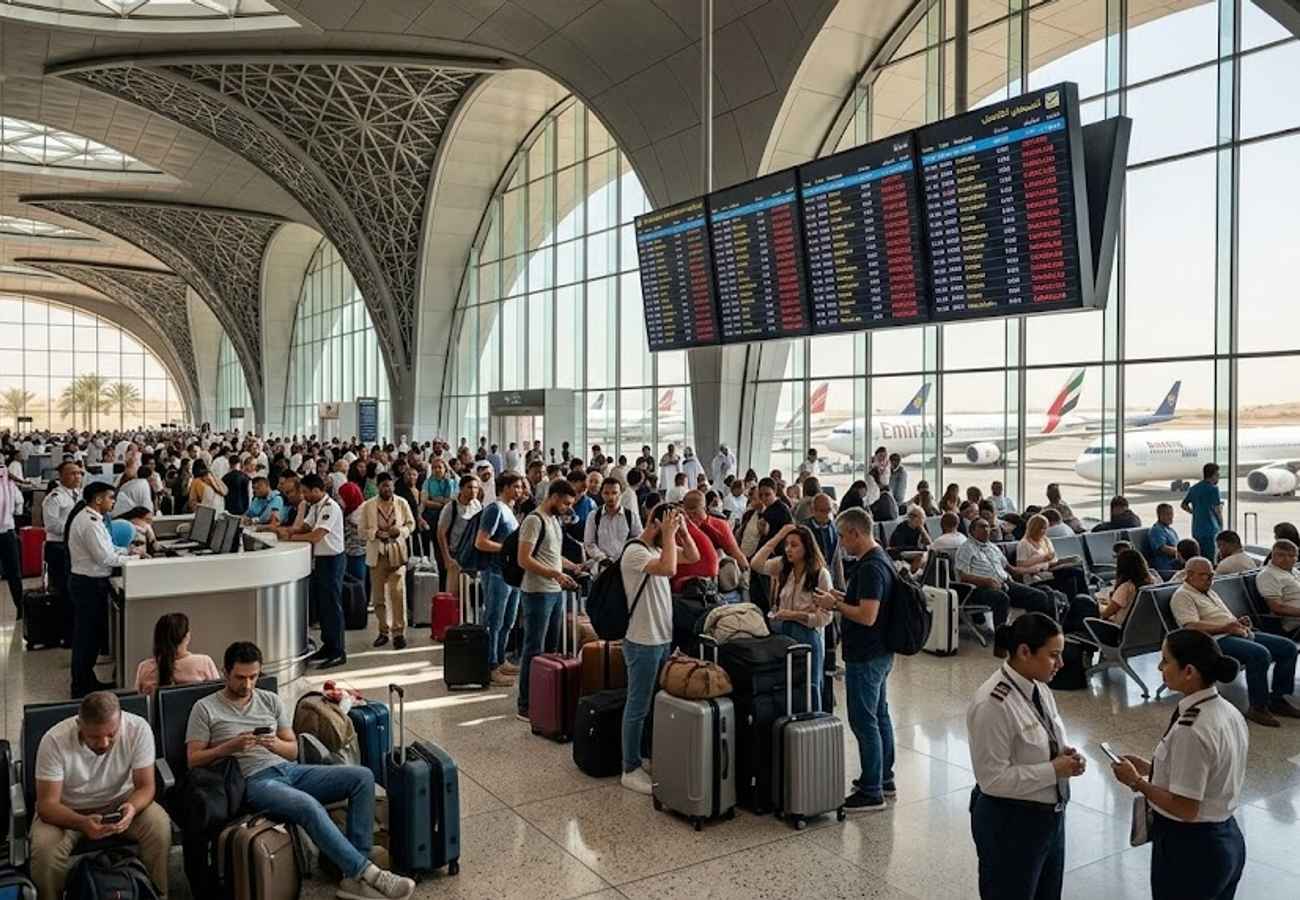
Image generated by AI
Middle East aviation networks have recorded 1,261 delayed flights and 59 cancellations within a single 24-hour window. This spike underscores the extreme fragility of regional transit corridors amid ongoing conflict and restricted airspace.
Regional Aviation Gridlock and Hub Volatility
Operational data indicates a concentrated wave of disruptions across the Gulf and Levant. Major gateways, including Bahrain International Airport, have become primary flashpoints for rolling schedule changes. These disruptions are driven by shifting airspace access and routing requirements, creating a cascade of late departures and missed connections for passengers transiting between Europe, Asia, and Africa.
Recent clusters of instability have specifically impacted airports in Kuwait, Sharjah, Tel Aviv, and the United Arab Emirates. These delays are linked to a combination of drone activity, temporary ground stops, and fluctuating overflight permissions. In July 2026, Kuwait International Airport reported significant waves of delays following tightened security measures after drone incidents, causing knock-on effects for carriers serving Sharjah and Tel Aviv.
While global mega-hubs like Dubai and Doha typically recover from shock events faster than smaller regional facilities, the overall punctuality of the region remains volatile. The necessity of extended routings around closed Flight Information Regions (FIRs) means that even "recovered" schedules are operating with minimal slack.
Impact of 2026 Airspace Closures and Conflict
The current disruption is a direct result of the 2026 conflict involving Iran and neighboring states. Since late February, widespread airspace closures have forced a total reshaping of flight paths. During the most acute phase of the crisis, flight volumes to, from, and within the Middle East dropped by more than 50%.
The following states have implemented severe restrictions or total closures of their airspace to commercial traffic at various intervals:
- Iran
- Iraq
- Kuwait
- Qatar
- Bahrain
- United Arab Emirates
- Israel
- Jordan
These closures force airlines to adopt longer, less direct routes, which increases fuel burn, extends flight times, and complicates crew duty rotations. Even as some corridors partially reopen, carriers avoid specific zones to mitigate risk, leaving schedules vulnerable to sudden changes when regional tensions flare.
Route Specifications and Operational Shifts
The transition from permanent route withdrawals to a "constant churn" of schedule adjustments defines the current operational environment. While most pre-crisis networks remain active, they operate with lower frequencies and a heightened risk of last-minute changes.
| Carrier Category | Impacted Airlines | Operational Status | Primary Risk Factor |
|---|---|---|---|
| Gulf Mega-Carriers | Emirates, Etihad, flydubai, Air Arabia | Reduced networks; active operations | Short-notice security delays |
| International Carriers | Singapore Airlines, Air France | Limited frequencies / Extended suspensions | Risk reassessment in Dubai, Riyadh, Beirut |
| Regional Feeders | Various | High volatility | Secondary delays from hub congestion |
Traveler Logistics Guide: Navigating Middle East Transit
From a ground-level perspective, the best way to navigate this instability is to abandon the assumption that a "confirmed" ticket guarantees a timely arrival. The current environment requires a proactive, digitally-led strategy.
Optimal Connection Windows Avoid "tight" connections (under 3 hours) at hubs like Dubai or Doha. Given the 1,261 delays recorded in a single day, a standard connection window is insufficient. Aim for 5-7 hours to account for rerouting and potential ground stops.
Digital Transit Policies Ensure all airline mobile apps are installed with push notifications enabled. In 2026, email updates are often too slow for tactical airspace changes. Real-time flight tracking tools are essential for identifying if your aircraft is taking a detour before the airline officially announces a delay.
Compensation and Rights Passengers should be aware that disruptions stemming from "extraordinary circumstances"—such as active conflict or government-mandated airspace closures—often exempt airlines from paying financial compensation under regulations like EU261. However, carriers are still obligated to provide "duty of care," including meals, hotel accommodation, and rebooking options.
Infrastructure and Global Connectivity Assessment
The Middle East serves as the primary bridge between Europe, Asia, Africa, and Oceania. Consequently, localized disruptions in the Gulf reverberate globally. When aircraft and crew rotations are displaced in the Middle East, secondary delays occur on flights that never enter the region but depend on aircraft arriving from these hubs.
Mid-2026 traffic assessments show a sharp reduction in east-west capacity. At the height of the crisis, Europe-to-Middle East flights were cut by over 50%. While capacity is returning, the lack of operational "slack" means any single event—like the recent 1,261-delay spike—can paralyze regional connectivity for several days.
Transit reliability in the Gulf has shifted from a gold standard to a high-risk variable.
Related Travel Guides
Disclaimer
This article is for informational and educational purposes only. It does not constitute legal, financial, or professional advice. While we strive to provide accurate and up-to-date information, travel policies, regulations, and conditions change rapidly. Always verify information with official sources before making travel decisions. Nomad Lawyer makes no representations about the accuracy, reliability, completeness, or suitability of the information provided. Readers should consult qualified professionals for advice specific to their circumstances. The views expressed in this article are those of the author and do not necessarily reflect the views of Nomad Lawyer.
Naina Thakur
Contributor & Travel Specialist
Travel enthusiast and legal writer covering visa regulations, responsible tourism, and cultural journeys across global destinations.
Learn more about our team →