
Robotic Surgery and ACL Innovation Take Center Stage at 10th Arthroplasty Arthroscopy Summit 2026
Over 250 surgeons gathered at Apollo Hospitals Secunderabad for AAS 2026 to evaluate robotic knee replacements, synthetic ACL ligaments, and stem-cell therapies
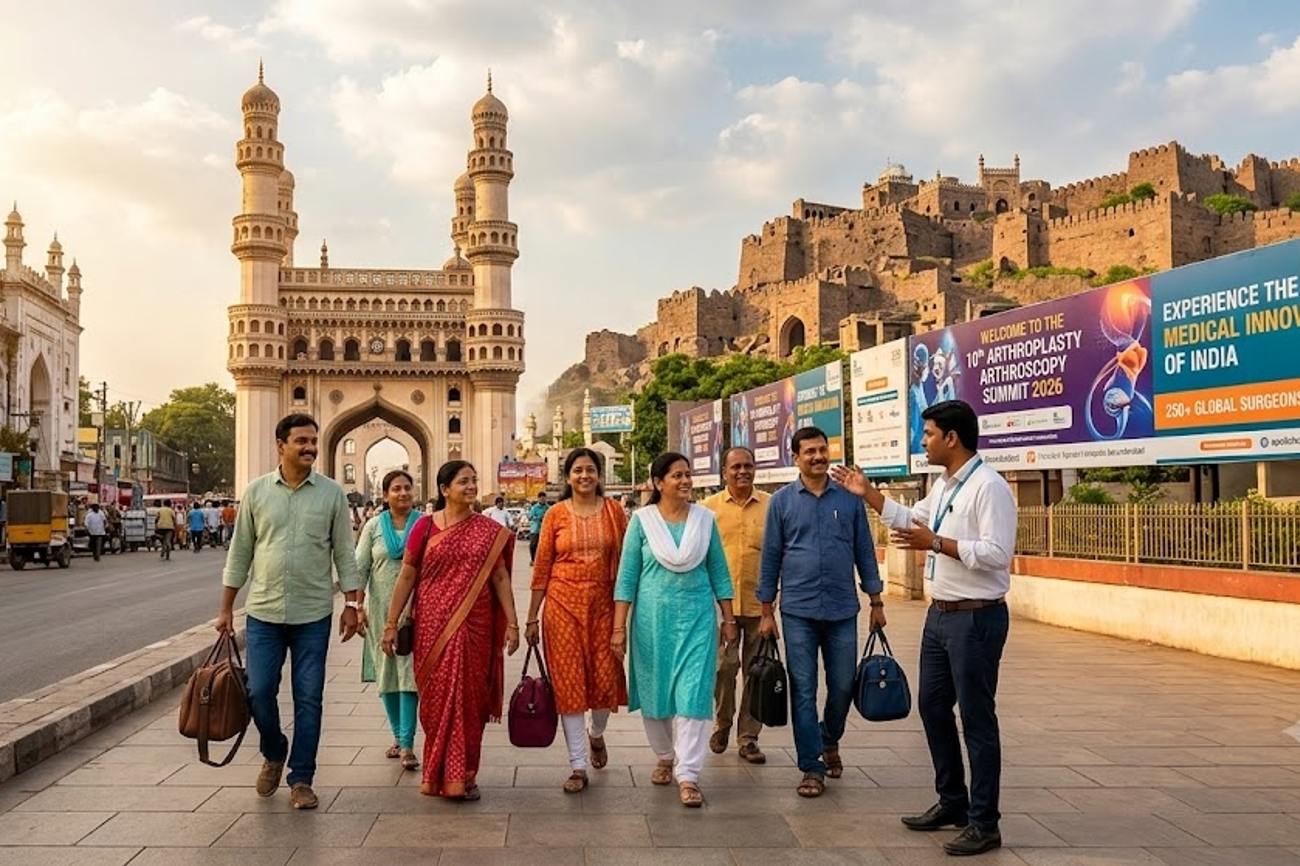
Image generated by AI
[Secunderabad, September 7, 2026] — A gathering of over 250 orthopaedic surgeons from across India recently convened at the Apollo Institute of Medical Sciences and Research in Jubilee Hills for the 10th Arthroplasty Arthroscopy Summit (AAS 2026). The one-day intensive academic program, organized in partnership with the Twin Cities Orthopaedic Society (TCOS) and the Telangana Orthopaedic Surgeons Association (TOSA), focused on the intersection of high-tech surgical intervention and evidence-based patient outcomes.
The summit served as a critical forum for medical professionals to move beyond theoretical advancements and discuss the practical application of new technologies within the specific economic and clinical landscape of the Indian healthcare system.
Robotic Integration in Indian Joint Replacements
A primary point of contention and discussion during the summit was the rapid adoption of robotic-assisted knee replacements. While the technology is evolving quickly, medical leaders cautioned against adopting these tools based on novelty alone. Dr Mithin Aachi, Course Director of AAS and Senior Orthopaedic & Joint Replacement Surgeon at Apollo Hospitals, Secunderabad, noted that while robotic systems are an excellent treatment option, there is an urgent need for rigorous, long-term evaluations of patient outcomes.
The discourse specifically highlighted the "cost-effectiveness" gap. For the Indian market, the high cost of robotic infrastructure must be weighed against actual clinical improvements. Experts argued that precision and improved surgical planning are evident, but whether these translate into superior long-term recovery compared to traditional methods remains a subject of ongoing research.
Debunking Knee Injection Myths for Advanced Arthritis
The summit provided a clear clinical consensus regarding the use of intra-articular injections for patients suffering from severe arthritis. For those who have already reached the stage where they are candidates for full knee replacement, the consensus among the attending specialists was that injections are unlikely to provide meaningful or lasting relief.
Rather than delaying inevitable surgery with temporary fixes, the summit advocated for a more direct path toward replacement in advanced cases to prevent further joint degradation and improve the patient's quality of life. However, the role of these injections in younger patients—specifically as a means to delay the onset of replacement surgery—remains a viable area of study and application.
Innovations in ACL Repair and Synthetic Ligaments
Beyond joint replacement, the AAS 2026 focused heavily on sports medicine and keyhole procedures for ACL (anterior cruciate ligament) tears. A significant portion of the academic discourse centered on the shift from conventional ligament repair to newer synthetic ligament technology.
The goal of these discussions was to determine how these synthetic alternatives can be integrated into routine care while remaining accessible to the average Indian patient. The summit explored the balance between the high performance of new materials and the necessity of keeping surgical costs low to ensure widespread availability.
Evidence-Based Evaluation Across Six States
The reach of the summit extended beyond Telangana, attracting specialists from six different Indian states. Dr N. Somashekar Reddy, Organizing Chairman of AAS and Senior Orthopaedic & Joint Replacement Surgeon at Apollo Hospitals, Hyderabad, emphasized that the primary goal was the dissemination of evidence-based developments.
The sessions were designed to act as a filter, helping surgeons distinguish between "genuinely beneficial advances" and those that lack sufficient clinical evidence. This critical approach aims to protect patients from undergoing "trendy" procedures that do not offer a statistically significant improvement in safety or efficacy over established methods.
Interactive Pedagogy in Surgical Education
Unlike traditional medical conferences that rely on one-way presentations, AAS 2026 utilized a discussion-driven format. Dr Satish Mutha, President Elect of the Mumbai Orthopaedic Society and a representative from Hinduja Hospitals Mumbai, highlighted that this interactive model encouraged healthy scientific debate.
By focusing on clinical controversies and the limitations of new modalities, the summit moved away from promotional presentations and toward a model of peer-to-peer critical evaluation. This format is now being proposed as a blueprint for medical education programs across India to ensure surgeons are making informed, evidence-based decisions.
Expanding the Scope of Regenerative Orthopaedics
The summit's agenda covered a vast array of subspecialties, ensuring a comprehensive overview of modern orthopaedic practice. Key areas of focus included:
- Regenerative Medicine: Detailed analysis of cell-based therapies, specifically autologous stem-cell approaches for treating knee osteoarthritis.
- Shoulder Arthroplasty: Discussions on new implant designs and the use of robotics to improve functional outcomes and precision in shoulder surgery.
- Cartilage Management: Single-stage cartilage repair techniques designed to stop the progression of arthritis before it requires total joint replacement.
- Specialized Care: Comprehensive reviews of periprosthetic joint infections (PJI), orthopaedic oncology, and complex trauma care.
Impact Analysis: The Future of Orthopaedic Care in India
The outcomes of the 10th Arthroplasty Arthroscopy Summit suggest a shift in the Indian orthopaedic landscape. There is a clear movement toward "joint preservation" rather than just "joint replacement." By emphasizing early cartilage repair and the cautious use of robotic tools, the medical community is attempting to extend the natural life of the joint.
Furthermore, the emphasis on cost-effectiveness indicates that the next wave of orthopaedic innovation in India will not be defined by the most expensive technology, but by the technology that provides the highest value per rupee spent.
Why This Matters (Information Gain & Experience)
For the patient, the conclusions drawn at AAS 2026 are highly significant. If you are seeking treatment for knee pain, the summit's findings suggest that you should be wary of "miracle" injections if your arthritis is already advanced; these may be an unnecessary expense that delays a necessary surgery.
From a logistical standpoint, the push for synthetic ACL ligaments and cost-effective robotics means that high-end sports medicine—once reserved for professional athletes or the wealthy—is moving toward becoming a standard of care for the general public. The transition toward "evidence-based" surgery means patients can expect more transparency regarding whether a new robotic procedure actually offers a better result than a traditional one, or if it simply offers a more high-tech process.
Related Travel Guides
Disclaimer
This article is for informational and educational purposes only. It does not constitute legal, financial, or professional advice. While we strive to provide accurate and up-to-date information, travel policies, regulations, and conditions change rapidly. Always verify information with official sources before making travel decisions. Nomad Lawyer makes no representations about the accuracy, reliability, completeness, or suitability of the information provided. Readers should consult qualified professionals for advice specific to their circumstances. The views expressed in this article are those of the author and do not necessarily reflect the views of Nomad Lawyer.