
Arabian Travel Market 2026: AI, Aviation, and Global Tourism Policy in Dubai
Arabian Travel Market 2026 gathers 210+ speakers and global ministers at Dubai World Trade Centre to address AI integration, tourism resilience, and market shif

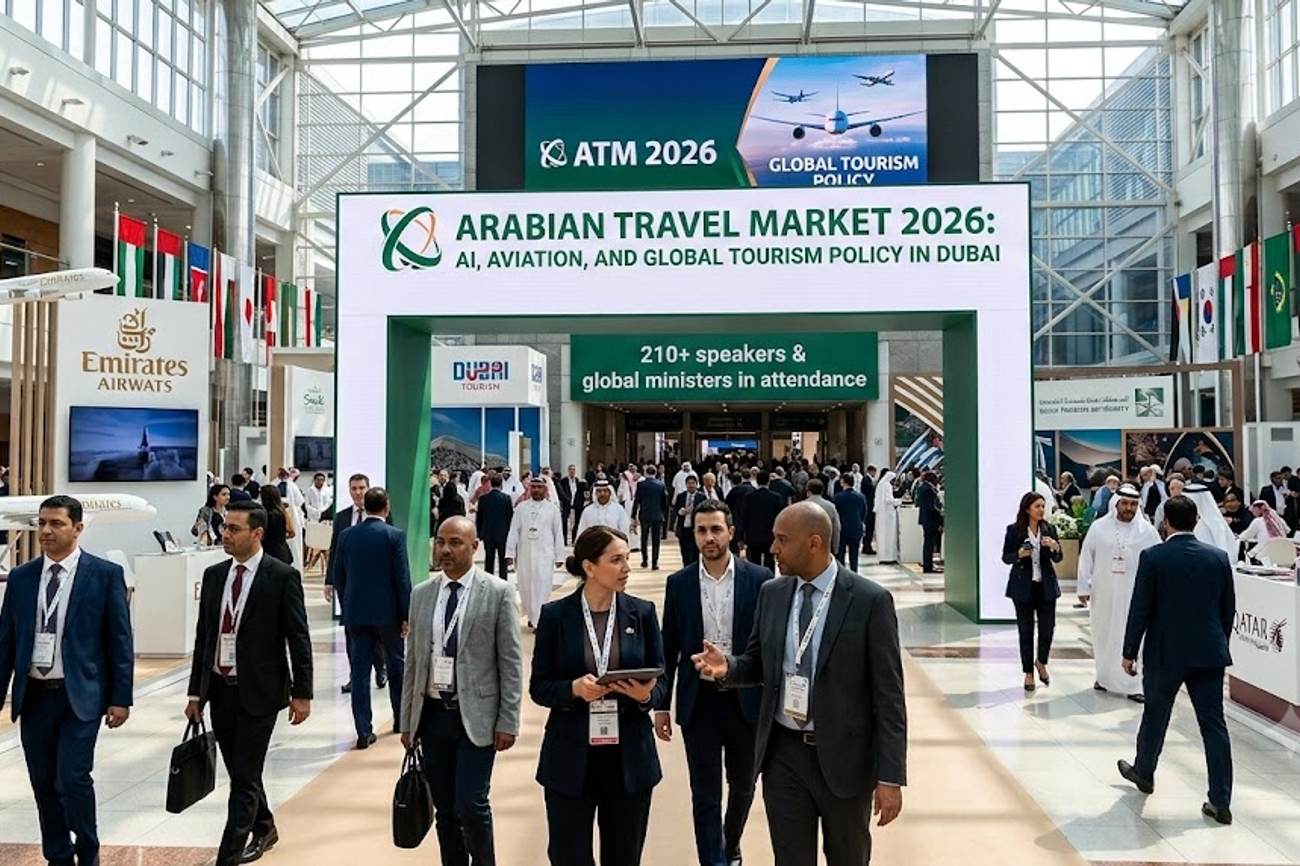
Image generated by AI
The Arabian Travel Market (ATM) 2026 is positioning Dubai as the primary hub for global tourism strategy. Scheduled for September 14–17, 2026, at the Dubai World Trade Centre (DWTC), the event focuses on moving beyond traditional tourism to address systemic challenges in aviation, investment, and artificial intelligence.
The 33rd edition of the event features an expansive program designed to provide practical solutions for a sector currently grappling with geopolitical instability and shifting consumer behaviors.
High-Level Policy and Resilience The Global Stage opens on September 14 with addresses from H.E. Shaikha Al Nuwais, UN Tourism Secretary-General, and H.E. Abdulla bin Touq Al Marri, UAE Minister of Economy and Tourism. A central pillar of the opening is the "Ministerial Debate: Building A Resilient Industry Through Collaboration."
This session will include H.E. Fatima bint Jafar Al Sairafi, Bahrain Minister of Tourism, and Apostolos Tzitzikostas, European Commissioner for Sustainable Transport and Tourism. The discourse will prioritize coordinated responses to global disruptions, specifically focusing on policy alignment and crisis communication between governments and airlines.
Data-Driven Market Intelligence Market research will anchor the 2026 debates. Euromonitor International, led by Global Insight Manager Stephen Dutton, will present "The State of Travel: Inflation, Polycrisis & the New Travel Reality," analyzing how inflation and geopolitical uncertainty dictate traveler decision-making.
Simultaneously, Tourism Economics (an Oxford Economics company) will release its annual ATM Travel Trends Report. Managing Director for EMEA, Dave Goodger, will lead a session titled "Middle East Momentum & Market Shifts" to analyze international demand and aviation connectivity within the GCC.
The Commercialization of AI Artificial Intelligence is transitioning from a conceptual topic to a commercial reality via the debut of "ATM Travel Tech," a co-located exhibition. Dr. Marwan Alzarouni, CEO of AI at the Dubai Department of Economy and Tourism, will open the Future Stage with "AI’s True Role in Rewriting the Travel Landscape."
The focus has shifted from customer-facing chatbots to the integration of AI within pricing, distribution, and operational infrastructure.
Key Facts Breakdown:
- Dates: 14–17 September 2026.
- Venue: Dubai World Trade Centre (DWTC).
- Scale: 210+ speakers across 80+ sessions.
- Key Stages: Global, Future, and Experience stages.
- Tech Integration: Launch of the Tech & Innovation Hub – Demo Zone featuring 15+ interactive demonstrations.
- Corporate Participants: Executives from Sabre, Trip.com, Tripadvisor, Wego, MakeMyTrip, RateGain, and Visa.
Data Table: Key Session Leadership
| Speaker | Organization | Session Focus |
|---|---|---|
| H.E. Shaikha Al Nuwais | UN Tourism | Global Opening Address |
| H.E. Abdulla bin Touq Al Marri | UAE Ministry of Economy & Tourism | Tourism Resilience & Collaboration |
| Stephen Dutton | Euromonitor International | Inflation & Polycrisis Impact |
| Dave Goodger | Tourism Economics | Middle East Market Shifts |
| Dr. Marwan Alzarouni | Dubai Dept. of Economy & Tourism | AI Infrastructure & Policy |
| Schubert Lou | Trip.com | AI & OTA Competition |
Why This Matters
From a logistical and operational perspective, the shift toward "Agentic AI" and the focus on "Polycrisis" indicates that the industry is moving away from optimistic growth projections and toward risk mitigation. For travel providers, the real impact is the move toward "connected platforms"—where AI handles the entire supply chain from pricing to distribution, rather than just acting as a booking interface.
Our analysis suggests that the heavy involvement of GCC ministers alongside European Commissioners signals a strategic effort to diversify source markets. For operators, this means a necessary pivot in marketing and connectivity strategies to reduce reliance on single-region travel flows.
Industry Outlook
Expect the post-ATM 2026 landscape to be defined by a consolidation of Online Travel Agencies (OTAs) as AI-driven innovation cycles accelerate. The focus will likely shift from "digital transformation" to "digital maturity," where the competitive edge is held by those who integrate AI into their back-end operations and policy frameworks rather than just their front-end user experience.
Internal Link Suggestions:
- Analysis of GCC Aviation Connectivity Trends
- The Impact of Agentic AI on Global OTA Markets
- Sustainable Tourism Policy in the Middle East
Related Travel Guides
Disclaimer
This article is for informational and educational purposes only. It does not constitute legal, financial, or professional advice. While we strive to provide accurate and up-to-date information, travel policies, regulations, and conditions change rapidly. Always verify information with official sources before making travel decisions. Nomad Lawyer makes no representations about the accuracy, reliability, completeness, or suitability of the information provided. Readers should consult qualified professionals for advice specific to their circumstances. The views expressed in this article are those of the author and do not necessarily reflect the views of Nomad Lawyer.
Naina Thakur
Contributor & Travel Specialist
Travel enthusiast and legal writer covering visa regulations, responsible tourism, and cultural journeys across global destinations.
Learn more about our team →