
Arizona Travel Alert: Tucson Weather Challenges Desert Tourism With Heat and Storm Risks
Tucson's late-summer weather brings upper-90s temperatures and sudden monsoon downpours, reshaping desert trail timing, mountain escapes, and culinary travel.

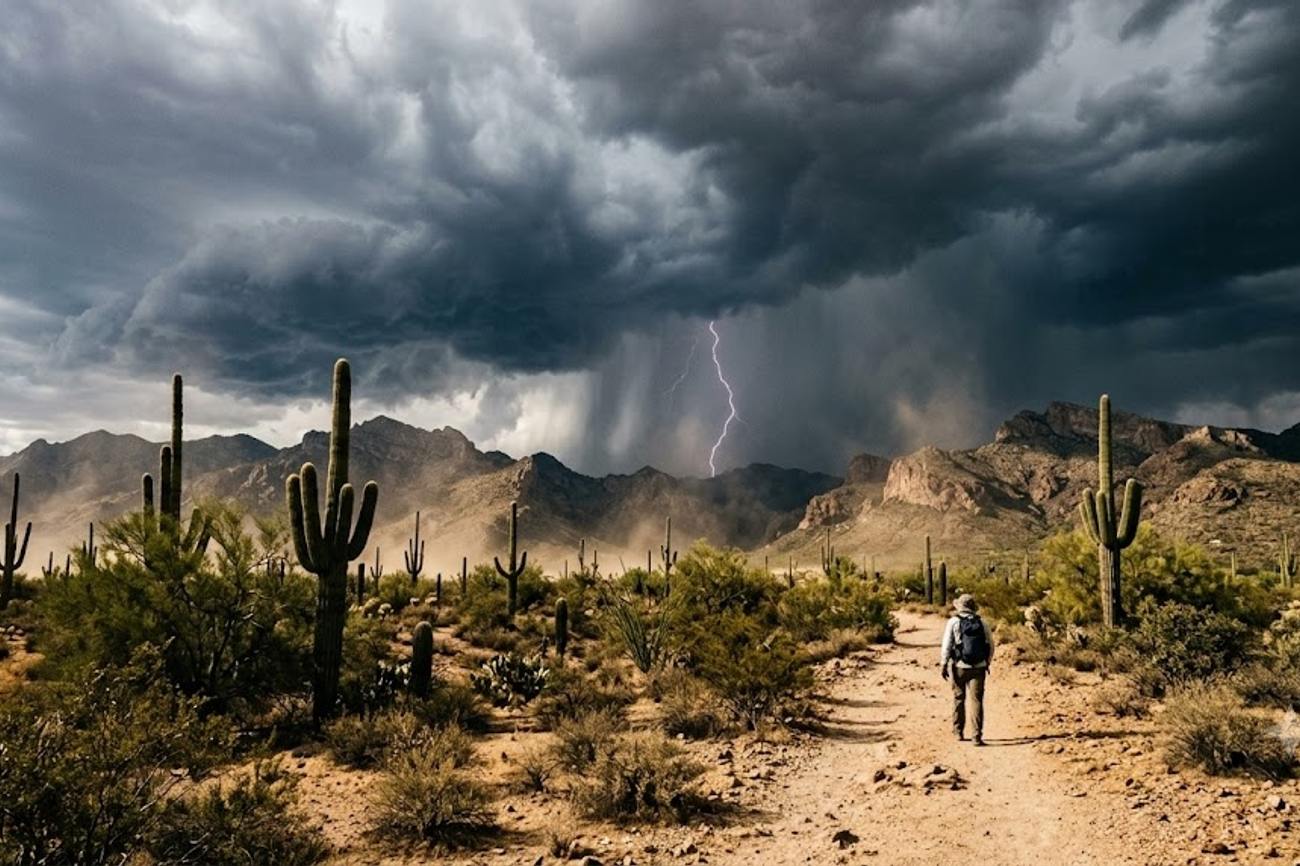
Image generated by AI
While most outsiders imagine the Sonoran Desert as an arid wasteland baking under uniform sun, late summer in southern Arizona triggers a meteorological drama where upper-90s Fahrenheit heat collides with violent monsoon thunderstorms in a matter of minutes. In Tucson, September conditions push temperatures into the upper 90s and beyond, while moisture-laden atmospheric winds sweep up from the Gulf of California to generate blinding downpours, lightning displays, and perilous dry-wash flash floods. Rather than dampening visitor enthusiasm, this climate volatility is forging a new generation of desert travel—one anchored by dawn trail departures, mid-day culinary exploration in America's first UNESCO City of Gastronomy, and high-altitude mountain retreats where temperatures plunge by thirty degrees.
The Dual Realities of Sonoran Heat and Monsoon Rhythms
Exploring southern Arizona during the transition from late summer into early autumn requires shedding conventional sightseeing schedules. The desert is not an environment to be conquered during the heat of the day; it demands that travelers synchronize their movements with natural temperature curves. Between 11:00 AM and 4:30 PM, solar radiation turns granite boulders into thermal radiators, elevating surface temperatures far past ambient air readings.
Simultaneously, the North American Monsoon reaches its transition phase. High-altitude moisture builds over the surrounding mountain ranges by early afternoon, transforming clear morning skies into towering thunderheads. These storms bring:
- Intense Localized Deluges: Torrential downpours that drop inches of rain in under an hour, turning parched desert arroyos into raging torrents of mud and debris.
- Atmospheric Cooling and Dramatic Skies: Rapid drops in ambient temperature following storm fronts, illuminating the desert with vivid purple sunsets and triggering the scent of rain-soaked creosote bushes.
- Flash Flooding Hazards: Water rushing from distant mountain canyons into dry valley washes miles away, cutting across low-lying paved roads without warning.
- Ephemeral Floral Blooms: Bursts of green across the desert floor as ocotillo stalks sprout fresh leaves, desert tortoises emerge from burrows, and night-blooming cereus cacti prepare their fleeting petals.
To navigate these conditions safely, regional authorities and the Arizona Office of Tourism urge visitors to monitor hyper-local radar forecasts, carry ample hydration, and adopt flexible day plans that respect shifting conditions.
What Makes the Tucson Basin Different
Surrounded by five distinct mountain ranges—the Santa Catalinas, Rincons, Santa Ritas, Tucsons, and Tortolitas—Tucson sits within an ecological crossroads where subtropical desert meets temperate sky islands. Unlike Phoenix's sprawling concrete expanse, Tucson preserves a direct physical connection to the Sonoran wilderness, where suburban neighborhoods blend into dense forests of centuries-old giant saguaros.
The heart of this desert realm is protected within Saguaro National Park, split across two distinct districts flanking the city. The Tucson Mountain District to the west features dense stands of saguaros standing like silent sentinels across volcanic slopes, while the Rincon Mountain District to the east climbs into oak woodlands and pine-clad peaks. Nearby, the open-air Arizona-Sonora Desert Museum functions as an integrated zoo, botanical garden, and natural history institute, allowing visitors to walk alongside coatis, mountain lions, and hummingbirds in their natural habitats.
When the valley floor heats up, the Santa Catalina Mountains provide an accessible ecological escape. Rising to 9,157 feet, Mount Lemmon is accessible via the scenic 27-mile Catalina Highway. Driving up this winding mountain road is biologically equivalent to traveling from Mexico to Canada: within an hour, travelers transition from saguaro-studded desert through semi-desert grasslands, oak woodlands, and pine forests, arriving in the subalpine village of Summerhaven where temperatures are typically 20 to 30 degrees Fahrenheit cooler than downtown Tucson.
Visitor Insider Tips
Living and traveling in the Sonoran Desert requires adopting the rhythm of local desert dwellers, who structure their days around dawn, dusk, and the cool shade of courtyard arcades.
- The Dawn Patrol Hiking Strategy: Complete all trail excursions before 9:30 AM. In Sabino Canyon or Saguaro National Park West, hit trailheads at 5:30 AM as civil twilight breaks. At dawn, wildlife is active: javelinas forage in washes, desert mule deer graze on prickly pear pads, and morning light casts long golden shadows across the saguaros. Terminate all hiking as temperatures approach the upper 90s.
- Hydration Math and Gear Essentials: Dehydration in an arid climate happens silently through perspiration that evaporates instantly. Carry a minimum of four liters of water per person for morning walks, supplemented with electrolyte powders. Wear a wide-brimmed sun hat, lightweight long-sleeved linen or UPF-rated clothing, and sturdy closed-toe trail shoes to protect against cholla cactus spines.
- Monsoon Driving and Flash Flood Etiquette: If you encounter standing or flowing water across a desert dip, never drive through it. Obey Arizona's "Stupid Motorist Law," which charges emergency rescue costs to drivers who bypass barricades into flooded washes. If caught on the highway during a sudden monsoon dust storm (haboob), pull completely off the roadway, shift into park, turn off your lights, and keep your foot off the brake pedal so following vehicles do not rear-end you in zero visibility.
- Culinary Mid-day Escapes: Use the scorching midday hours to savor the flavors of America's first UNESCO Creative Cities City of Gastronomy. Escape into air-conditioned heritage dining rooms for Sonoran-style flour tortillas, wood-fired carne seca dried in desert air, mesquite flour pastries, and authentic Sonoran hot dogs wrapped in bacon and topped with pinto beans, grilled onions, and fresh jalapeño salsa.
- Base Neighborhood Recommendations: For walking access to historic adobe homes, craft cocktail bars, and art galleries, stay in the downtown Barrio Viejo or the historic Presidio District. For tranquility among cactus gardens, book a historic guest ranch in the Tucson foothills or near Saguaro West.
Cultural and Environmental Context
Tucson’s relationship with its arid home reflects four thousand years of continuous agricultural history. Long before Spanish missionaries arrived in the 17th century to build Mission San Xavier del Bac, the indigenous Tohono O'odham and their Hohokam ancestors cultivated drought-tolerant crops along the Santa Cruz River, gathering saguaro fruit (bahidaj) to brew ceremonial rain wine and grinding mesquite pods into nourishing flour.
This deep indigenous heritage informs modern conservation efforts across southern Arizona. As climate change increases the frequency of extreme heat events and alters monsoon intensity, local communities are pioneering urban heat island mitigation through native tree canopies, rainwater harvesting systems, and solar microgrids.
Tourism plays a role in this ecological equilibrium. Visiting travelers directly support institutions like the Tucson Botanical Gardens, native seed-saving collectives at Native Seeds/SEARCH, and non-profit trail organizations that maintain multi-use pathways across Coronado National Forest. By shifting travel habits toward climate awareness—respecting water scarcity, avoiding fragile cryptobiotic soil crusts, and patronizing local indigenous and Mexican-American food producers—visitors help sustain the cultural resilience of one of North America's most singular desert societies.
FAQ: Visiting Tucson 2026
What are the best hours for hiking around Tucson in September? Hike between 5:30 AM and 9:30 AM to avoid dangerous upper-90s heat and late-afternoon monsoon thunderstorms that bring lightning and flash flooding.
Why is Mount Lemmon popular during the summer and early autumn? Rising to over 9,000 feet in the Santa Catalina Mountains, Mount Lemmon offers alpine pine forests and temperatures 20 to 30 degrees cooler than the valley floor.
What does Tucson's UNESCO City of Gastronomy status mean for travelers? It celebrates 4,000 years of agricultural heritage, blending Native American, Sonoran Mexican, and regional ingredients into a vibrant dining culture centered on heirloom grains and desert flavors.
How should visitors prepare for unexpected desert storms? Check real-time weather radar, carry emergency vehicle supplies, stay out of dry washes during rain, and pull completely off roads if caught in low-visibility dust storms.
In the quiet majesty of the Sonoran Desert, true discovery belongs to those who wake before the sun and honor the ancient wisdom of this sun-carved land.
Related Travel Guides
Disclaimer
This article is for informational and educational purposes only. It does not constitute legal, financial, or professional advice. While we strive to provide accurate and up-to-date information, travel policies, regulations, and conditions change rapidly. Always verify information with official sources before making travel decisions. Nomad Lawyer makes no representations about the accuracy, reliability, completeness, or suitability of the information provided. Readers should consult qualified professionals for advice specific to their circumstances. The views expressed in this article are those of the author and do not necessarily reflect the views of Nomad Lawyer.
Preeti Gunjan
Contributor & Community Manager
A passionate traveller and community builder. Preeti helps grow the Nomad Lawyer community, fostering engagement and bringing the reader experience to life.
Learn more about our team →