
Argentina Inbound Tourism Surpasses 1.3 Million in August 2026 Led by Brazil and Uruguay: Complete Travel & Regional Guide

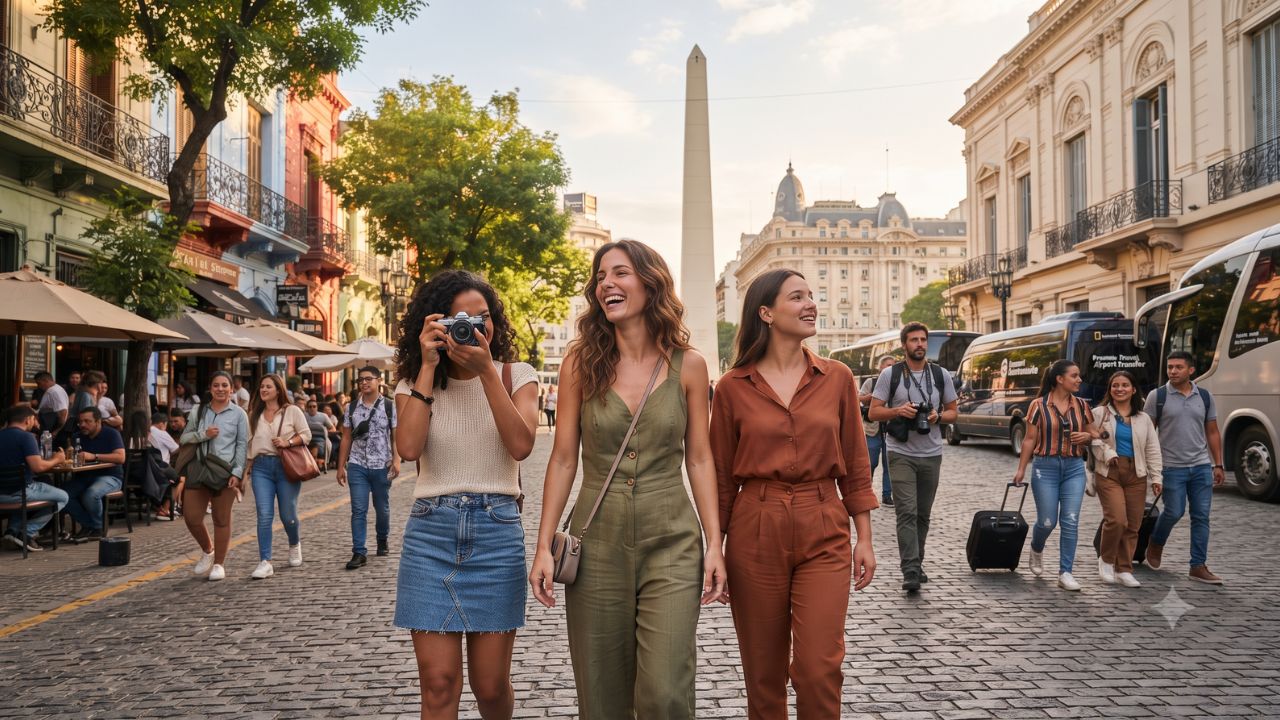
While international travel across South America typically slows during the late southern winter, Argentina welcomed more than 1.3 million foreign visitors in August 2026 alone, driven by massive cross-border inflows from Brazil and Uruguay. Official tourism monitoring from Visit Argentina (INPROTUR) reveals that regional travelers now constitute the cornerstone of the country's inbound hospitality economy, filling boutique hotels across Buenos Aires, mountain chalets in Bariloche, and vineyard estates in Mendoza.
The monthly tally comprised approximately 652,000 overnight foreign tourists alongside nearly 733,000 excursionists crossing river and land borders for day visits without overnight stays. Brazil cemented its standing as Argentina's primary international source market, generating 31.8% of all inbound arrivals, followed closely by neighboring Uruguay at 14.5% and visitors from across the wider Americas representing 13.1%. Aviation played an increasingly dominant role in this regional surge, with non-resident air arrivals reaching roughly 267,000 travelers—a 16.7% increase compared to August 2025.
The Regional Dynamics: How South American Demand is Reshaping Argentine Inbound Travel
The steady influx of regional neighbors highlights a profound realignment in South American tourism corridors. With flight frequencies multiplying between São Paulo, Rio de Janeiro, Montevideo, and Argentine hubs through carriers like Aerolíneas Argentinas, Argentina has established itself as the continent's premier culinary, alpine, and cultural playground.
On a seasonally adjusted month-on-month basis, non-resident tourist entries climbed 1.6% compared to July 2026, with the underlying trend-cycle indicator gaining 0.2%. This consistent upward trajectory represents a comprehensive rebound from the historic disruptions of 2020, when foreign visits to Argentina plummeted by 66.4%.
At the same time, shifting domestic economic conditions led to a notable retreat in Argentine outbound departures. The total number of Argentine residents traveling abroad reached approximately 1.1 million in August 2026, reflecting a 19% year-on-year drop. Among outbound travelers, 483,000 were overnight tourists and 418,000 were day excursionists. Brazil remained the top overseas destination for Argentines (capturing 20.3% of outbound departures), followed by Europe at 15.2% and Paraguay at 14.5%. Air departures by Argentine residents dropped 7.6% year-on-year to roughly 398,000.
Despite the surge in foreign arrivals, Argentina recorded a net negative monthly international visitor balance of roughly 366,000 travelers (reflecting a deficit of 219,000 tourists and 147,000 excursionists). However, the rapid expansion of foreign inbound spending continues to provide vital liquidity to regional hospitality sectors.
What Makes Argentina's Regional Circuits Geographically and Culturally Distinct
Argentina's vast geography stretches across 3,700 kilometers from subtropical jungle borders in the north to sub-Antarctic glaciers in the south, offering distinct regional identities:
- Buenos Aires Urban Sophistication: The Argentine capital remains South America's cultural epicenter. Beyond the historic cobblestones of San Telmo and the grand European facades of Recoleta, travelers immerse themselves in neighborhood milongas (tango halls), late-night literary cafes along Avenida Corrientes, and contemporary art galleries in Villa Crespo and Chacarita.
- Mendoza and the Cuyo Wine Belt: Nestled against the snow-dusted Andes, Mendoza produces world-renowned high-altitude Malbecs across the Uco Valley, Luján de Cuyo, and Maipú. Travelers pair private vineyard tastings with olive oil mills and horseback treks beneath Mount Aconcagua.
- Northern Andean Heritage in Salta and Jujuy: The northwest presents dramatic red-rock gorges, high-altitude salt flats at Salinas Grandes, and indigenous Quechua and Kolla cultural traditions celebrated through hearty Andean stews like locro and humitas en chala.
- Patagonian Wilderness and Southern Lakes: Centered around Bariloche, San Martín de los Andes, and El Calafate, southern Argentina offers alpine skiing, glacial trekking, and pristine lake navigation within protected reserves overseen by the National Parks Administration of Argentina. Further south, the Perito Moreno Glacier inside Los Glaciares National Park stands protected by the UNESCO World Heritage Centre.
- Iguazú Rainforest Wonder: In the northeastern province of Misiones, the thunderous cascades of Iguazú Falls plunge through lush subtropical Atlantic forest, home to toucans, coatis, and jaguar conservation corridors.
Visitor Insider Tips for Exploring Argentina
Navigating Argentina efficiently requires understanding local cultural schedules, payment habits, and regional transport logistics:
- Adapt to the Argentine Evening Rhythm: Dinner rarely starts before 21:30 or 22:00 in Buenos Aires and provincial cities. Traditional parrillas (steakhouses) and bodegones hit their stride around 23:00. Arriving at 19:30 often means dining in empty dining rooms before the kitchen fully opens.
- Payment and Currency Savvy: While international credit and debit cards offering favorable official tourist exchange rates (MEP rate) are widely accepted in major cities, carry physical Argentine pesos in small denominations when traveling to rural areas in Jujuy, Catamarca, or remote Patagonian valleys.
- Master the SUBE Public Transit Card: In Buenos Aires, Bariloche, and Mendoza, public buses and the Buenos Aires Subte (subway) operate exclusively via the reloadable SUBE contactless transit card. Purchase one at airport kiosks or neighborhood kioscos upon arrival.
- Book Multi-Leg Domestic Air Routes Early: Domestic distances are enormous—a flight from Iguazú in the far north to Ushuaia in Tierra del Fuego spans more than five hours of total flying time. Secure domestic flights several weeks ahead to secure optimal routing via Aeroparque Jorge Newbery (AEP), which is situated directly inside Buenos Aires city limits.
- Embrace the Afternoon Merienda: Between 17:00 and 19:00, join locals in neighborhood bakeries (panaderías) for afternoon tea, submarino hot chocolate, and fresh medialunas (sweet glazed croissants) or alfajores filled with dulce de leche.
Cultural and Environmental Context: Sustainable Tourism and Heritage Conservation
As leisure travel continues to lead inbound arrivals, local authorities and conservation bodies are focusing on spreading visitor footprints away from oversaturated urban centers and into rural communities.
In Patagonia, park authorities have instituted strict carry-in, carry-out waste protocols, regulated trekking quotas on high-traffic trails around Mount Fitz Roy in El Chaltén, and expanded renewable solar grids for off-grid eco-lodges. In the Iberá Wetlands of Corrientes province, rewilding initiatives have restored native giant anteaters, pampas deer, and jaguars, transforming former cattle ranches into community-led conservation sanctuaries where former hunters work as certified nature guides.
Supporting local craft cooperatives in the Calchaquí Valleys, dining at family-operated pulperías in the Pampas, and respecting protected national park wildlife ensures that Argentina's rising tourism economy supports long-term ecological and cultural resilience.
FAQ: Visiting Argentina 2026
When is the best time of year to visit Argentina?
October to December (spring) and March to May (autumn) offer pleasant temperatures nationwide, ideal for exploring Buenos Aires, Mendoza wine harvests, and Patagonian hiking trails.
Do international tourists need a visa to enter Argentina?
Citizens of the United States, Canada, the European Union, the United Kingdom, Brazil, and Australia can enter Argentina visa-free for tourism stays up to 90 days.
What is the easiest way to travel between Argentine cities?
Domestic flights from Buenos Aires Aeroparque (AEP) provide the fastest connections, while comfortable long-distance sleeper buses (cama ejecutivo) connect regional provincial capitals.
Is Argentina safe for solo and independent travelers?
Yes. Argentina is among the safest destinations in South America. Exercise standard urban precautions in crowded transit stations, avoid flashing expensive electronics, and use radio taxis or rideshare apps at night.
From the thundering roar of Iguazú to the silent majesty of Patagonian ice fields, Argentina rewards those who journey beyond the ordinary.
Related Travel Guides
Disclaimer
This article is for informational and educational purposes only. It does not constitute legal, financial, or professional advice. While we strive to provide accurate and up-to-date information, travel policies, regulations, and conditions change rapidly. Always verify information with official sources before making travel decisions. Nomad Lawyer makes no representations about the accuracy, reliability, completeness, or suitability of the information provided. Readers should consult qualified professionals for advice specific to their circumstances. The views expressed in this article are those of the author and do not necessarily reflect the views of Nomad Lawyer.
Raushan Kumar
Founder & Lead Developer
Full-stack developer with 11+ years of experience and a passionate traveller. Raushan built Nomad Lawyer from the ground up with a vision to create the best travel and law experience on the web.
Learn more about our team →