
Argentina Eco Hotel Taxes and 21% VAT Exemption: Complete Financial and Conservation Guide for 2026

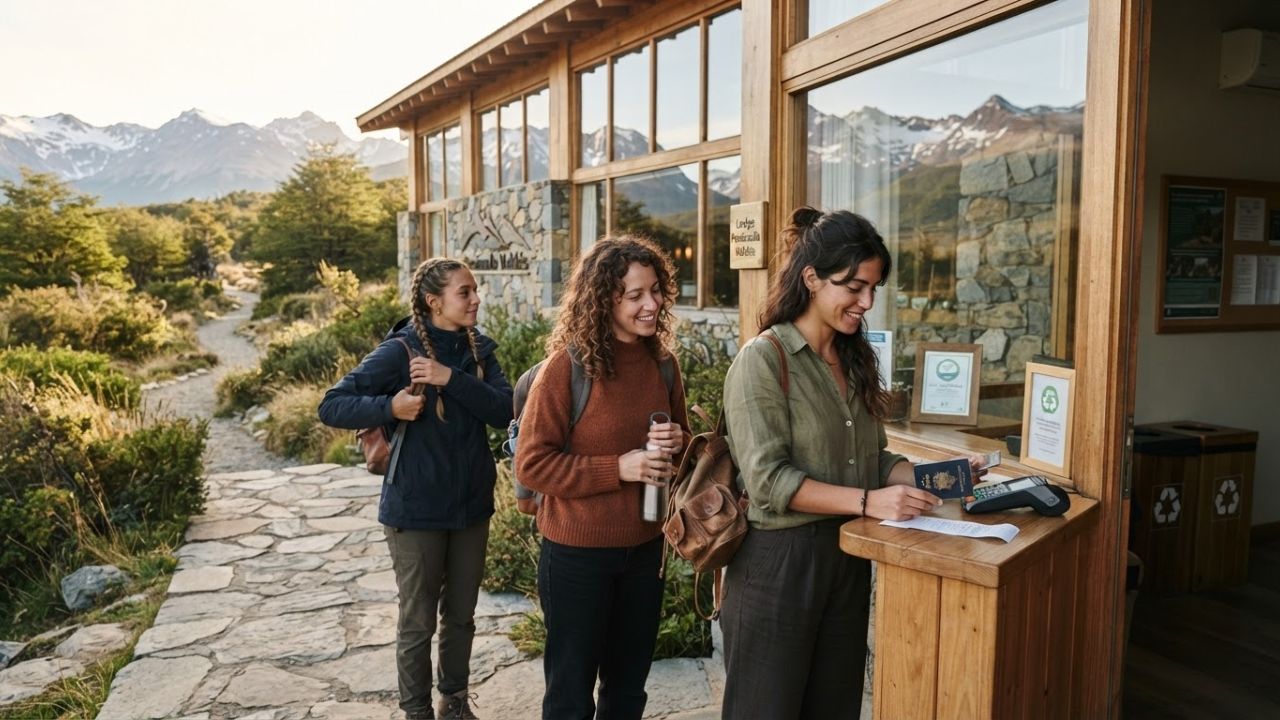
Under Decree 1043/2016, foreign visitors to Argentina enjoy an immediate 21% VAT exemption on accommodation when paying with foreign cards, unlocking substantial savings alongside favorable Dólar MEP exchange rates. However, navigating municipal eco-taxes in Bariloche and Puerto Iguazú alongside tiered national park fees requires smart planning to ensure travel spending directly backs regional conservation.
Each year, Argentina welcomes roughly 5.68 million foreign tourists, generating between USD 5.0 billion and USD 5.4 billion in direct foreign exchange receipts. Origin markets are heavily anchored by regional neighbors—Brazil leads at 23%, with Chile and Uruguay contributing 15% each—with travel contributing roughly 1.7% to 2.1% of national Gross Domestic Product (GDP). To maintain international competitiveness amid domestic inflation, federal authorities and provincial municipalities have built a distinctive fiscal structure balancing tourist cost savings with conservation reinvestment.
Unlocking the 21% National VAT Exemption and Dólar MEP Rates
The cornerstone of Argentine travel savings is the national 21% Value Added Tax (VAT / IVA) accommodation exemption established under federal Decree 1043/2016. When settled properly, this discount strips the standard 21% tax directly off nightly room charges and included breakfasts.
To qualify for the 21% waiver at check-out, foreign non-resident visitors must meet three strict operational criteria:
- Foreign Electronic Payment: Pay via an internationally issued foreign credit or debit card, or complete an international bank wire transfer. Card payment networks automatically process foreign transactions under the Electronic Payment Market (Dólar MEP) rate, delivering an immediate 15% to 30% increase in effective purchasing power compared to official banking rates.
- Passport and Migration Slip Verification: Present a valid foreign passport alongside official electronic entry documentation issued by the Dirección Nacional de Migraciones upon entering the country.
- Certified Commercial Properties: Book certified commercial lodging registered with national tax agency ARCA (formerly AFIP). Certified hotels, registered inns, and accredited eco-lodges account for over 57% of the sustainable lodging sector and possess the fiscal software required to generate tax-exempt invoices.
By contrast, 60% to 70% of short-term peer-to-peer vacation rentals operate under simplified local tax regimes (the Monotributo system). These informal accommodations cannot legally process VAT-free invoices, and settling bills in physical local cash automatically revokes the 21% discount, adding standard taxes back onto the bill.
Municipal Ecotasas: Bariloche, Puerto Iguazú, and Buenos Aires
Beyond national taxes, individual municipalities enforce local tourist levies designed to fund civic sustainability projects, waste treatment, and trail maintenance:
- San Carlos de Bariloche (Río Negro Province): Established under Ordenanza Municipal N.° 2809-CM-16 and updated via Ordenanza N.° 3287-CM-21, Bariloche’s Ecotasa levies a daily fee on hotel guests to maintain trekking trails and public parks across the Andean foothills. Although the Argentine Supreme Court (Corte Suprema de Justicia de la Nación) issued a ruling declaring aspects of the municipal tax unconstitutional, enforcement and appeals remain active, causing collection policies to vary by hotel property.
- Puerto Iguazú (Misiones Province): Administered by the Municipalidad de Puerto Iguazú, the Tasa Eco-Turística Municipal is collected per person per night at commercial lodgings or municipal perimeter checkpoints. This charge directly funds municipal waste processing to handle the 25% to 40% surge in seasonal solid waste generated by visitors heading to the waterfalls. Travelers must note this municipal fee is completely separate from the national park entry ticket.
- Autonomous City of Buenos Aires (CABA): The capital levies a specialized Derecho de Uso Urbano on non-resident international visitors aged 12 and older. Scaled to hotel tier, fees range from USD $0.50 per night for 3-star accommodations to USD $1.50+ per night for 5-star luxury hotels, capped at three to five consecutive nights.
APN National Parks Pricing and Multi-Day Pass Strategies
The federal agency Administración de Parques Nacionales (APN) manages entry tariffs across Argentina's protected natural monuments using a tiered fee scale. Flagship Tier-1 reserves—such as Parque Nacional Iguazú in Misiones and Parque Nacional Los Glaciares in Santa Cruz—welcome over 1.5 million visitors annually, with up to 60% concentrating within narrow peak seasons.
Because operating and trail maintenance expenses adjust with domestic inflation, the APN updates fees two to three times per year. Current pricing metrics include:
- International Admission: Standard international general entry ranges between $45,000 ARS and $50,000 ARS (approximately USD $35 to USD $45). This represents a 3x to 9x multiplier over domestic tickets ($15,000 to $25,000 ARS for national residents, and $5,000 to $8,000 ARS for provincial residents).
- 3-Day Flexipass: Priced at $90,000 ARS, this multi-entry pass delivers a 33% discount compared to purchasing separate single-day tickets, ideal for viewing the Perito Moreno Glacier from multiple viewpoints.
- 12-Month Annual Pass: At $225,000 ARS, the nationwide pass grants unlimited year-long access across all federal national parks, providing immense value for extended overland itineraries.
To protect operating margins, over 80% of boutique wilderness eco-lodges list room rates directly in US Dollars, insulating operators from local currency swings while providing overseas guests with stable booking figures.
Sustainable Reinvestment and Certified Green Stays
More than 200 Argentine properties hold formal sustainability credentials through the Hoteles Más Verdes program, recognized internationally by the Global Sustainable Tourism Council (GSTC). In off-grid Patagonian valleys lacking municipal electrical connections, premier wilderness lodges routinely reinvest 10% to 15% of operational revenue into self-sustaining infrastructure, including solar photovoltaic arrays, micro-hydroturbines, and zero-waste organic composting facilities.
Local Visitor Insider Tips: Timing, Logistics, and Regional Flavors
Maximize your Argentine adventure while staying ahead of local payment rules:
- Optimal Visitation Windows: Visit Iguazú Falls during the shoulder months of April to May or September to October to avoid sweltering summer humidity and peak holiday crowd densities. For Patagonia, November and March deliver calm trekking weather, golden southern beech foliage, and uncrowded trailheads.
- Always Swipe in Foreign Currency: When checking out of hotels, confirm that the billing terminal processes your card in USD or foreign currency under Dólar MEP rules, rather than forcing dynamic currency conversion into local pesos at uncompetitive bank rates. Keep your stamped migration receipt handy.
- Regional Culinary Specialties: In Bariloche, taste slow-roasted Patagonian cordero al palo (whole lamb roasted over open wood embers) alongside craft microbrews. In Buenos Aires, pair a charcoal-grilled bife de chorizo with a Mendoza Malbec. In Misiones, snack on warm chipa (yuca-flour cheese rolls) alongside fresh river fish like surubí.
- Backcountry Etiquette: Observe strict Leave No Trace principles in Patagonian parks. Pack out all non-biodegradable waste, stick to designated trail paths to prevent soil erosion on steep moraines, and never light open campfires outside authorized, sheltered campground cooking huts.
Tourism Outlook: Sustaining Wild Sanctuaries Through Smart Policy
Argentina's dual-track approach—offering generous 21% federal VAT exemptions while dedicating local ecotasas to municipal conservation—demonstrates how fiscal incentives can support both traveler affordability and environmental preservation. By choosing certified green accommodations and paying via verified electronic channels, international visitors ensure their travel capital directly sustains Argentina's iconic wilderness areas for future generations.
Related Travel Guides
Disclaimer
This article is for informational and educational purposes only. It does not constitute legal, financial, or professional advice. While we strive to provide accurate and up-to-date information, travel policies, regulations, and conditions change rapidly. Always verify information with official sources before making travel decisions. Nomad Lawyer makes no representations about the accuracy, reliability, completeness, or suitability of the information provided. Readers should consult qualified professionals for advice specific to their circumstances. The views expressed in this article are those of the author and do not necessarily reflect the views of Nomad Lawyer.
Raushan Kumar
Founder & Lead Developer
Full-stack developer with 11+ years of experience and a passionate traveller. Raushan built Nomad Lawyer from the ground up with a vision to create the best travel and law experience on the web.
Learn more about our team →