
April Flight Turmoil Hits Asia-Pacific Hubs: 3,000+ Delays, 150+ Cancellations
April flight turmoil strikes Asia-Pacific in 2026 as airspace closures and severe weather disrupt thousands of flights. Tokyo, Hong Kong, Singapore, and Gulf hubs face major delays and cancellations affecting long-haul travelers.

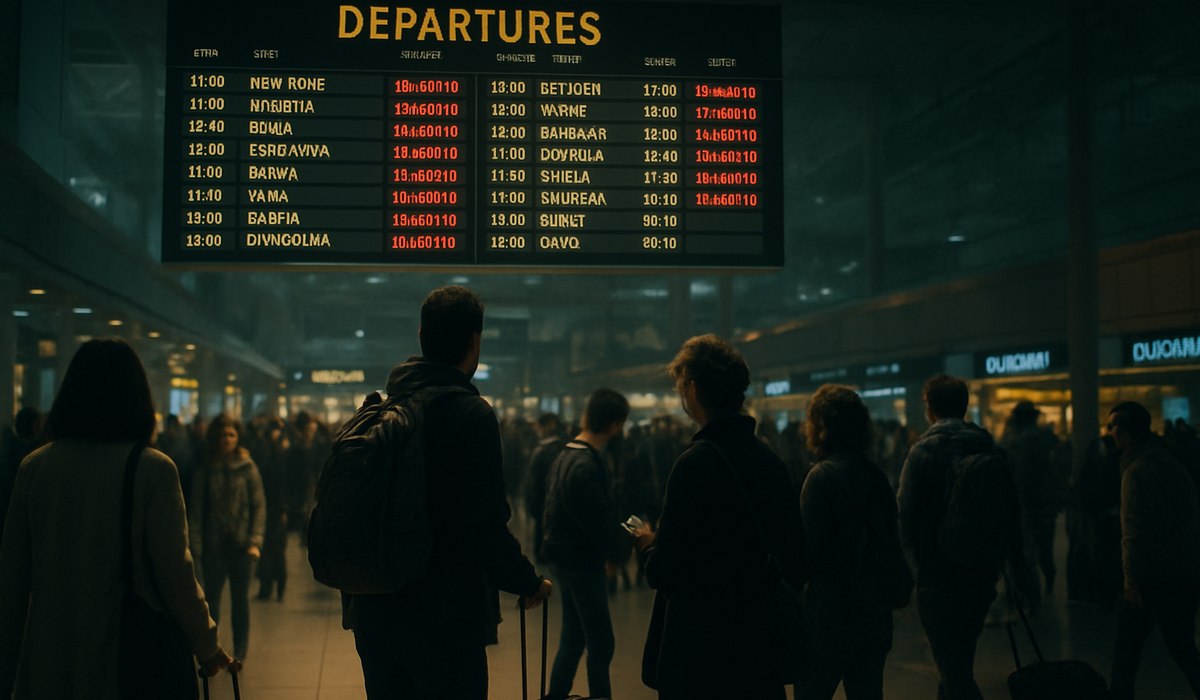
Image generated by AI
April Flight Turmoil Strikes Asia-Pacific's Busiest Hubs
Thousands of flights across Asia and the Gulf face delays and cancellations during early April 2026, as conflict-related airspace closures and adverse weather patterns combine to strain regional airline networks. More than 3,000 flights experienced delays and over 150 were canceled across major hubs in a single 24-hour period, stranding passengers on regional and intercontinental routes. This convergence of operational challenges has created cascading disruptions that ripple through one of the world's most critical aviation corridors.
Wave of Disruptions Across Asian Gateways
The first week of April 2026 saw unprecedented strain on Asia-Pacific's premier airports. Tokyo's Haneda and Narita airports, Hong Kong International, Seoul's Incheon, and Shanghai's Pudong each recorded over 100 late departures within days. Secondary mainland Chinese gateways—Guangzhou, Hangzhou, and Shenzhen—added dozens more cancellations to the regional backlog.
Tracking data from FlightAware confirms the scale of disruption. April 6 and 7 data reveals that tight turnaround schedules at high-demand airports created a domino effect. Late arrivals from North Asia triggered cascading delays across Southeast Asian hubs like Singapore Changi and Manila's Ninoy Aquino International. Analysts note that 2026's thinner schedule buffers mean modest operational shocks translate rapidly into crowded terminals and missed connections for thousands of passengers.
The April flight turmoil reflects systemic vulnerability in Asia's interconnected network. When primary hubs falter, secondary markets experience immediate pressure, as airlines route traffic through alternative facilities or consolidate services.
Major Hubs Hit Hardest: Tokyo, Hong Kong, Seoul, Shanghai
Tokyo Haneda Airport processed the region's highest delay volumes during early April, with aircraft arriving late from affected airspace regions. Haneda's role as Asia's busiest international gateway meant delays here cascaded across domestic and transpacific routes simultaneously.
Hong Kong International Airport faced similar constraints. As a major transfer point for Asia-Europe connections, delays at Hong Kong directly impacted long-haul passenger flows. The airport's capacity limitations during peak demand periods meant recovery proved slower than anticipated.
Seoul's Incheon International recorded substantial cancellations and delays affecting Korean carriers and connecting passengers. Incheon's geographic position makes it critical for North Asia-to-Middle East routing, making April flight turmoil particularly disruptive for this corridor.
Shanghai's Pudong Airport struggled with the combination of high demand and reduced airline capacity. As China's primary international hub, Shanghai's operational challenges affected millions of passengers monthly. Secondary hubs in Guangzhou, Hangzhou, and Shenzhen absorbed overflow traffic but quickly reached saturation during peak hours.
Each hub's disruption created independent bottlenecks. Yet their interconnected nature meant pressure accumulated rather than distributed. Airlines reduced frequencies to major hubs, forcing passengers onto alternative routes or delaying travel entirely.
Gulf Hubs Still Constrained After Conflict-Related Closures
The April flight turmoil cannot be assessed without understanding Gulf region disruptions. Conflict-related airspace closures beginning in late February 2026 created severe capacity constraints affecting Dubai, Abu Dhabi, and Doha—three of aviation's largest connecting hubs.
By early April, Emirates, Qatar Airways, and Etihad had reduced their flight programs substantially. Data indicates Dubai and Abu Dhabi recorded cancellation or non-operation rates near 50 percent on certain dates between late February and early April. Millions of passengers experienced flight suspensions rather than merely delays.
The partial network recovery by April's first week remained fragile. Emirates operated approximately 75 percent of typical schedules on April 4, while low-cost UAE-based carriers flew at under 50 percent of pre-closure volumes. European and Asian carriers extended Dubai and Riyadh service suspensions into May, while others maintained reduced frequencies or rerouted entirely around sensitive airspace.
For passengers, this created a patchwork of inconsistent options—some flights near-normal capacity while others faced short-notice cancellations or schedule changes.
Ripple Effects Spread to Southeast Asian Corridors
Singapore Changi and Manila's Ninoy Aquino International experienced the April flight turmoil differently than primary North Asian hubs. Rather than mass cancellations, these airports wrestled rolling delays. Late-arriving aircraft from affected North Asian and Indian airports disrupted tight turnaround schedules inherent to Southeast Asian operations.
Singapore Changi handled fewer outright cancellations than Tokyo or Hong Kong but accumulated a growing backlog of late departures. This complicated onward connections to Australia, Europe, and North America. Passengers booked on tight connections faced systematic rebooking onto later flights or alternative routing.
The pressure proved particularly acute because Southeast Asian hubs depend on efficient turnarounds. Aircraft serving regional networks typically operate 4-5 legs daily. Late arrivals compound through the entire daily schedule, creating cascading delays that extend into evening hours.
Manila faced similar constraints with limited spare capacity and Ninoy Aquino's geographic position making it a critical link between North Asia and the Americas. Delays at source airports in Japan, South Korea, or China propagated through Manila's system, affecting connections to the United States, Canada, and Central America.
What Travelers Need to Know
The April flight turmoil significantly impacts both regional and long-haul passenger experiences. Travelers should expect:
Multi-stop itineraries face elevated disruption risk. Connections through Doha, Dubai, Abu Dhabi, and Asian hubs remain subject to short-notice changes. Passengers holding connecting tickets should monitor their flights continuously and consider booking longer connection times.
Airlines are implementing irregular operations procedures. Expect potential aircraft substitutions, schedule consolidations, and flight cancellations through mid-April. Some carriers are waiving rebooking fees for passengers willing to accept alternative routing.
Weather continues compounding operational stress. Seasonal weather patterns across Asia-Pacific add another layer of complexity to already-strained networks. Monitor Weather.com and airline websites for updated forecasts affecting your routing.
Baggage handling delays are increasing. With full terminals and reduced ground crew availability, baggage sorting and delivery face extension of 2-4 hours beyond normal operations.
Rebooking options appear limited. Airlines are struggling to absorb displaced passengers. Seats on alternative flights may require paying premium fares or accepting connections 24+ hours later than originally scheduled.
Traveler Action Checklist
-
Check your flight status on FlightAware immediately upon booking confirmation and again 72 hours before departure.
-
Contact your airline directly if your flight appears on cancellation lists rather than relying on automated notifications.
-
Verify airspace status affecting your routing by reviewing current advisories from aviation authorities affecting your departure or transit regions.
-
Extend connection buffers beyond minimum requirements if rebooking flexibility remains available; aim for 3+ hours on connecting flights through major hubs.
-
Document all airline communications including rebooking offers, compensation details, and schedule changes for potential regulatory claims.
-
Review your ticket terms on the airline website or your booking email to understand rebooking rights and compensation eligibility under applicable regulations.
-
Consider travel insurance if currently uninsured; April flight turmoil may warrant filing claims for documented losses or missed connections.
-
Plan for destination arrival delays by arranging flexible hotel check-in times and notifying ground transportation providers of potential late arrivals.
Disclaimer
This article is for informational and educational purposes only. It does not constitute legal, financial, or professional advice. While we strive to provide accurate and up-to-date information, travel policies, regulations, and conditions change rapidly. Always verify information with official sources before making travel decisions. Nomad Lawyer makes no representations about the accuracy, reliability, completeness, or suitability of the information provided. Readers should consult qualified professionals for advice specific to their circumstances. The views expressed in this article are those of the author and do not necessarily reflect the views of Nomad Lawyer.
Preeti Gunjan
Contributor & Community Manager
A passionate traveller and community builder. Preeti helps grow the Nomad Lawyer community, fostering engagement and bringing the reader experience to life.
Learn more about our team →