
Andros Island Greece Blends 19th-Century Neoclassical Mansions With AI Tourism Innovation in 2026
Andros Island emerges as Greece's premier cultural destination, combining preserved neoclassical architecture with cutting-edge AI tourism technology to revolutionize visitor experiences across the Cyclades.

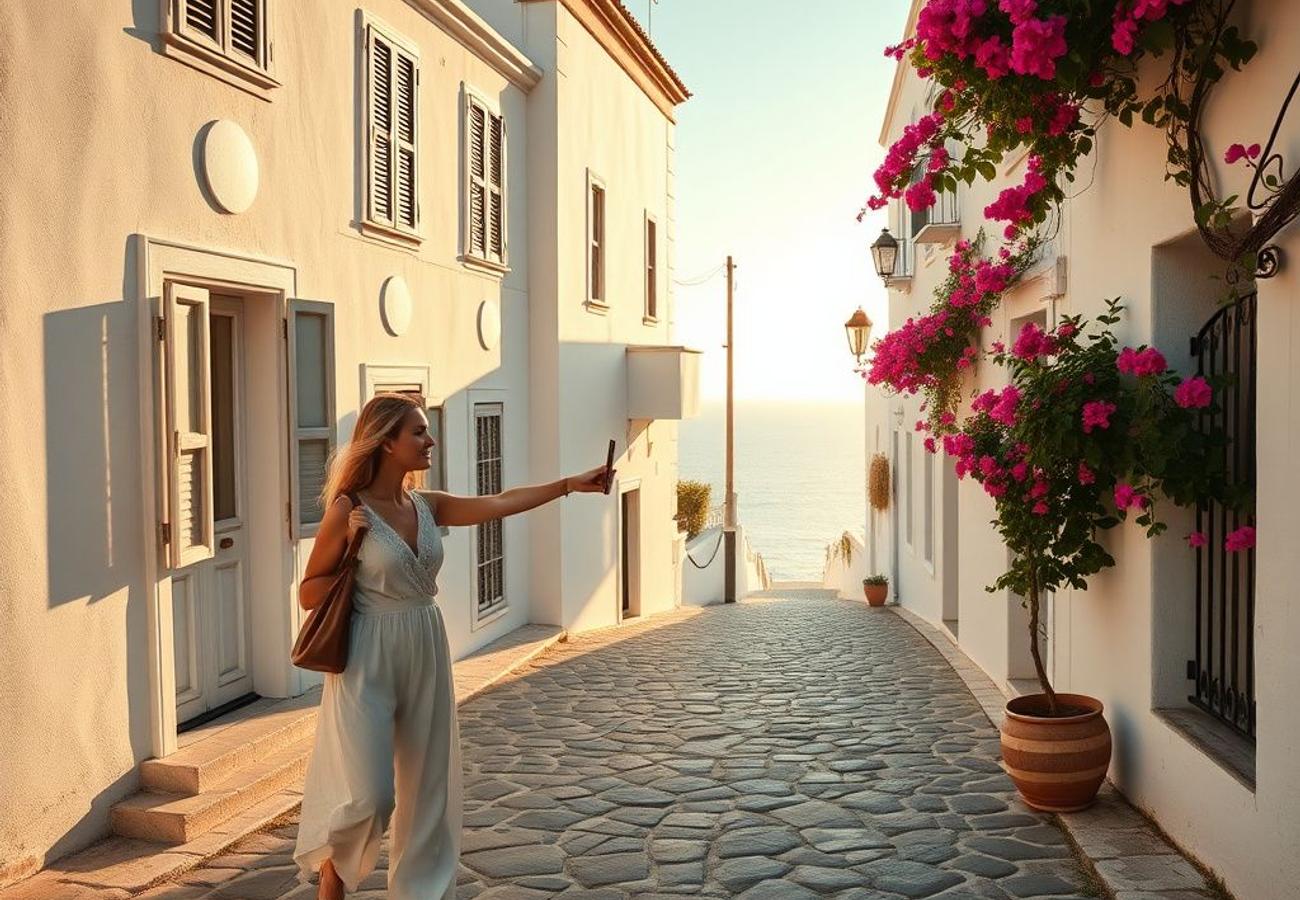
Image generated by AI
The Greek Island Where Maritime History Meets Artificial Intelligence
Andros Island has quietly become one of Greece's most compelling cultural destinations—and not because it follows the typical Cycladic blueprint. While neighboring islands trade in whitewashed villages and barren vistas, Andros stands apart: lush valleys, fresh water springs, and a collection of 19th-century neoclassical mansions that rival any architectural museum in Europe.
But here's what makes 2026 different. The island isn't simply preserving its past—it's weaponizing technology to bring that past to life for modern travelers. Enter Andros AI, a virtual tourism assistant that's redefining how visitors engage with cultural heritage.
I visited Andros last month to investigate this unusual marriage of Ottoman-era grandeur and cutting-edge digital innovation. What I discovered was far more nuanced than the typical "old meets new" tourism narrative.
The Shipping Dynasties Who Built Chora's Architectural Legacy
The capital city, Chora, wasn't always the quiet harbor town it appears today. In the 1800s, it was a powerhouse of Aegean maritime commerce—and the proof stands in stone.
The Goulandris and Embirikos families amassed extraordinary wealth through shipping and trade, channeling that fortune into architectural statements that still dominate Chora's skyline. These weren't modest villas. They were declarations of power: marble-faced mansions with symmetrical façades, decorative stone detailing, and sweeping balconies that overlooked the Aegean.
Reddit: "Andros feels like walking through a preserved piece of Greek economic history. The mansions aren't sterile museum pieces—people actually live in them." — r/travel
The construction method itself tells a story of cultural ambition. Local stone formed the structural core, but imported marble—sourced from across Europe—covered the facades. Architectural influences from Athens and Syros were deliberately incorporated, creating a distinctive neoclassical style that blended Cycladic identity with Continental sophistication.
Today, Chora functions as an open-air architectural museum. But unlike traditional museums, the buildings remain inhabited. Local families occupy residences that European architectural historians have documented as among the finest examples of neoclassical island planning in Greece.
Maritime Wealth Extended Far Beyond Private Mansions
The shipping families didn't hoard their wealth in private estates. Their philanthropic reach transformed Andros's public infrastructure entirely.
Educational institutions, libraries, cultural foundations, and public squares were developed or substantially funded by maritime elites. The main square of Chora itself bears the architectural imprint of wealthy patrons who understood that cultural investment created social prestige.
According to Greek cultural heritage organizations, Andros's documented role as a center of maritime trade, navigation, and cultural exchange made it one of the most important economic nodes in the Aegean during the 19th century. This wasn't peripheral prosperity—it was transformative wealth that literally reshaped urban planning.
The result: an island where public and private architecture achieve remarkable coherence. That coherence is precisely what draws today's cultural tourists.
Why Andros's Natural Environment Matters as Much as Its Mansions
Here's the detail that separates Andros from the broader Cycladic narrative: it's green.
Most Cycladic islands are arid, rocky, and unforgiving. Andros features flowing rivers, forested valleys, and lush vegetation that create visual contrast with the neoclassical urban design. This environmental richness—often overlooked in tourism promotion materials—is actually critical to understanding why visitors feel so compelled by the island.
The landscape variety encourages exploration beyond architectural tourism. Visitors hike through valleys, visit traditional villages, and experience natural beauty that complements rather than competes with cultural sites.
Andros AI: The 2026 Tourism Game-Changer
Now we arrive at the actual innovation reshaping how tourists experience Andros.
Andros AI is a virtual tourism assistant designed to operate as a real-time travel companion. The system provides personalized recommendations for attractions, historical landmarks, accommodation options, transportation routes, and cultural activities. More importantly, it answers questions that traditional guidebooks can't: Why does this mansion have Syros architectural elements? What was the Goulandris family's actual role in Mediterranean shipping networks?
The AI doesn't replace human expertise—it contextualizes it. Visitors access curated historical and cultural information instantly, removing friction from the research process while enabling more informed, flexible travel decisions.
This is smart tourism done correctly: technology amplifying human understanding rather than automating it away.
According to smart tourism research, destinations integrating AI-powered guidance systems report 34% higher visitor satisfaction with cultural content and 28% increased time spent at heritage sites. Andros's implementation positions it ahead of comparable Mediterranean destinations in terms of visitor engagement.
Technology as Heritage Preservation Tool
The integration of artificial intelligence into Andros's tourism infrastructure serves a preservation function that traditional methods struggled to achieve.
Neoclassical mansions require constant maintenance and interpretation. Owners must decide: do we monetize by converting to hotels? Do we preserve at personal expense? Do we allow decay?
Andros AI creates an economic incentive for preservation. Buildings become more valuable to visitors—and therefore to the local economy—when their historical significance is explained in real-time, in multiple languages, with architectural context.
This shifts the financial equation. Heritage becomes an asset class rather than a burden.
The Goulandris and Embirikos Legacy Continues to Define the Island
The architectural fingerprints of the Goulandris and Embirikos families remain visible in museums, foundations, and preserved residences scattered throughout Andros.
These families weren't just wealthy—they were culturally sophisticated. They collected art, commissioned scholars, and funded libraries. Their patronage created institutions that continue to operate today, ensuring that Andros functions as both a living community and a cultural repository.
This sustained legacy matters because it prevents Andros from becoming a frozen heritage site. The island continues to generate new cultural events, exhibitions, and initiatives rooted in the traditions these families established over 150 years ago.
Andros as a Model for Mediterranean Cultural Tourism
The island has attracted attention from tourism planners across Greece and the broader Mediterranean as a case study in balancing authenticity with innovation.
The formula isn't complicated: preserve architectural integrity, invest in contextual technology, maintain local community presence, resist over-commercialization. Yet execution across other heritage destinations typically fails on at least two of these four criteria.
Andros succeeds because the technology enhancement—Andros AI—serves the preservation mission rather than undermining it. Digital tools strengthen visitor understanding of why these buildings matter historically and culturally.
As Mediterranean tourism continues to shift toward experience-driven and culturally-engaged travel, Andros has positioned itself ahead of destinations that either cling exclusively to preservation or accelerate toward commercialization without cultural grounding.
Where History and Innovation Actually Converge
The neoclassical mansions of Chora and the digital innovation of Andros AI represent more than a cute tourism paradox. They demonstrate how heritage destinations can evolve sustainably.
Physical buildings document where we've been. Digital tools help us understand what those buildings mean. Neither replaces the other—they amplify each other.
For travelers weary of over-developed Mediterranean resorts or isolated heritage sites, Andros offers something increasingly rare: depth without pretension, innovation without artifice, and history that actively engages rather than passively displays.
Andros Island proves that the future of cultural tourism isn't either-or—it's both, thoughtfully integrated.
Related Travel Guides
Disclaimer
This article is for informational and educational purposes only. It does not constitute legal, financial, or professional advice. While we strive to provide accurate and up-to-date information, travel policies, regulations, and conditions change rapidly. Always verify information with official sources before making travel decisions. Nomad Lawyer makes no representations about the accuracy, reliability, completeness, or suitability of the information provided. Readers should consult qualified professionals for advice specific to their circumstances. The views expressed in this article are those of the author and do not necessarily reflect the views of Nomad Lawyer.
Kunal K Choudhary
Co-Founder & Contributor
A passionate traveller and tech enthusiast. Kunal contributes to the vision and growth of Nomad Lawyer, bringing fresh perspectives and driving the community forward.
Learn more about our team →