
Penn Station Fire Paralyzes Northeast Rail: Amtrak, NJ Transit Crisis
A massive fire in Hudson River rail tunnels on May 29, 2026 shut down Amtrak, NJ Transit, and LIRR services, leaving thousands scrambling for alternatives and exposing critical infrastructure vulnerabilities.

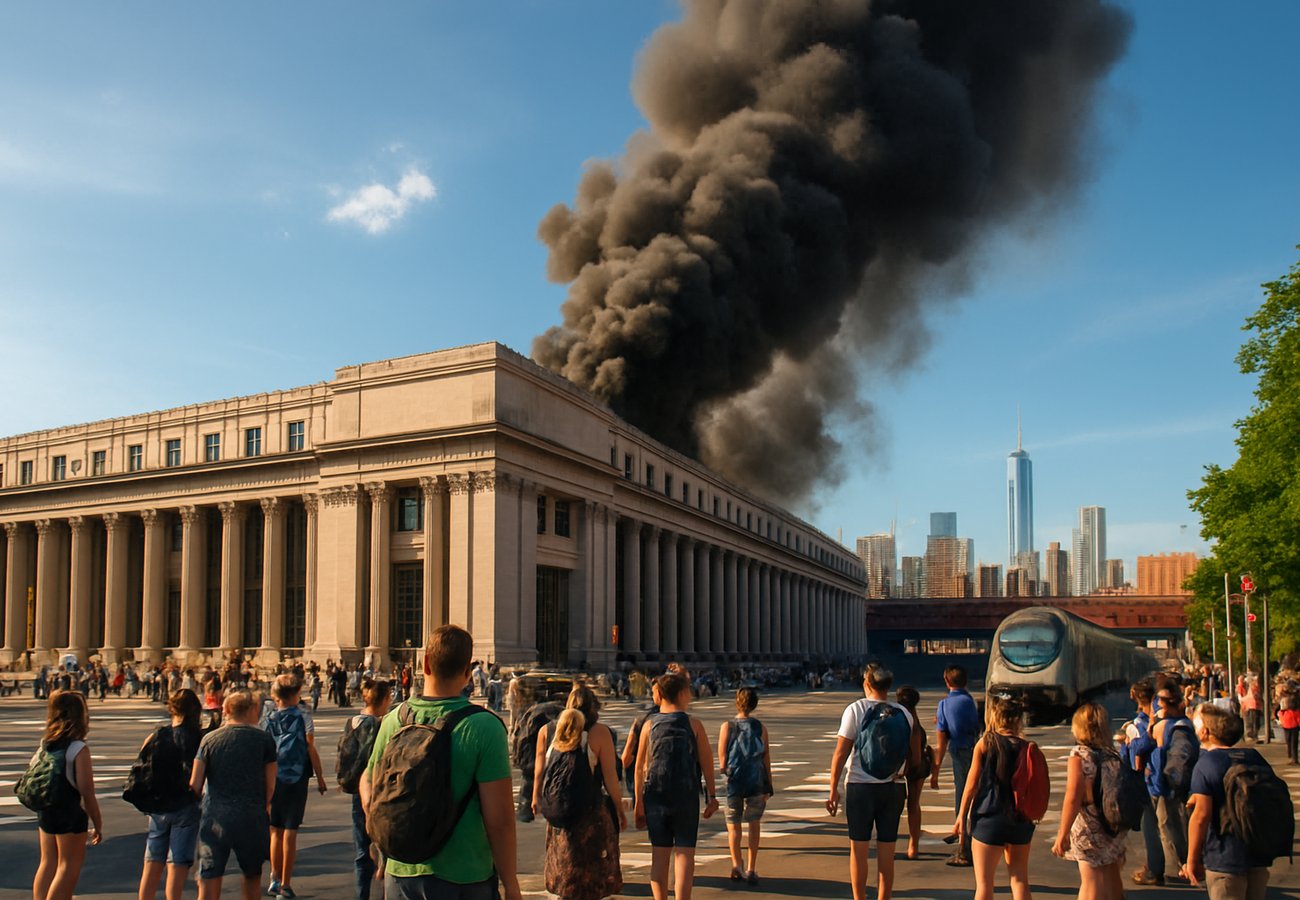
Image generated by AI
A Northeast Corridor Nightmare Unfolds at 1:30 a.m.
At 1:30 a.m. on May 29, 2026, a maintenance vehicle contracted by Amtrak ignited inside one of the twin Hudson River rail tunnels connecting Manhattan to New Jersey. What started as a containable incident escalated rapidly into a two-alarm fire that would paralyze one of America's most critical transportation arteries.
The Fire Department of New York (FDNY) rushed to the scene at Track 11 inside Penn Station's tunnel network. After more than an hour of intense firefighting, crews brought the blaze under control—but the damage was done. Overhead electrical wires and safety infrastructure lay scorched and unusable, forcing transit authorities to make the inevitable call: complete service suspension until repairs could be verified safe.
The Immediate Fallout: Three Rail Systems in Crisis
Within hours of the fire's extinguishment, the cascading effect rippled across the Northeast Corridor. Amtrak, New Jersey Transit (NJ Transit), and the Long Island Rail Road (LIRR) all reported massive suspensions and diversions that stranded thousands of commuters during the critical morning rush.
Amtrak's Washington-New York Corridor Grinds to Halt
Amtrak suspended all service between New York City and Newark, effectively cutting off the busy Washington D.C., Philadelphia, and New York corridor. Northbound operations toward Boston and northeastern destinations continued on a severely limited basis, but officials projected that full southbound service restoration would not occur until late afternoon at the earliest.
Reddit: "I was supposed to catch a 7 a.m. Amtrak to Philadelphia. Ended up waiting six hours for rebooking." — r/travel
NJ Transit: All Rails Into Penn Station Halted
New Jersey Transit announced that all rail service into and out of Penn Station had been stopped due to tunnel safety concerns. The commuter lifeline that typically ferries tens of thousands of New Jersey workers directly into Manhattan simply ceased operating. The agency activated contingency arrangements, diverting Midtown Direct trains to Hoboken Terminal to provide some passenger relief, though delays and overcrowding became immediate problems.
LIRR's Adaptive Response: Grand Central and Long Island City Reroutes
The Long Island Rail Road briefly suspended all Penn Station service but quickly implemented a creative workaround. LIRR diverted morning trains to Grand Central Madison and Long Island City, providing alternate entry points into Manhattan—though schedule changes and delays persisted throughout the morning and into the afternoon.
Five Workers Injured in Tunnel Inferno
The human cost of the incident was immediate and serious. Authorities confirmed that five railroad workers were injured as the fire spread through the tunnel environment. Two individuals with serious injuries were transported to Bellevue Hospital for emergency treatment, while three others were evaluated at the scene and declined further medical attention.
Investigators from fire and transportation agencies launched an active probe to determine whether procedural failures or equipment defects triggered the maintenance vehicle fire—a critical question given the aging infrastructure running beneath the Hudson River.
How Travelers Adapted: Cross-System Flexibility Activated
Transit agencies quickly pivoted to damage control, implementing cross-honoring agreements that allowed passengers stranded by rail suspensions to use alternative transportation without additional charges.
NJ Transit announced that rail tickets and passes would be accepted on PATH trains, NJ Transit buses, and participating private carriers at key hubs including Newark Penn Station, Hoboken, and 33rd Street. This flexibility proved essential as thousands of commuters scrambled to reach their destinations through whatever means available.
Amtrak issued service alerts through its app and customer service channels, offering fee-free rebooking and full refunds to affected passengers. The national carrier urged travelers to consult real-time updates before attempting to reschedule or rebook trips—a critical recommendation given the fluid situation.
The Infrastructure Reality: Why the Damage Mattered So Much
The Hudson River tunnels represent a genuine chokepoint in North America's rail network. Carrying both intercity Amtrak trains and regional commuter rail traffic, these twin tubes handle an enormous volume of passenger and freight movement daily.
The fire damaged critical overhead catenary systems that supply electrical power to trains, along with signaling equipment essential for safe train operation. Until these systems underwent thorough inspection and repair, electric trains could not safely traverse the tunnels—a constraint that cascaded across the entire Northeast Corridor network.
"With the Northeast Corridor serving as a backbone for regional and national rail service, any disruption in its key junctions can affect both local commuters and long-distance travelers," transit officials explained. That principle proved accurate as the fire's impact extended far beyond Penn Station itself.
What Travelers Needed to Know (and Do)
Transportation agencies issued clear guidance for stranded and potentially affected passengers:
- Check official service alert pages for live updates on delays, suspensions, and reroutes
- Allow substantial extra travel time and consider alternate routes using cross-honored transit options
- Prepare for ongoing schedule changes, especially for afternoon and evening travel windows
- Use transit agency apps and websites for real-time information rather than relying on outdated social media reports
The Broader Question: Aging Infrastructure and Regional Vulnerability
The May 29 fire exposed a hard truth about Northeast rail infrastructure: the system's vulnerability to disruption. The Hudson River tunnels—first opened in 1910—carry modern traffic loads through aging infrastructure that requires constant vigilance and maintenance.
Rail agencies stressed that systematic infrastructure repairs and safety inspections must occur before normal operations could resume. The incident underscored the critical importance of investing in rail infrastructure renewal to prevent future service catastrophes.
Transit officials committed to detailed updates as restoration work progressed, signaling that the path back to normal would be methodical and safety-focused rather than rushed.
Infrastructure failures don't respect commute schedules—they rewrite them.
Related Travel Guides
Disclaimer
This article is for informational and educational purposes only. It does not constitute legal, financial, or professional advice. While we strive to provide accurate and up-to-date information, travel policies, regulations, and conditions change rapidly. Always verify information with official sources before making travel decisions. Nomad Lawyer makes no representations about the accuracy, reliability, completeness, or suitability of the information provided. Readers should consult qualified professionals for advice specific to their circumstances. The views expressed in this article are those of the author and do not necessarily reflect the views of Nomad Lawyer.
Kunal K Choudhary
Co-Founder & Contributor
A passionate traveller and tech enthusiast. Kunal contributes to the vision and growth of Nomad Lawyer, bringing fresh perspectives and driving the community forward.
Learn more about our team →