
Amtrak National Park Rail Routes Connect Arizona, California, Colorado, Montana, Washington to Grand Canyon, Yosemite, Glacier in 2026
Amtrak scenic rail vacations through five western states offer stress-free access to America's greatest national parks without traditional road trip hassles.

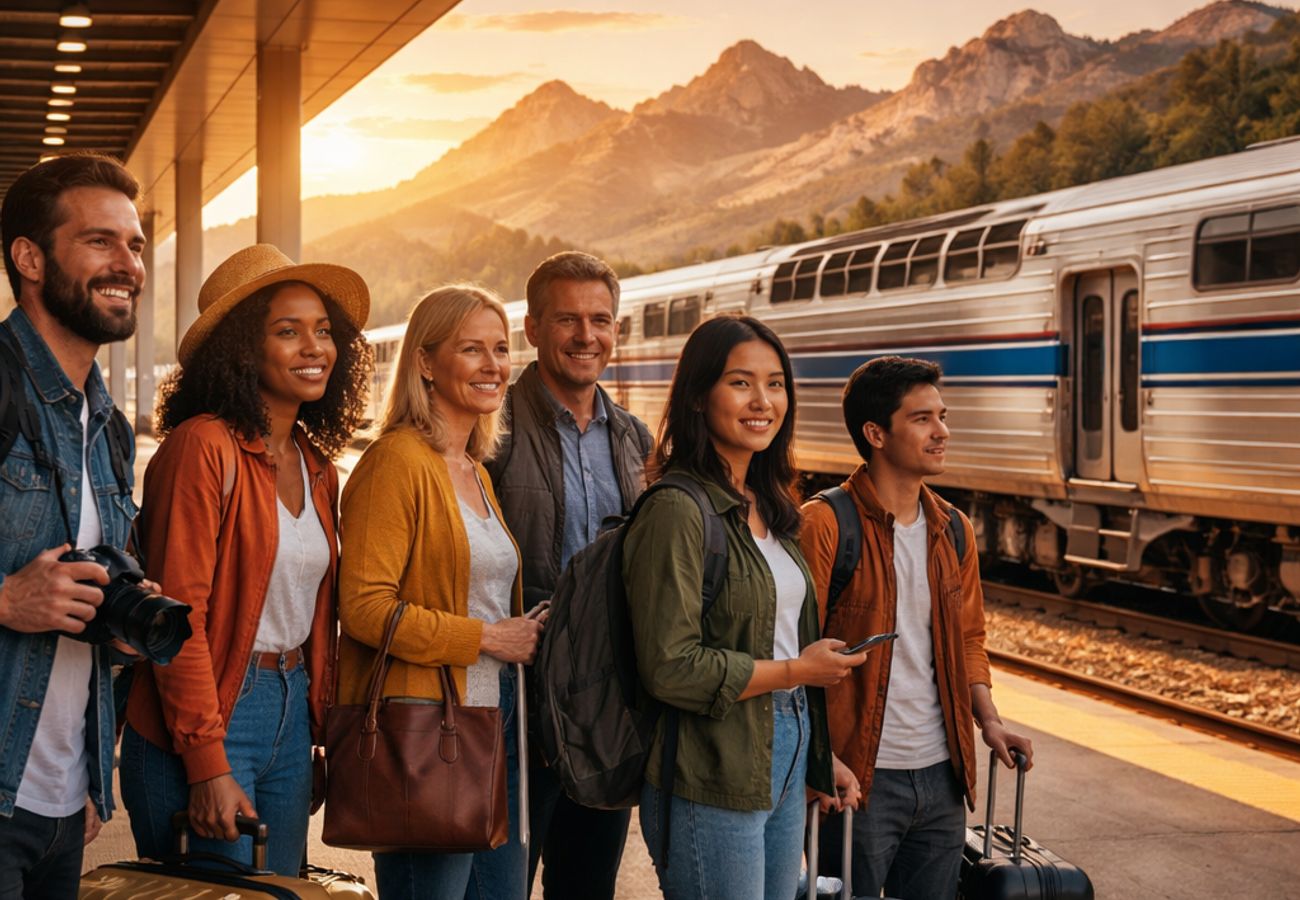
Image generated by AI
Summer travel season has ignited a quiet revolution in American domestic tourism. While millions queue for rental cars and highway fuel stops, a growing wave of travelers are discovering something radical: sitting back in a panoramic observation car, watching Arizona, California, Colorado, Montana, and Washington roll past their windows on the way to some of Earth's most spectacular protected wilderness.
Amtrak's national park vacation packages are redefining what a American summer getaway looks like—and they're doing it by making the journey itself the attraction.
The End of the Great American Road Trip?
For decades, visiting the Grand Canyon, Yosemite, Glacier, Channel Islands, and Mount Rainier meant one thing: hours behind the wheel, gas station stops, parking nightmares, and exhaustion before you even stepped foot on a trail. Not anymore.
Amtrak's integrated rail-to-park strategy eliminates the friction that traditionally plagued national park tourism. No rental car. No traffic. No midnight navigation through unfamiliar highways. Just curated access to five of the West's most iconic landscapes, delivered through a transportation network that transforms transit into sightseeing.
Reddit: "Taking the California Zephyr to Yosemite changed how I think about travel. The journey WAS the vacation." — r/Amtrak
Southwest Chief: Desert Drama and Grand Canyon Access
The Southwest Chief remains Amtrak's gateway to the Southwest's raw, austere beauty. This legendary route cuts through New Mexico's high deserts and arrives in Flagstaff, Arizona, where coordinated transfers connect passengers to the historic Grand Canyon Railway—a railway that itself has been ferrying park-goers since 1901.
What makes this approach revolutionary isn't just convenience. Passengers witness the landscape transformation firsthand: high plains giving way to juniper and piñon forests, then the dramatic color shifts as the South Rim approaches. The journey becomes context for the destination.
Ground transfer logistics are handled seamlessly, meaning travelers step off the observation car and onto a park shuttle without the stress of rental car negotiation or GPS fumbling.
Pacific Surfliner: Coastal Rail and Island Exploration
California's Pacific Surfliner takes an entirely different approach to national park access. Running alongside the Pacific Ocean for stretches of its route, the train delivers passengers to Oxnard Harbor, where ferries shuttle them to Channel Islands National Park—one of America's least-visited but most remarkable park systems.
This multi-modal journey (rail plus ferry plus hiking) creates a distinctive travel experience that road trips simply cannot replicate. Passengers witness the coastline transformation in real time, arriving at their island destination mentally prepared and already immersed in the region's geography and ecology.
For travelers seeking lesser-known natural treasures, this route offers what mass tourism rarely delivers: genuine solitude paired with exceptional scenery.
California Zephyr: Rocky Mountains and Yosemite in One Journey
The California Zephyr is Amtrak's most celebrated scenic route, and for good reason. This route traverses the Rocky Mountains, passes through the jaw-dropping Ruby Canyon, and connects Colorado's mountain wilderness directly to California's alpine grandeur.
Curated vacation itineraries now combine Rocky Mountain National Park with Yosemite National Park in a single multi-day journey. Overnight sleeper accommodations and coordinated shuttle services remove the logistics burden entirely. Travelers focus on exploration rather than route planning.
The route's overnight segments mean passengers wake to entirely new landscapes—a form of travel that road trips can only approximate through exhaustion and compromise.
Empire Builder: Northern Wilderness and Pacific Northwest Access
The Empire Builder stretches from Chicago through Montana to Seattle, unlocking access to some of North America's most pristine wilderness. Passengers disembark near Glacier National Park—where alpine lakes, towering peaks, and extensive trail networks await—before continuing westward toward Mount Rainier National Park.
Summer peak season transforms Mount Rainier into a wildflower wonderland. The Empire Builder's schedule aligns with this window, allowing travelers to experience both Glacier's rugged alpine terrain and Mount Rainier's famous meadow ecosystems within a single journey.
For Pacific Northwest enthusiasts, this route represents the most stress-free way to experience two of the region's most demanding destinations.
Sustainable Travel Meets Tourism Convenience
The rising popularity of these rail packages reflects a broader shift in how Americans approach leisure travel. Sustainable tourism practices and reduced vehicle dependency are increasingly influencing consumer preferences, with travelers actively seeking lower-impact alternatives to traditional road trips.
Rail transportation generates roughly 83% fewer emissions per passenger than personal vehicles. This environmental advantage, combined with the elimination of driving stress and parking hassles, creates a compelling value proposition that attracts both environmentally conscious travelers and those simply seeking a more relaxing vacation.
The combination of sustainability, convenience, and immersive sightseeing positions rail tourism as a significant growth sector within American domestic travel.
The Future of National Park Tourism
National park visitation has strained infrastructure at many iconic destinations. Rail-based travel offers a pathway toward more efficient visitor management. By streamlining transportation flows and reducing vehicle congestion at park gateways, rail networks can support higher visitor numbers while maintaining environmental and experiential quality.
Amtrak's integration of rail access with national park itineraries suggests this isn't a temporary trend. Rather, it represents a structural shift in how America's tourism industry approaches destination access and visitor experience.
For travelers planning 2026 summer vacations, the choice between a rental car and a scenic train suddenly looks less like a compromise and more like an upgrade.
Rail travel isn't the past of American tourism—it's becoming its future.
Related Travel Guides
Phu Quoc Tourism Report 2026: Vietnam's Largest Island Projects 8.5 Million Arrivals Amid 38% Surge
Disclaimer
This article is for informational and educational purposes only. It does not constitute legal, financial, or professional advice. While we strive to provide accurate and up-to-date information, travel policies, regulations, and conditions change rapidly. Always verify information with official sources before making travel decisions. Nomad Lawyer makes no representations about the accuracy, reliability, completeness, or suitability of the information provided. Readers should consult qualified professionals for advice specific to their circumstances. The views expressed in this article are those of the author and do not necessarily reflect the views of Nomad Lawyer.
Raushan Kumar
Founder & Lead Developer
Full-stack developer with 11+ years of experience and a passionate traveller. Raushan built Nomad Lawyer from the ground up with a vision to create the best travel and law experience on the web.
Learn more about our team →