
America's 250th Anniversary Travel Chaos: 160 Million Under Heat Warnings as Northeast Heat Dome Cancels DC Parade, Amtrak Services in July 2026
Record-breaking heat dome across the Eastern Seaboard forces DC parade cancellations, Amtrak service cuts, and emergency cooling centers during America's 250th anniversary weekend.

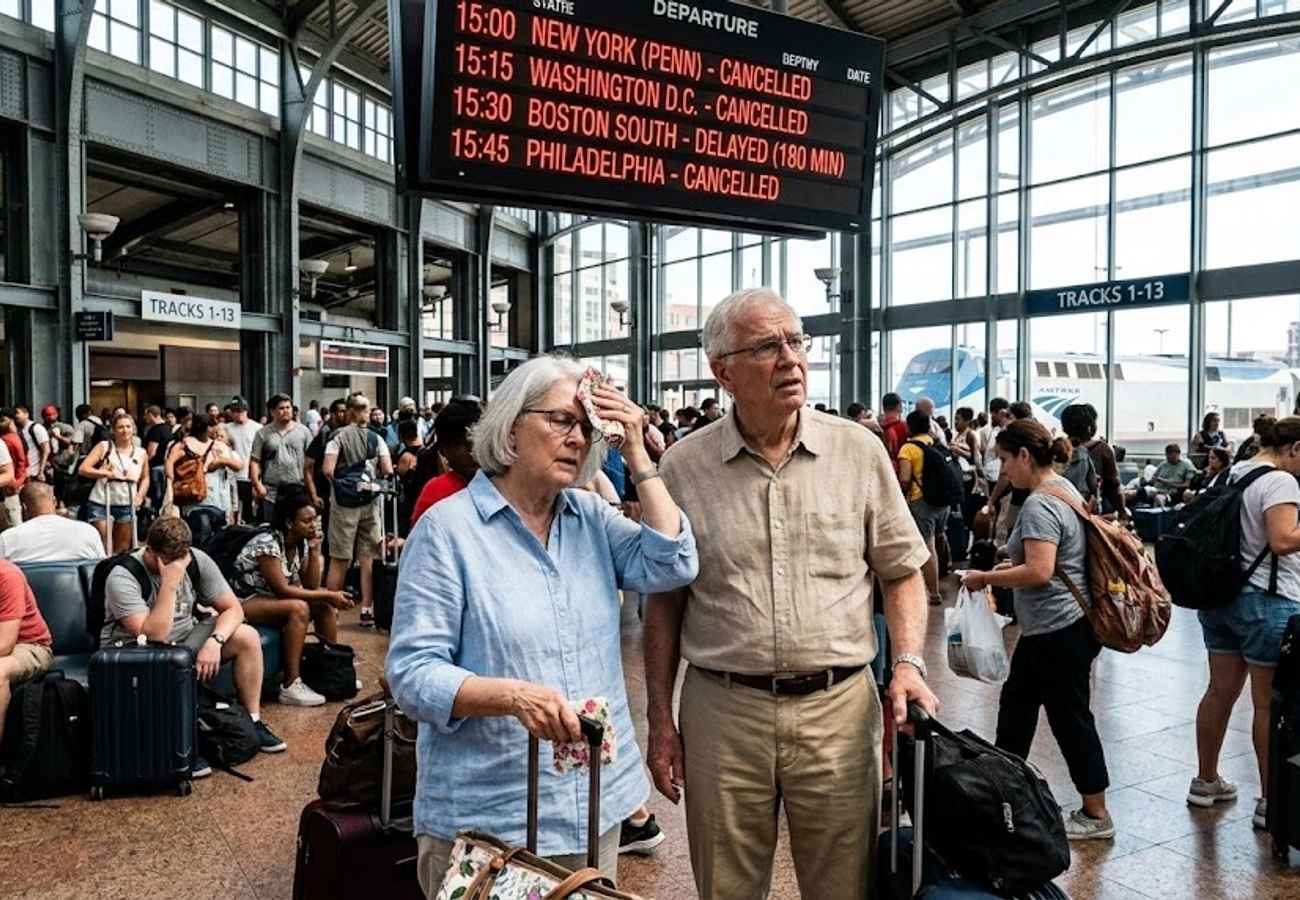
Image generated by AI
Nearly 160 million Americans are under active major or extreme heat warnings as a record-breaking atmospheric heat dome settles across the Midwest and Eastern Seaboard, colliding head-on with America's 250th anniversary Independence Day celebrations. The National Weather Service has synchronized emergency advisories with regional management databases as triple-digit heat indices force event cancellations, rail service cuts, and widespread power restoration efforts across Washington DC, New York City, Philadelphia, and Boston.
In Washington DC, organizers completely canceled the annual Independence Day Parade and temporarily shut down the Great American State Fair on the National Mall after multiple visitors required emergency medical transport for heat exhaustion. Amtrak has canceled select Northeast corridor passenger services over fears that extreme steel temperatures could physically warp tracks, while Con Edison works to restore power to tens of thousands of households facing heat-related outages.
Heat Dome Meets Historic Celebration
The convergence of a once-in-a-generation patriotic milestone and a brutal climate event has created what public safety coordinators are calling an extraordinarily complex logistical map. Federal entities including the Congressionally established America250 commission and the White House-aligned Freedom 250 group have organized extensive civil programming that now intersects dangerously with temperatures soaring past 105°F heat indices in major metropolitan hubs.
Visitors stepping out in Philadelphia, New York City, and Boston are encountering triple-digit real-feel temperatures that have fundamentally altered public accessibility to outdoor monuments, historic sites, and traditional celebration venues. Thousands of holidaymakers have been forced to trade open-air viewing stands for air-conditioned hotel lounges and designated cooling centers.
"Drove 6 hours from Virginia to see the parade in DC with my kids. Showed up to barricades and a cancellation notice. Hotels are packed, cooling centers are overflowing, and every indoor museum has a 3-hour wait. We're sitting in our car with the AC running just trying to figure out what to do." — r/roadtrps
Transportation Infrastructure Under Strain
Transportation analytics databases are monitoring substantial operational strain as high environmental thresholds trigger protective service rollbacks across core rail and energy sectors. The impact extends beyond passenger discomfort into critical infrastructure viability.
| Celebration Hub | Primary Environmental Risk | Emergency Asset Activation |
|---|---|---|
| Washington DC | Triple-Digit Real-Feel Heat | Mandatory Fair Suspensions |
| New York City Core | 105°F Extreme Heat Index | 24-Hour Cooling Centers |
| Northeast Rail | Thermal Track Distortion | Targeted Train Cancellations |
Intercity rail operators including Amtrak have been forced to cancel select passenger services throughout the Northeast corridor. The cancellations stem from legitimate engineering concerns: extreme steel temperatures can physically warp tracks, creating derailment risks that make continued operation unsafe.
Concurrently, regional utility networks like Con Edison are working aggressively to restore power to tens of thousands of households facing heat-related outages. Grid operators like PJM stand ready to transition massive commercial data centers to independent backup power assets to prevent widespread brownouts amidst unprecedented air-conditioning demands across the Eastern Seaboard.
Traveler Impact Across Major Hubs
The core impact on the traveler experience has been defined by necessary operational changes and sudden scheduling pullbacks that have caught many visitors off guard. The National Mall, typically the centerpiece of Independence Day celebrations, became temporarily inhospitable during peak afternoon radiation hours.
In New York City, 24-hour cooling centers have been activated as the heat index climbed to 105°F. The city's transit infrastructure is operating under reduced capacity schedules, with subway platforms becoming dangerous heat traps for commuters waiting for delayed trains.
Philadelphia and Boston, both critical stops on historical anniversary tourism routes, are experiencing similar disruptions. Outdoor walking tours of Independence Hall and the Freedom Trail have been suspended during peak heat hours, with tour operators pivoting to early morning and evening schedules.
What to Do Next
If you are currently traveling or planning to travel through the affected regions this weekend, take immediate action:
- Reschedule outdoor activities to early morning hours. Plan monument tours, walking routes, and outdoor celebrations for before 9 AM. Retreat indoors by mid-day when thermal spikes peak.
- Monitor live transit dashboards continuously. Before heading to any rail terminal or embarking on highway travel, check real-time service alerts through state transportation apps and Amtrak's official channels to bypass weather-related suspensions.
- Hydrate aggressively and locate cooling stations. Consume high volumes of water, seek out designated misting stations deployed across major cities, and completely avoid over-exertion in unconditioned spaces. Know the location of your nearest cooling center.
- Consider redirecting travel to milder regions. The Pacific Northwest is experiencing pleasant conditions in the 60s. If you have flexibility in your itinerary and heat sensitivity concerns, shifting targets toward Seattle, Portland, or coastal Oregon may preserve your vacation quality.
- Book indoor alternatives immediately. Museums, aquariums, and indoor entertainment venues are filling rapidly as outdoor events cancel. Secure timed-entry tickets now rather than arriving and facing multi-hour waits.
- Maintain vehicle preparedness for road trips. Carry extra water, ensure air conditioning systems are functional, and plan routes with identified rest stops every 90 minutes. Highway shoulders become dangerous during extreme heat if breakdowns occur.
- Check power grid status at your destination. Before confirming hotel stays, verify that accommodations have backup power arrangements. Heat-related outages are affecting tens of thousands of households, and some hotels may lack sufficient generator capacity.
Broader Industry Implications
The intersection of extreme weather and peak holiday travel is testing the resilience of national infrastructure grids in ways that extend beyond this single weekend. Aviation and transit specialists note that the protective service rollbacks, while necessary for safety, are generating significant commercial revenue losses across the hospitality and transportation sectors.
Hotels in the affected corridors are experiencing unusual occupancy patterns: guests are extending stays to remain in air-conditioned environments rather than checking out for onward travel, creating availability squeezes for incoming reservations. Restaurants and entertainment venues with robust climate control are seeing surge demand, while outdoor vendors and street festivals face total revenue elimination.
The Federal Emergency Management Agency and regional emergency management offices continue coordinating with local officials to maintain sufficient medical transport availability at celebration sites that remain operational. Public health officials have emphasized that the country's foundational ideals are strong enough to endure any historic trial, but citizens must actively prioritize safety and look out for one another.
Looking Ahead
Weather models suggest the heat dome will begin shifting eastward by mid-week, potentially bringing some relief to interior Northeast corridors. However, coastal cities along the Eastern Seaboard may continue experiencing elevated heat indices through the remainder of the anniversary week.
Travelers with flexible plans should consider monitoring extended forecasts and maintaining contingency indoor options for any remaining celebration dates. The remarkable intersection of rigorous public health tracking, historic anniversary programming, and the unyielding human drive to celebrate community serves as a reminder that shared national journeys require deep care and mutual respect to remain successful.
By choosing to navigate these high-visibility celebration spaces mindfully, extending patience to frontline hospitality and medical workers, and treating the natural elements with profound respect, contemporary travelers can turn a demanding holiday rush into a testament to shared adventure rather than a cautionary tale.
Stay cool, stay informed, and stay alive — the monuments will still be there when the heat breaks.
Related Travel Guides
Disclaimer
This article is for informational and educational purposes only. It does not constitute legal, financial, or professional advice. While we strive to provide accurate and up-to-date information, travel policies, regulations, and conditions change rapidly. Always verify information with official sources before making travel decisions. Nomad Lawyer makes no representations about the accuracy, reliability, completeness, or suitability of the information provided. Readers should consult qualified professionals for advice specific to their circumstances. The views expressed in this article are those of the author and do not necessarily reflect the views of Nomad Lawyer.
Raushan Kumar
Founder & Lead Developer
Full-stack developer with 11+ years of experience and a passionate traveller. Raushan built Nomad Lawyer from the ground up with a vision to create the best travel and law experience on the web.
Learn more about our team →