
American, United and Delta Among Airlines Reporting Mishandled Baggage in Latest US Data
American, United and Delta Among Airlines Reporting Mishandled Baggage in Latest US Data

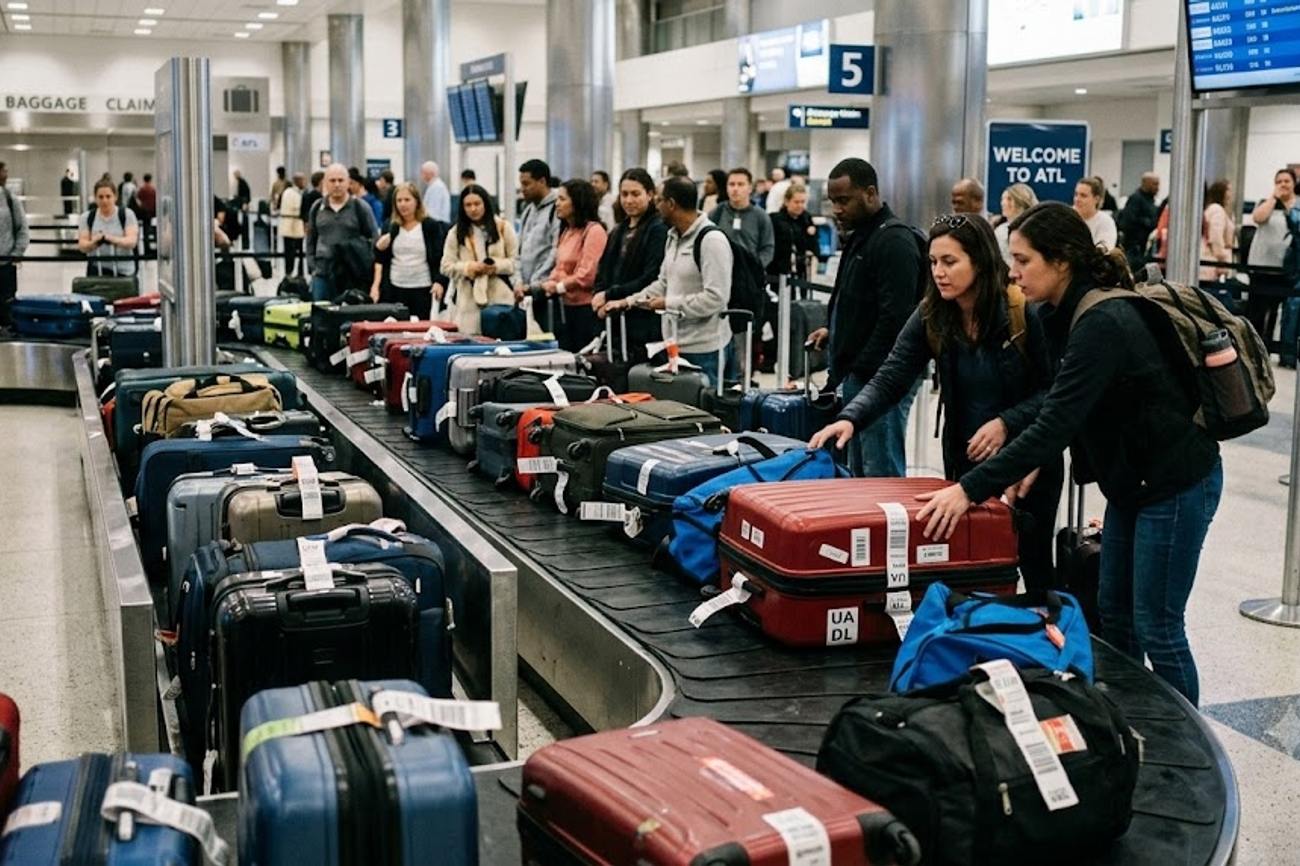
Image generated by AI
[Washington, August 2026] — The United States Department of Transportation (DOT) has released July 2026 data revealing that tens of thousands of checked bags were lost, delayed, damaged, or pilfered across the domestic aviation network. While major carriers like American and United report the highest absolute numbers of mishandled luggage, the data indicates a diverging trend in operational efficiency between global network carriers and point-to-point operators.
The latest report focuses on reportable domestic nonstop scheduled passenger services, analyzing the performance of the nation's largest airlines during the peak summer travel window. The findings highlight a persistent struggle to synchronize baggage logistics with soaring passenger demand, though several legacy carriers show year-over-year improvements in their mishandling rates.
The July 2026 Baggage Crisis
The current surge in mishandled baggage is a direct result of the extreme logistical pressure placed on US airport hubs during the July peak. For network carriers, the primary trigger is the "transfer window"—the narrow timeframe in which a bag must be unloaded from an arriving aircraft, sorted through an automated system, and loaded onto a departing flight. When these windows are missed due to weather, staffing shortages, or aircraft delays, the bag is separated from the passenger.
Operational complexity varies wildly by business model. Global carriers managing international transfers face significantly higher risks than ultra-low-cost carriers (ULCCs) that fly primarily nonstop routes. The US Department of Transportation (DOT) tracks these metrics specifically to hold airlines accountable for the "last mile" of the passenger experience, as baggage failures directly correlate to increased insurance claims and operational costs for the airlines.
Breakdown of Airline Performance
The July 2026 data reveals a stark contrast between the total volume of bags processed and the actual rate of error. The following table details the performance of the primary US carriers:
| Airline | Bags Enplaned (July 2026) | Mishandled Bags | Rate (per 100 bags) | July 2025 Rate | Trend |
|---|---|---|---|---|---|
| American Airlines | 6.43 Million | 52,300 | 0.81 | 0.91 | Improving |
| United Airlines | 5.45 Million | 42,908 | 0.79 | 0.87 | Improving |
| Delta Air Lines | 7.87 Million | 33,933 | 0.43 | 0.48 | Improving |
| Southwest Airlines | 9.24 Million | 32,534 | 0.35 | 0.41 | Improving |
| JetBlue | Not Specified | Not Specified | 0.46 | 0.37 | Worsening |
| Frontier Airlines | Not Specified | Not Specified | 0.54 | 0.41 | Worsening |
| Alaska Airlines | Not Specified | Not Specified | 0.46 | Not Specified | Stable |
| Allegiant Air | Not Specified | Not Specified | 0.12 | 0.11 | Worsening |
American Airlines recorded the highest volume of failures with 52,300 bags, though its efficiency improved from a 0.91 rate in July 2025 to 0.81. United Airlines followed closely with 42,908 mishandled items and a rate of 0.79, down from 0.87 the previous year.
Conversely, Southwest Airlines demonstrated the strongest performance among the high-volume carriers, processing a massive 9.24 million bags while maintaining a low mishandling rate of 0.35. Allegiant Air achieved the lowest overall rate at 0.12, a figure attributed to its simpler, non-hub-and-spoke operating model.
Practical Traveler Advisory and Strategic Insights
For the average passenger, these statistics translate into a tangible risk based on the airline and route chosen. If you are booking a flight right now, here is the plain-language impact:
Connecting vs. Nonstop: If you fly a legacy carrier like American or United through a major hub, your risk of a delayed bag is statistically higher. This is due to the "operational hand-offs" required to move a bag between aircraft. Travelers on nonstop flights or those using point-to-point carriers like Allegiant face a significantly lower probability of baggage loss.
The "Volume Trap": Do not be misled by raw numbers. While American Airlines has the most "lost" bags, it also moves millions more bags than smaller carriers. The rate per 100 bags is the only accurate metric for predicting your personal risk.
Carrier Choice: Based on July 2026 data, Southwest and Delta offer higher reliability for checked luggage than Frontier or JetBlue, both of which saw their mishandling rates increase compared to July 2025.
Recourse: Under DOT regulations, airlines are required to compensate passengers for lost or damaged baggage. Travelers should ensure they keep all baggage claim tags and file reports immediately upon arrival at the airport to facilitate the claims process.
The Push for Automation
To combat these failures, the industry is shifting toward a technology-first approach. The reliance on manual barcode scanning is being replaced by Radio Frequency Identification (RFID) technology, which allows airlines to track a bag's location in real-time without requiring a direct line-of-sight scan.
The latest data from the US Department of Transportation reveals that major airlines, including American, United, and Delta, have reported a significant number of mishandled baggage incidents. According to the Bureau of Transportation Statistics, the rate of mishandled baggage has increased, affecting thousands of passengers. This surge in mishandled baggage has led to increased scrutiny of airline baggage handling practices.
Carriers are investing heavily in automated sorting systems to reduce the human error associated with transferring bags between flights. The goal is to create a seamless digital thread from the check-in counter to the luggage carousel. This shift is essential because, as passenger demand continues to rise, the sheer volume of luggage—exceeding 30 million bags across the top four carriers in a single month—makes manual processing unsustainable.
Furthermore, airlines are integrating better digital communication tools. Instead of passengers waiting at a carousel for a bag that isn't coming, new systems aim to notify passengers via mobile apps the moment a bag is identified as "missed" during a transfer, allowing for faster resolution and delivery.
FAQ: US Baggage Performance 2026
Which US airline is most likely to lose my bag? Based on July 2026 DOT data, American Airlines and United Airlines have the highest mishandling rates (0.81 and 0.79 per 100 bags, respectively), largely due to the complexity of their hub-and-spoke networks.
Why do some airlines have much lower baggage error rates? Airlines like Allegiant Air (0.12 rate) operate simpler route structures with fewer connections. Without the need to transfer bags between multiple aircraft at busy hubs, there are fewer opportunities for operational failure.
Are baggage handling rates improving overall? Yes, for most major carriers. American, United, Delta, and Southwest all reported lower mishandling rates in July 2026 compared to July 2025, despite handling enormous volumes of luggage.
What should I do if my bag is mishandled? Immediately file a report with the airline's baggage service office before leaving the airport. Retain your baggage claim ticket and provide a detailed description of your luggage to speed up the recovery process.
As passenger volumes hit new peaks, the gap between tech-forward carriers and legacy operations continues to widen.
Related Travel Guides
- Illinois Travel Shift Begins as Digital Tourism Replaces Traditional Highway Information Hubs
- Las Vegas Unveils Massive 5-Day Travel Sale With Luxury Stays Entertainment Deals and Unmissable Visitor Savings
- Washington DC Joins Massachusetts, New York and More US States on Bilingual Workers Gain Higher Earnings in America
Disclaimer
This article is for informational and educational purposes only. It does not constitute legal, financial, or professional advice. While we strive to provide accurate and up-to-date information, travel policies, regulations, and conditions change rapidly. Always verify information with official sources before making travel decisions. Nomad Lawyer makes no representations about the accuracy, reliability, completeness, or suitability of the information provided. Readers should consult qualified professionals for advice specific to their circumstances. The views expressed in this article are those of the author and do not necessarily reflect the views of Nomad Lawyer.
Naina Thakur
Contributor & Travel Specialist
Travel enthusiast and legal writer covering visa regulations, responsible tourism, and cultural journeys across global destinations.
Learn more about our team →