
The Sonic Highway: How the American Music Tourism Act Reimagines Cultural Road Trips Across the USA
Proposed federal legislation—the American Music Tourism Act of 2025—seeks to amend the Visit America Act, steering domestic and international travelers to historic recording studios, Delta blues trails, and jazz halls.

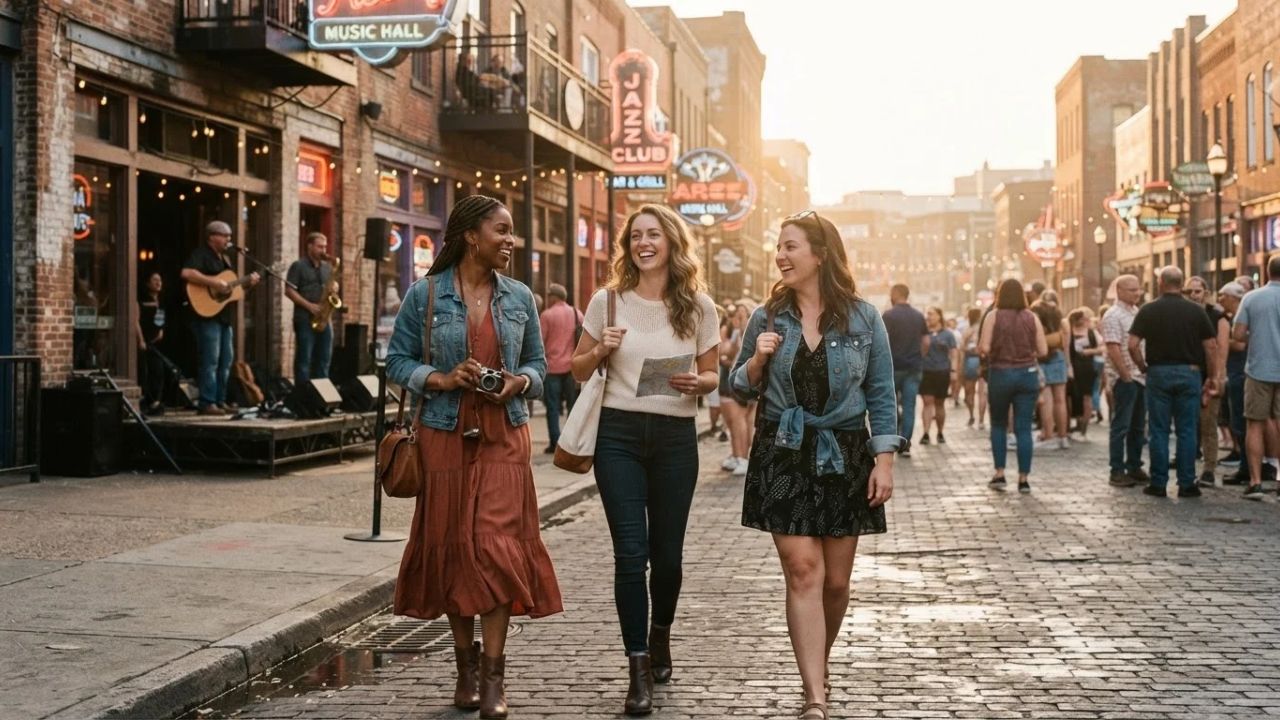
The American Music Tourism Act aims to connect travelers with America’s rich musical legacy across iconic cities and rural heartlands
While international travelers have long flocked to the United States primarily for coastal theme parks or neon-lit casino strips, more than sixty percent of cultural visitors report that musical heritage—from the birth of the blues in muddy river deltas to the electric roots of Motown—forms the true emotional core of their American journeys. Recognizing this profound cultural draw, federal lawmakers have introduced the American Music Tourism Act of 2025, advancing bipartisan measures through both chambers of Congress via H.R. 617 in the 119th Congress and S. 195 in the Senate. Seeking to formally amend the Visit America Act, the pending legislation directs national tourism authorities to elevate historic recording studios, heritage music trails, independent venues, and iconic festivals into the forefront of global destination marketing. If enacted into federal law, the initiative promises to steer domestic and international travelers beyond traditional gateway cities like New York, Los Angeles, and Orlando, guiding them instead down the resonant backroads of Louisiana, Tennessee, Michigan, and the Mississippi Delta.
The proposed legislation arrives as global travel patterns experience a profound shift away from generic sightseeing toward deeply immersive cultural exploration. Music is one of the United States’ most influential cultural exports, shaping the global identity of communities from New Orleans and Nashville to Detroit and Cleveland. By linking music heritage directly with official federal marketing strategies, the American Music Tourism Act seeks to ensure that historic musical landmarks receive the preservation support, visitor foot traffic, and economic investment necessary to thrive for generations to come.
From Front Porches to Federal Policy: Inside the American Music Tourism Act
The American Music Tourism Act represents a coordinated effort to harness the economic power of cultural tourism. Both the House version (H.R. 617) and the Senate companion (S. 195) focus on amending the statutory framework of the Visit America Act, ensuring that music-related travel promotion receives formal federal recognition. Under the proposal, the federal government would collaborate with state tourism offices, municipal arts councils, and non-profit cultural trusts to identify and promote historic music landmarks, performance halls, music heritage trails, and festival corridors.
While the legislation has advanced through key procedural milestones in Congress, it remains under active legislative consideration and has not yet been enacted into federal law. However, its introduction has already stimulated national dialogue regarding the economic value of music travelers. Visitors drawn by live music do not merely buy concert tickets; they fill local hotels, patronize neighborhood diners, hire regional guides, and support independent instrument repairers and record shops.
A major focus of the initiative is extending economic opportunities to smaller, rural communities that gave birth to foundational genres. While major cities like New York and Los Angeles dominate media coverage, the roots of American music lie in rural outposts like Clarksdale, Mississippi; Muscle Shoals, Alabama; Macon, Georgia; and Bristol, Tennessee. A coordinated national strategy led by Visit The USA would give international travelers the confidence to navigate regional scenic byways, spreading tourism spending directly into communities that preserved this heritage against immense odds.
The Sonic Highway: What Makes America’s Regional Music Sanctuaries Irreplaceable
To travel through the American music corridor is to experience an extraordinary dialogue between geography, community migration, and cultural resilience. Each region developed its distinct sonic identity through the traditions, struggles, and hopes of its people.
In Louisiana, New Orleans stands as the birthplace of jazz. In Congo Square, enslaved Africans gathered on Sunday afternoons in the eighteenth and nineteenth centuries, preserving ancestral drumming patterns and polyrhythms that eventually evolved into ragtime, jazz, and rhythm and blues. At the National Park Service managed New Orleans Jazz National Historical Park, ranger-musicians explain how brass bands laid the foundation for modern popular song. Away from tourist congestion, the acoustic rooms along Frenchmen Street in the Marigny district vibrate with upright bass lines and trumpet solos, while neighborhood Second Line brass parades celebrate community solidarity through the streets of Tremé.
Travel north along the Mississippi River into Tennessee, and you reach Memphis, the capital of blues and early rock. On Beale Street, brass markers celebrate innovators like W.C. Handy, B.B. King, and Memphis Minnie. At Sun Studio on Union Avenue, the modest room with original acoustic ceiling tiles still echoes with the early recordings of Howlin’ Wolf, Johnny Cash, and Elvis Presley. South of downtown, the Stax Museum of American Soul Music honors artists like Otis Redding, Isaac Hayes, and Booker T. & the M.G.’s, whose raw, driving southern soul provided the soundtrack to the Civil Rights Movement.
Further east in Nashville, the story turns toward country, bluegrass, and Americana. Anchored by the Country Music Hall of Fame and Museum, the city celebrates storytelling in song. The sacred curved pews of the Ryman Auditorium—revered as the Mother Church of Country Music—showcase near-flawless acoustics, while the historic Grand Ole Opry continues its century-old tradition of live radio broadcasts.
The musical journey extends across the industrial heartland as well. In Detroit, Hitsville U.S.A. preserves the humble photography studio on West Grand Boulevard where Berry Gordy Jr. built Motown Records, producing timeless hits by Stevie Wonder, the Supremes, and Marvin Gaye. Along Lake Erie, Cleveland houses the Rock & Roll Hall of Fame, celebrating the global explosion of rock and roll.
Visitor Insider Tips
Experiencing the American music highway with authenticity requires avoiding commercial tourist traps and seeking out grassroots venues:
- New Orleans Frenchmen Street Etiquette: Avoid the alcohol-fueled novelty bars on Bourbon Street. Walk ten minutes east to Frenchmen Street, where venues like The Spotted Cat Music Club and Snug Harbor present world-class jazz. Arrive around 20:30, carry small cash bills for artist tip buckets, and respect the musicians by keeping table chatter low during acoustic performances.
- Sun Studio Advance Reservations: Sun Studio in Memphis preserves intimate, small-group tours that fill up quickly. Book your morning tour slot online at least three weeks in advance. Afterward, take the free vintage-style shuttle bus connecting Sun Studio directly to Graceland and the Memphis Rock 'n' Soul Museum.
- Nashville Beyond the Honky-Tonk Strip: While Lower Broadway’s neon honky-tonks offer high-energy cover bands, the real magic of Nashville lies in listening rooms. Reserve seats weeks ahead for an intimate songwriter-in-the-round session at The Bluebird Cafe in Green Hills, or catch rising Americana artists at the Station Inn in the Gulch.
- Driving the Blues Highway (US 61): Rent a car and trace US Highway 61 from Memphis south through the flat, open cotton fields of the Mississippi Delta to Clarksdale. Check into the historic rustic cabins at the Shack Up Inn, and spend the evening at Red’s Lounge, an authentic juke joint where master blues guitarists play raw twelve-bar blues from a corner amplifier.
- Official Heritage Trail Maps: Download official state music trail maps and festival calendars through Explore Louisiana and the Tennessee Department of Tourism Development.
Cultural and Environmental Context
Promoting music tourism requires deep respect for living cultural heritage and community stability. In historic musical cradles like New Orleans’ Tremé and North Nashville, rapid urban gentrification, short-term rental conversions, and noise ordinances threaten multi-generational musician communities. The American Music Tourism Act encourages preservation policies that ensure tourism spending directly benefits resident musicians, culture bearers, and historic non-profit music archives rather than corporate landlords.
Environmental sustainability is equally intertwined with heritage trails. The Mississippi Delta and Louisiana bayous are ecologically sensitive floodplains experiencing coastal wetland loss and river erosion. State tourism initiatives are linking music trails with scenic byway conservation, encouraging electric vehicle touring routes and educating travelers on wetland restoration projects that protect the communities where blues and Cajun music first took root.
Preservation also extends to the physical spaces that nurtured these sounds. Independent historic venues often operate on thin profit margins. Recognizing historic venues as vital cultural landmarks can unlock federal preservation grants and historic tax credits, preventing storied recording studios and family-owned listening rooms from being demolished for commercial redevelopments.
FAQ: Planning an American Music Pilgrimage 2026
What is the current status of the American Music Tourism Act?
The legislation has advanced through congressional procedural steps as H.R. 617 in the House and S. 195 in the Senate, but it remains under consideration and has not yet become federal law.
What is the most iconic route for a US music heritage road trip?
The classic route traces the Mississippi River from New Orleans through the Mississippi Delta to Memphis, continuing eastward to Nashville and north to Detroit or Cleveland.
How do travelers find authentic live music in New Orleans?
Head to Frenchmen Street in the Marigny neighborhood or attend live performances and ranger talks at the New Orleans Jazz National Historical Park in the French Market.
What is the best time of year to take an American music road trip?
Autumn (September through November) and spring (March through May) offer comfortable driving weather, lively neighborhood music festivals, and fewer summer holiday crowds.
From the brass-fueled street corners of New Orleans to the sacred microphone stands of Memphis and Nashville, America’s music trails offer a journey into the very soul of human resilience and creative triumph.
Related Travel Guides
Disclaimer
This article is for informational and educational purposes only. It does not constitute legal, financial, or professional advice. While we strive to provide accurate and up-to-date information, travel policies, regulations, and conditions change rapidly. Always verify information with official sources before making travel decisions. Nomad Lawyer makes no representations about the accuracy, reliability, completeness, or suitability of the information provided. Readers should consult qualified professionals for advice specific to their circumstances. The views expressed in this article are those of the author and do not necessarily reflect the views of Nomad Lawyer.
Raushan Kumar
Founder & Lead Developer
Full-stack developer with 11+ years of experience and a passionate traveller. Raushan built Nomad Lawyer from the ground up with a vision to create the best travel and law experience on the web.
Learn more about our team →