
Mid-Air Sensor Anomaly Triggers Travel Chaos: American Airlines Flight 1617 Boeing 737 MAX 8 Makes Terrifying Emergency Diversion to West Texas
As unexpected technical failures threaten passenger safety, American Airlines Flight 1617 violently aborts its Dallas-bound route, executing a dramatic emergency landing in Midland and sparking massive travel chaos.

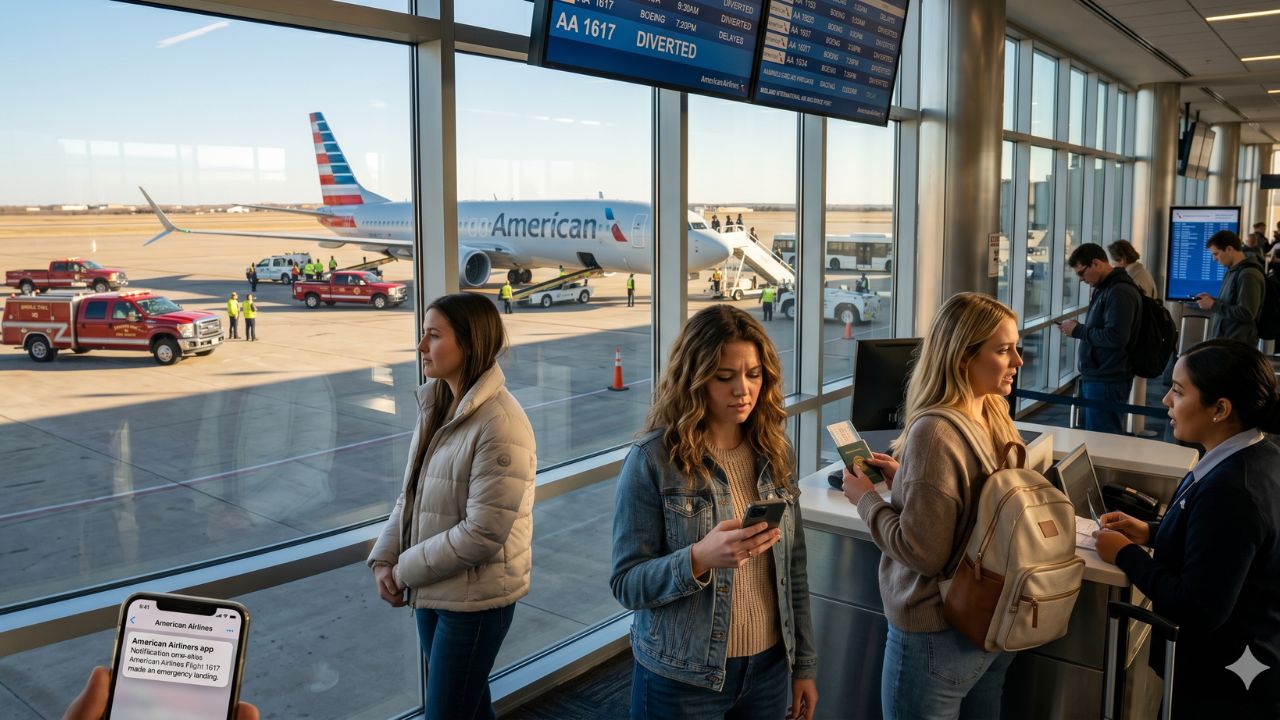
Image generated by AI
A Sudden Technical Emergency Triggers Mid-Air Panic
While massive sectors of the global passenger network frequently battle highly unpredictable extreme weather events, synchronized logistical bottlenecks, and horrific commercial fleet constraints, the sudden, unmanageable eruption of a mid-air technical failure remains the absolute most terrifying catalyst for cascading airport disruptions. Delivering highly urgent, breaking airline news, verified U.S. aviation trackers confirm that a highly alarming operational emergency has actively detonated, completely exposing vulnerable domestic commuters to severe travel chaos over the airspace of West Texas. On June 2, 2026, highly disturbing operational news forcefully emerged confirming that an American Airlines Boeing 737 MAX 8 violently aborted its planned route, plunging terrified passengers into an unexpected emergency landing at a remote regional facility.
While desperate travelers usually attempt to navigate terrifying terminal gridlock caused by absolute flight cancellations on the ground, these exclusive aviation updates reveal a highly systemic, incredibly dangerous logistical nightmare unfolding at cruising altitude. American Airlines Flight 1617, originally scheduled to complete a routine high-capacity transit from Burbank (BUR) to Dallas/Fort Worth (DFW), took a dramatic and terrifying turn mid-flight. Without warning, the highly advanced aircraft diverted from its flight path, forcing an immediate, highly stressful emergency descent into Midland International Air and Space Port (MAF). This unplanned descent instantly raised urgent, massive questions among aviation experts regarding the safety of the Boeing 737 MAX 8 fleet and the immediate cause of the disruption.
Expanded Overview: The Scale of the Mid-Flight Disruption
The sudden, highly publicized execution of this massive mid-air diversion serves as an undeniable example of how rapidly complex aircraft operations can collapse into extreme transit pressure. The route connecting Southern California to the massive Dallas mega-hub serves as an absolutely critical, high-capacity domestic corridor. When a sudden technical anomaly strikes an aircraft traversing this route, it completely shatters the passenger pipeline. For a massive corporate and leisure market heavily reliant on incredibly robust, high-frequency flight schedules, this emergency diversion heavily exposes the entire network to terrifying bottlenecks, severe travel safety concerns, and massive logistical damage to connecting itineraries.
The terrifying reality of the current transit crisis is found in the sheer vulnerability of passengers trapped inside an aircraft executing an unplanned descent. Flight-tracking databases, such as PlaneFinder, logged the aircraft’s sudden change of routing on June 2, completely verifying the diversion event. Initially, neither American Airlines nor the Federal Aviation Administration (FAA) provided immediate public confirmation regarding the specific cause—whether a sudden weather anomaly, a violent passenger disturbance, or a critical mechanical failure. This terrifying silence fueled massive speculation until subsequent technical reports revealed that the highly trained flight crew took immediate, decisive action to prevent a catastrophic failure.
Section-Wise Breakdown of the Flight 1617 Diversion
Unpacking the Technical Emergency
The mid-air operational strain aboard Flight 1617 actively buckled under a highly specific mechanical alert. According to verified airline and FAA statements following the incident, the severe diversion was triggered by a reported technical issue directly linked to a sensor anomaly aboard the Boeing 737 MAX 8. In modern aviation, faulty sensor readings can violently disrupt the aircraft's automated systems. Recognising the terrifying potential of an unverified sensor alert, the flight crew immediately prioritized passenger safety, opting to abort the flight to Dallas rather than risk a catastrophic failure in the highly congested airspace of North Texas.
The Decision to Divert to Midland
When an emergency landing is declared, safety protocols legally mandate that pilots immediately consult with air traffic control to locate the nearest suitable airport equipped to handle the specific aircraft. In this highly stressful scenario, Midland International Air and Space Port (MAF) represented the absolute closest regional facility with the necessary runway infrastructure and emergency response capabilities. The routine, safety-first decision ensured that the massive Boeing aircraft touched down without incident, successfully avoiding the devastating consequences of pushing a compromised aircraft to its absolute limits.
The Reality of Flight Diversions and Passenger Isolation
While the aircraft landed safely with no serious injuries reported, the passenger reality is one of complete isolation. By successfully diverting to West Texas, the airline successfully avoided a physical tragedy but instantly triggered massive logistical travel chaos. Passengers bound for international connections or vital corporate meetings in Dallas were violently stranded at a regional airport far removed from their intended destination, completely reliant on the airline to dispatch rescue aircraft or arrange complex ground transportation.
Verified Aviation Disruption and Flight Data
To fully comprehend the massive operational scale and strategic deployment dictating this highly terrifying mid-air emergency, the following table explicitly details the exact flight metrics heavily impacting American Airlines Flight 1617:
Complete Flight 1617 Emergency Diversion Breakdown
| Flight Disruption Metric | Verified Aviation Data | Direct Impact on Passenger Logistics |
|---|---|---|
| Operating Airline | American Airlines | Flag carrier heavily scrutinized following diversion. |
| Flight Identifier | Flight 1617 (AA1617) | Scheduled service completely aborted mid-flight. |
| Aircraft Model | Boeing 737 MAX 8 | High-capacity jet; triggered massive technical concern. |
| Original Departure | Burbank Airport (BUR) | Southern California origin heavily delayed. |
| Intended Destination | Dallas/Fort Worth (DFW) | Massive hub connections violently missed. |
| Diversion Airport | Midland International (MAF) | West Texas facility utilized for emergency landing. |
| Date of Incident | June 2, 2026 | Mid-week travel schedules completely shattered. |
| Verified Cause | Technical Sensor Anomaly | Precautionary landing executed to prevent catastrophe. |
| Passenger Injuries | Zero Reported | Safe landing executed, but severe travel chaos ensued. |
Passenger Impact: Navigating the Terminal Gridlock
For the modern commuter attempting to navigate this highly volatile domestic network, the passenger impact of this massive mid-air emergency is completely terrifying. Reliable, on-time flights are the absolute backbone of intercontinental travel, and this mid-air abortion completely destroyed that promise. Passengers facing these massive disruptions must employ immediate survival tactics.
- Surviving Regional Isolation: Because Flight 1617 landed at a regional facility (MAF), passengers were physically isolated in smaller holding areas, enduring intense fear and confusion regarding their onward journey to Dallas.
- The Threat of Ruined Connections: By violently missing their scheduled arrival at the massive DFW mega-hub, passengers suffered totally ruined onward itineraries, missing vital connecting flights across the entire American Airlines network.
- Survive the Rebooking Gridlock: Rather than celebrating a smooth journey, stranded travelers are aggressively urged to demand immediate re-accommodation via official airline apps as they battle extreme customer service queues while waiting for a rescue aircraft to be dispatched to Midland.
Conclusion: A Highly Destructive Aviation Meltdown
The massive, highly publicized emergency diversion of American Airlines Flight 1617 represents a severe, incredibly dangerous wake-up call for the North American aviation sector. By actively demonstrating that deep systemic technical anomalies aboard advanced aircraft like the Boeing 737 MAX 8 can instantly shatter flight schedules and violently strand passengers in remote locations, this incident completely highlights the terrifying fragility of modern air travel. As executive leadership across American Airlines frantically scrambles to analyze the faulty sensor data and appease hundreds of isolated passengers, domestic tourists are heavily urged to aggressively monitor their flight status, actively prepare for sudden flight diversions, and fully expect this unprecedented technical disaster to trigger massive regional travel chaos.
Key Takeaways
- Massive Mid-Air Emergency: American Airlines Flight 1617 executed a terrifying emergency landing on June 2, 2026.
- Targeted Aircraft: The incident involved a Boeing 737 MAX 8, an aircraft frequently scrutinized by global aviation authorities.
- Aborted Route: The aircraft violently aborted its scheduled high-capacity transit from Burbank (BUR) to Dallas/Fort Worth (DFW).
- Technical Sensor Failure: The emergency descent into Midland International Air and Space Port (MAF) was triggered by a highly dangerous sensor anomaly.
- Passenger Survival Tactics: Travelers caught in mid-air diversions are aggressively urged to use digital apps to initiate immediate rebooking protocols upon landing, as ground staff at regional airports are frequently overwhelmed by the sudden influx of stranded passengers.
Disclaimer: The specific flight diversion metrics, aircraft technical anomalies, and passenger impact assessments presented in this report are based on verified aviation tracking data from PlaneFinder and official statements regarding American Airlines operations on June 2, 2026. Official airline technical reports, sensor diagnostics, and federal safety investigations are highly volatile and subject to continuous, real-time update based on active operational shifts. Prospective passengers are urgently advised to fiercely monitor their specific booking status and verify active flight safety records directly via the airline's official portal prior to airport arrival.
Disclaimer
This article is for informational and educational purposes only. It does not constitute legal, financial, or professional advice. While we strive to provide accurate and up-to-date information, travel policies, regulations, and conditions change rapidly. Always verify information with official sources before making travel decisions. Nomad Lawyer makes no representations about the accuracy, reliability, completeness, or suitability of the information provided. Readers should consult qualified professionals for advice specific to their circumstances. The views expressed in this article are those of the author and do not necessarily reflect the views of Nomad Lawyer.
Kunal K Choudhary
Co-Founder & Contributor
A passionate traveller and tech enthusiast. Kunal contributes to the vision and growth of Nomad Lawyer, bringing fresh perspectives and driving the community forward.
Learn more about our team →