
Allegiant Air Operated Flight AAY211, an Airbus A320 from Allentown to Fort Myers Diverts to Punta Gorda Airport, United States: What You Need To Know
Allegiant Air flight AAY211 diverted to Punta Gorda Airport on June 25, 2026. Learn how the Airbus A320 avoided Fort Mye

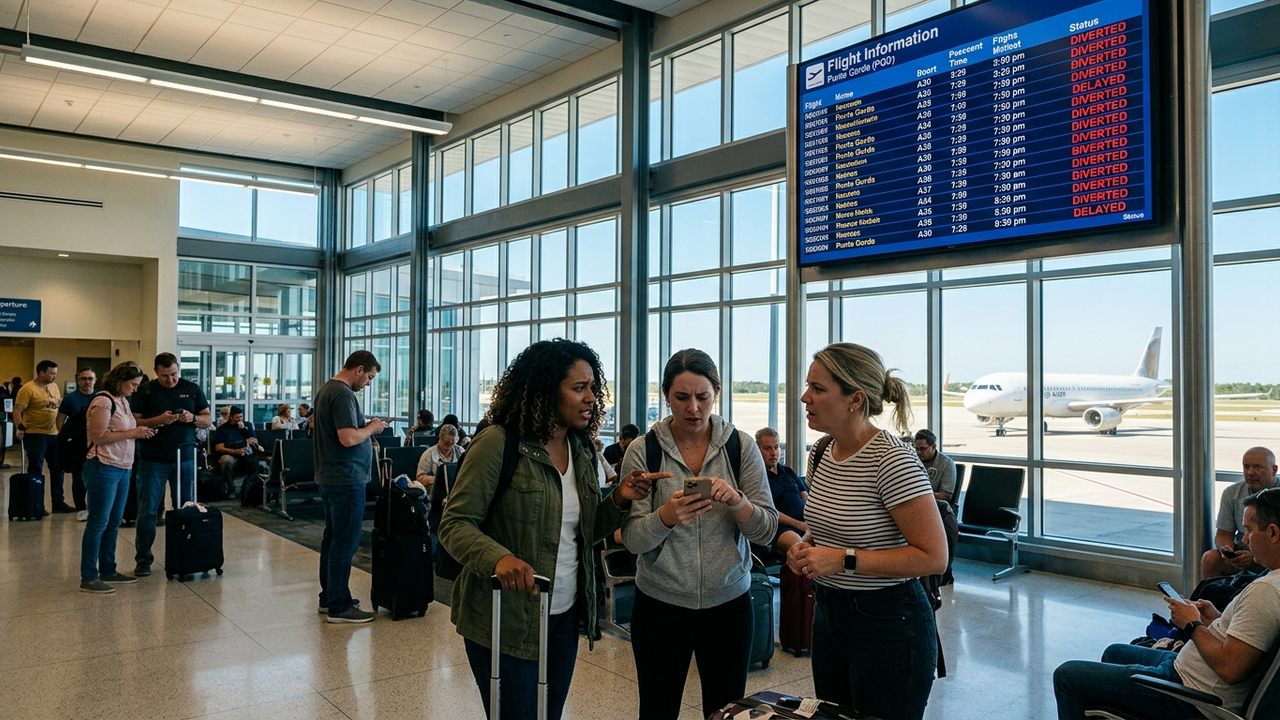
Image generated by AI
[Punta Gorda, June 27, 2026] — An Allegiant Air flight traveling from Pennsylvania to Florida was forced to divert to Punta Gorda Airport on June 25, 2026, after operational issues arose during the journey. The Airbus A320, operating as flight AAY211, landed safely with all passengers and crew onboard following a mid-flight course correction.
The aircraft, registered as N190NV, had departed from Allentown (ABE) on schedule at 2:46 PM. While the flight was initially proceeding toward Fort Myers (RSW), flight crews identified a need to alter the destination to ensure a secure arrival. This decision resulted in the aircraft redirecting to Punta Gorda Airport (PGD), a regional facility located approximately 30 miles north of the original destination.
Operational Factors Leading to the AAY211 Diversion
Aviation diversions are standard safety protocols implemented when the primary arrival airport presents risks that could compromise the security of the aircraft or its occupants. In the case of flight AAY211, the crew opted to bypass Southwest Florida International Airport (RSW) in favor of Punta Gorda (PGD).
Industry observers indicate that such redirections are typically triggered by localized meteorological anomalies, sudden runway closures, or acute air traffic congestion. Flight tracking data confirmed that the Airbus A320 maintained a stable trajectory from Pennsylvania for the majority of the trip before the crew initiated a new approach vector. By utilizing real-time weather reports and coordinating with air traffic controllers, the pilots were able to select an alternative airfield that guaranteed a safe touchdown.
The proximity of Punta Gorda to Fort Myers was a critical factor in this decision. The short distance allowed the flight team to execute the diversion without significantly depleting fuel reserves, adhering to the fundamental aviation principle of prioritizing safety over strict schedule adherence.
Strategic Role of Punta Gorda Airport Infrastructure
The selection of Punta Gorda Airport as the diversion site was not arbitrary. Allegiant Air maintains a robust operational presence at PGD, which serves as a strategic hub and crew base for the carrier. Landing at a primary station provides an airline with immediate access to its own ground infrastructure, which is vital during unplanned disruptions.
When an aircraft is diverted to a hub, the carrier can immediately deploy proprietary ground crews and customer service representatives to manage the situation. Had the Airbus A320 required any immediate mechanical inspections following the diversion, Allegiant’s on-site engineering teams would have been available to service the airframe, preventing the logistical delays often associated with landing at "outstation" airports.
Furthermore, the availability of established terminal facilities at PGD allowed the airline to streamline the passenger experience. This infrastructure enabled the carrier to coordinate ground transportation more efficiently, utilizing buses to ferry travelers the remaining distance to Fort Myers.
Technical Execution of Mid-Flight Course Corrections
The process of diverting a commercial aircraft involves a complex integration of automated flight management systems and manual pilot intervention. The flight deck of the Airbus A320 utilizes advanced avionics that provide the crew with constant updates on atmospheric conditions and airspace status.
Upon deciding to divert, the captain and first officer coordinate with regional Air Traffic Control (ATC) to secure a new flight path. This requires precise calculations regarding landing weights, fuel burn rates, and the specific length of the available runway at the alternate airport. Modern flight management computers allow pilots to reprogram the aircraft's destination and approach vector within seconds, ensuring the transition does not disrupt other aircraft in the surrounding airspace.
To ensure a margin of safety, all commercial flight plans include contingency fuel, ensuring that the aircraft can reach a designated alternate airport even if the primary destination becomes unavailable. ATC typically grants priority to diverted flights to ensure they can enter the landing pattern with minimal delay.
Flight Summary Data
| Flight Detail | Information |
|---|---|
| Flight Number | AAY211 |
| Aircraft Type | Airbus A320 |
| Aircraft Registration | N190NV |
| Departure City | Allentown (ABE) |
| Original Destination | Fort Myers (RSW) |
| Diversion Airport | Punta Gorda (PGD) |
| Date of Incident | June 25, 2026 |
| Departure Time | 2:46 PM |
Analysis of Aviation Safety Impacts
The successful diversion of flight AAY211 underscores the effectiveness of contemporary aviation safety nets. By choosing to land at a regional hub rather than attempting a landing at a potentially compromised primary airport, the airline mitigated risks to both the equipment and the passengers.
This incident demonstrates the high level of coordination between flight crews and ground-based air traffic management. The ability to absorb a schedule change within the broader U.S. aviation network without causing systemic delays highlights the resilience of modern flight planning.
Why This Matters (Information Gain)
This event provides a clear example of "hub-and-spoke" operational advantages during emergencies. Most passengers view airline hubs as mere transit points, but this diversion proves they are critical safety assets. When a carrier like Allegiant Air utilizes a hub as a diversion point, it transforms a potential crisis into a manageable logistical exercise.
The ability to provide immediate mechanical support and pre-arranged ground transport significantly reduces the "recovery time" for a flight. In an era of increasing weather volatility and airport congestion, the strategic placement of crew bases and maintenance facilities at secondary airports like Punta Gorda serves as a vital insurance policy for airlines. This ensures that "operational necessity" does not result in stranded passengers, but rather a controlled transition to a safe landing.
Related Travel Guides
Disclaimer
This article is for informational and educational purposes only. It does not constitute legal, financial, or professional advice. While we strive to provide accurate and up-to-date information, travel policies, regulations, and conditions change rapidly. Always verify information with official sources before making travel decisions. Nomad Lawyer makes no representations about the accuracy, reliability, completeness, or suitability of the information provided. Readers should consult qualified professionals for advice specific to their circumstances. The views expressed in this article are those of the author and do not necessarily reflect the views of Nomad Lawyer.
Kunal K Choudhary
Co-Founder & Contributor
A passionate traveller and tech enthusiast. Kunal contributes to the vision and growth of Nomad Lawyer, bringing fresh perspectives and driving the community forward.
Learn more about our team →