
Etihad Flights Resume: 62 Abu Dhabi Departures Scheduled 2026
Etihad Airways resumes 62 Abu Dhabi flights on March 27 2026 following regional disruptions — routes, schedules and booking updates for passengers.

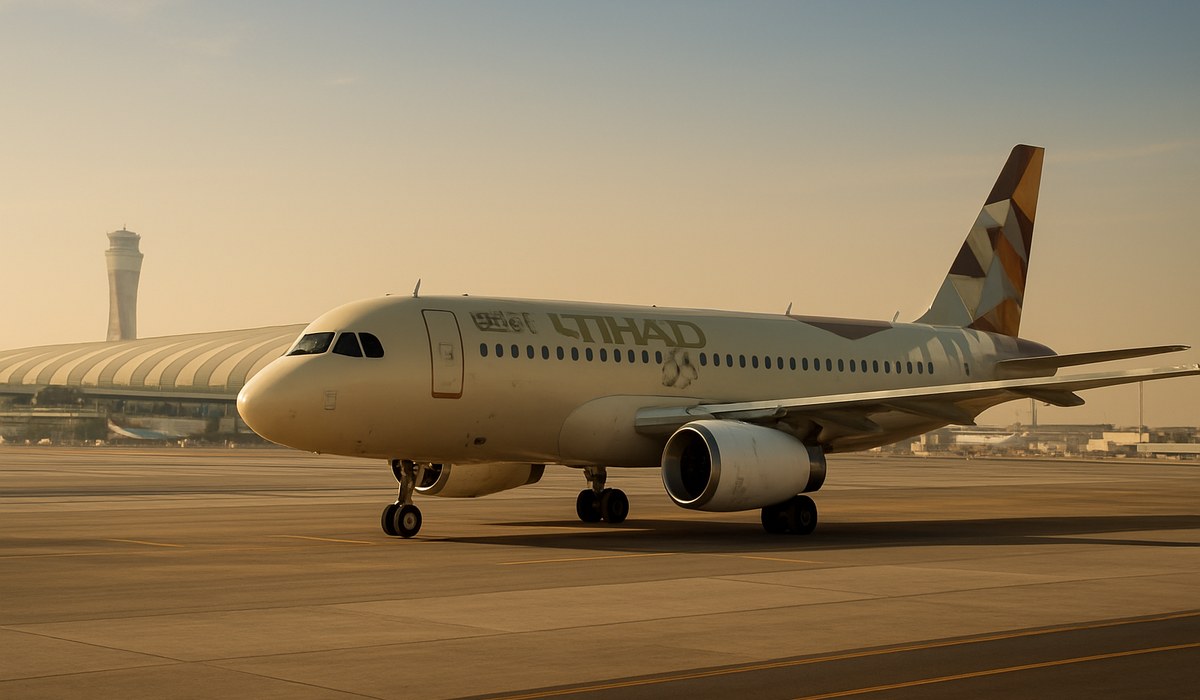
Image generated by AI
Breaking: Etihad Schedules 62 Flights From Abu Dhabi as Network Recovery Accelerates
Etihad Airways is restoring 62 passenger departures from Abu Dhabi on Friday, March 27, 2026. This marks a major acceleration in the UAE carrier's phased network recovery following early-March flight disruptions across the United Arab Emirates. The scheduled departures signal stabilization at Zayed International Airport (AUH) and reflect gradual reinstatement of long-haul, regional, and short-haul service across Etihad's three-continent footprint.
Network Ramp-Up: From Suspension to 62 Daily Departures
Etihad's recovery follows a controlled restart strategy implemented in early March 2026 after widespread commercial flight suspensions across Abu Dhabi. The airline initially resumed operations with a fraction of its typical schedule, focusing exclusively on essential routes and core destinations. Since that first restart phase, publicly filed timetables show consistent daily growth in departures. By March 27, the 62-flight milestone represents a significant step toward pre-disruption volumes, though capacity remains below 2025 peak levels. Airport coordination with competing carriers has emphasized conservative spacing and slot management, ensuring operational stability. This methodical approach prioritizes safety and airspace capacity restoration over rapid volume recovery. FlightAware real-time tracking shows Etihad's current slot utilization patterns at AUH, confirming the measured acceleration through late March.
Long-Haul Routes Anchor the March 27 Departure Schedule
The 62 Etihad departures on March 27 depend heavily on intercontinental services connecting Abu Dhabi to Europe, North America, and Asia-Pacific. Widebody aircraft—including Boeing 787 Dreamliners and Airbus A350s—operate core long-haul routes to London Heathrow (LHR), Paris Charles de Gaulle (CDG), and major Southeast Asian hubs. These premium, high-yield routes were among the first to resume and now operate near-normal frequencies as Zayed International stabilizes. North American services to New York (JFK) and other US gateways contribute substantially to the 62-flight tally, supporting both point-to-point passengers and long-haul transfer traffic through Abu Dhabi. Etihad's 2026 expansion into new North American markets reinforces the airline's hub strategy during this recovery window. Asia-Pacific connectivity—particularly India and Southeast Asian routes expanded over the past two years—accounts for additional departures, leveraging Abu Dhabi's position as a Europe-Asia transfer hub. These medium- and long-haul services generate the highest revenue and anchor the airline's daily wave structure for connecting passengers.
Regional and Short-Haul Connectivity Across Middle East and Africa
Beyond intercontinental flights, Etihad's March 27 schedule includes dense regional operations serving the Gulf, wider Middle East, and select African markets. Short-haul departures to Gulf Cooperation Council (GCC) states and Levant capitals create same-day connection windows for long-haul passengers arriving from Europe or Asia. Flights to markets like Riyadh (RYD), Doha (DOH), and Kuwait (KWI) operate in multiple daily banks—early morning, midday, and evening—to maximize transfer opportunities. African route expansion, a strategic focus for Etihad in 2025–2026, contributes additional departures on March 27 to emerging gateways across East and West Africa. These regional routes, while lower-yielding than long-haul services, drive hub efficiency by filling seats with connecting passengers and supporting local demand from UAE residents. The 62-flight structure reflects a balanced portfolio across all three networks, typical of a full-service hub operation.
Zayed International Airport: Capacity Recovery and Hub Operations
Zayed International Airport (AUH) ended 2025 with record passenger volumes and continues expanding infrastructure to handle higher traffic density in 2026. The airport's terminal capacity, ground handling services, and runway coordination support gradual volume increases without congestion. For Etihad, operating 62 departures on March 27 requires precise banked-schedule coordination—clustering arrivals from Europe/Asia in early morning, followed by departure banks to feed those connecting passengers to long-haul destinations in late morning and afternoon. This wave-based structure preserves hub efficiency even at reduced volumes. IATA (International Air Transport Association) publishes operational resilience guidelines that Etihad and AUH have adopted during this recovery phase. Ground services, fuel, and crew coordination at AUH have scaled proportionally with the March ramp-up, ensuring no bottlenecks on the 62-departure day.
Real-Time Flight Tracking and Passenger Verification
Travelers booked on Etihad flights departing Abu Dhabi on March 27 should verify status through airline-provided tools and FlightAware's live tracking for real-time gate, departure, and arrival data. Last-minute schedule adjustments remain possible during the recovery period, making official confirmation essential 24 hours before travel. Etihad's booking systems and mobile app display current departure times, gate assignments, and any operational notes. Passengers should also check US DOT's airline consumer protections if connecting to US destinations, as weather or slot constraints may trigger compensation eligibility. Email and SMS notifications from Etihad confirm departure status and any rerouting, so registered travelers receive timely alerts.
Traveler Action Checklist
- Confirm your March 27 flight status on Etihad.com or your booking confirmation 48 hours before departure; check for gate assignments, baggage allowances, and seat availability.
- Verify connecting flight details if transferring in Abu Dhabi; minimum connection times may differ due to recovery-phase slot spacing.
- Check passport and visa requirements for your destination, especially if your routing has changed from original booking.
- Monitor weather forecasts for Abu Dhabi and your destination; recovery schedules are sensitive to additional disruptions.
- Arrive at AUH early (3–4 hours for international departures) to account for potential ground handling delays during the ramp-up period.
- Register with your airline's app to receive real-time flight status alerts, including last-minute gate changes or delays.
- Review baggage policies and seat selections online; seat maps may show reduced inventory during the phased capacity increase.
- Contact Etihad customer service if your flight was previously cancelled; rebooking onto March 27 flights may be available.
Etihad Abu Dhabi Recovery Metrics (Early March to March 27)
| Metric | Early March Restart | Mid-March | March 27 Target |
|---|---|---|---|
| Daily Departures (AUH) | 15–20 flights | 35–40 flights | 62 flights |
| Long-Haul Routes Active | 8–10 | 15–18 | 22+ |
| Regional/Short-Haul Routes | 10–12 | 20–25 | 30+ |
| Widebody Aircraft in Use | 3–5 | 8–10 | 15+ |
| Narrowbody Aircraft in Use | 5–8 | 12–15 | 20+ |
| Peak Hourly Departure Rate | 1–2 flights | 3–4 flights | 6–8 flights |
What This Means for Travelers
The 62-flight schedule on March 27 restores meaningful connectivity through Abu Dhabi for connecting passengers who have faced limited options since early March. This milestone opens transfer possibilities between Europe, Asia, North America, and regional markets that were suspended or severely reduced during the disruption window. Travelers should expect near-normal service quality, though some flights may still experience minor delays due to congested ramp-up operations. Seat availability has recovered substantially but remains tighter than pre-disruption standards—booking confirmed connecting flights as early as possible minimizes the risk of involuntary rerouting. Ground services, catering, and crew provisioning may show modest inefficiencies given the rapid ramp-up, but Etihad has assured customers of full service restoration. Passengers on March 27 flights should budget extra time at AUH for check-in and boarding, as terminal operations will be busier than early-March restart days. Families traveling with children and elderly passengers benefit from this increased capacity, as flights are less oversold and more likely to accommodate special-service requests (meals, mobility assistance, unaccompanied minors). Revenue-paying tickets should see full rebooking rights and compensation eligibility if disruptions occur under EU Regulation 261/2004 or equivalent frameworks.
Frequently Asked Questions
How many flights does Etihad schedules on March 27, 2026, from Abu Dhabi? Etihad Airways operates 62 passenger departures from Abu Dhabi's Zayed International Airport (AUH) on Friday, March 27, 2026. This figure includes long-haul flights to Europe and North America, as well as regional services across the Middle East and Africa, marking a major recovery milestone after early-March disruptions.
What caused the flight disruptions that led to reduced Etihad schedules? Early-March 2026 saw commercial flight suspensions across Abu Dhabi affecting multiple carriers, including Etihad. While official disclosures have been limited, aviation authorities indicated airspace capacity constraints. Etihad initiated a phased restart strategy, scaling from 15–20 daily departures in early March to 62 by March 27, prioritizing essential routes and operational stability.
Which routes does Etihad schedules on the March 27 recovery flight schedule? The 62-flight schedule combines long-haul services to London, Paris, and North American hubs (New York, Toronto); Asia-Pacific routes to Southeast Asian and Indian markets; regional Gulf routes to Riyadh, Doha, and Kuwait; and African routes. Exact routing varies daily based on crew, aircraft, and passenger demand.
Will Etihad schedules return to pre-disruption flight volumes by April 2026? Recovery timelines depend on continued airspace stabilization and airport capacity restoration. Etihad's 62-flight March 27 schedule represents strong progress but likely remains 5–15% below peak 2025 volumes. Full network restoration typically follows a 4–8 week recovery window from the initial restart date. Monitoring official Etihad announcements and IATA bulletins provides the most current recovery forecasts.
Related Travel Guides
- Spain Heatwave 2026: UK FCDO Issues Wildfire Warnings for Balearic Islands and Mainland
- Dollar Strength Volatility Reshapes Travel Costs Between Tokyo and the United States
- Ministry of Culture and KTO Launch 2026 Autumn Travel Month Offering Rail Passes and Accommodation Subsidies Across South Korea
Disclaimer
This article is for informational and educational purposes only. It does not constitute legal, financial, or professional advice. While we strive to provide accurate and up-to-date information, travel policies, regulations, and conditions change rapidly. Always verify information with official sources before making travel decisions. Nomad Lawyer makes no representations about the accuracy, reliability, completeness, or suitability of the information provided. Readers should consult qualified professionals for advice specific to their circumstances. The views expressed in this article are those of the author and do not necessarily reflect the views of Nomad Lawyer.
Preeti Gunjan
Contributor & Community Manager
A passionate traveller and community builder. Preeti helps grow the Nomad Lawyer community, fostering engagement and bringing the reader experience to life.
Learn more about our team →