
Air India Express 737 MAX Emergency Landing Triggers Severe Travel Chaos and Flight Cancellations After Mid-Air Fuel Alert on Kannur to Jeddah Route: Latest Airline News
As a mid-air fuel filter alert forces a fully loaded Boeing 737 MAX back to Kannur, the sudden emergency landing sparks severe travel chaos and rolling airport disruptions along the highly congested India-Gulf corridor.

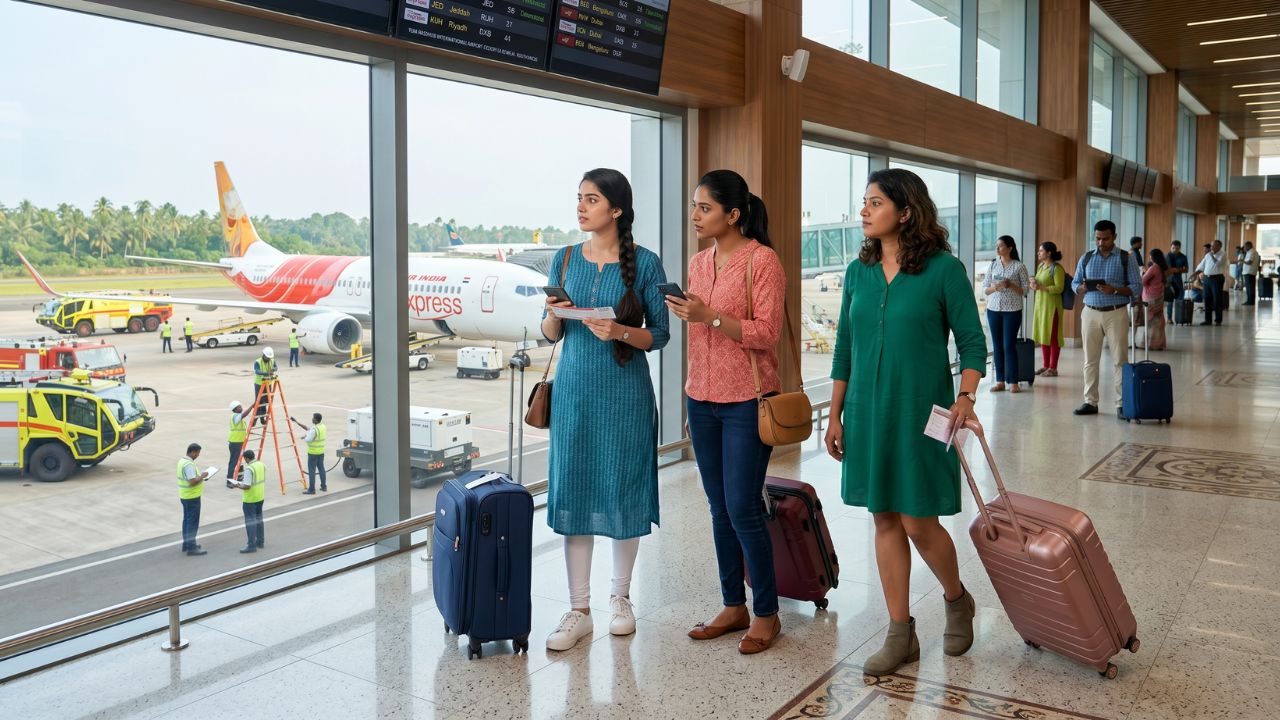
Image generated by AI
In a terrifying mid-air aviation event that instantly triggered severe travel chaos and a cascading wave of flight cancellations across the highly congested South Asia–Middle East corridor, an Air India Express flight carrying over 180 passengers was forced into an emergency return to Kannur. On Tuesday morning, approximately two hours into a routine international jump to Jeddah, a critical cockpit warning signaling a potential engine irregularity forced the crew of the Boeing 737 MAX variant to aggressively reverse course. The sudden diversion—later confirmed to be a fuel filter irregularity—not only forced the aircraft into extended holding patterns but completely paralyzed the departure schedule, sparking severe airport disruptions on the ground. As mechanics scramble to execute detailed maintenance reviews and passengers endure massive delays, this high-alert emergency landing represents the premier headline in today's breaking airline news and essential global aviation updates.
By introducing direct passenger coordination and dynamic scheduling backups, the regional aviation hubs target growing passenger demand across vital commerce sectors. The choice to coordinate flight departures in phases helps to manage gate capacity, supporting the country's broader regional transportation network.
Context: The Collapse of Operational Continuity
For the hundreds of labor travelers and religious pilgrims relying on the hyper-dense India–Saudi Arabia aviation corridor, a single mechanical failure can instantly ignite total travel chaos.
Historically, flights operating between Kannur and Jeddah are booked to absolute maximum capacity. Because this route experiences intense demand from seasonal passenger spikes and labor movement, airlines operate with virtually zero reserve fleet capacity. When the Air India Express Boeing 737 MAX detected an engine-related warning mid-flight on Tuesday, the crew’s immediate decision to prioritize safety over schedule continuity was structurally necessary but operationally devastating. By executing a forced return to Kannur, the airline essentially destroyed the daily rotation schedule for that specific aircraft. This instantly triggered severe airport disruptions, as over 180 passengers were suddenly stranded back at their origin airport, forcing ground crews into a massive logistical scramble. While the crew's execution of standard fuel management techniques prevented a physical disaster, the mechanical fault exposed a massive vulnerability in the predictive diagnostics of modern narrow-body fleets, directly resulting in brutal flight cancellations and schedule realignment across the broader Gulf network.
To view live flight schedules, specific Air India Express rebooking options, or alternative connection statuses, travelers must consult official Indian aviation directories. For direct booking access on routes unaffected by this specific aircraft grounding, travelers should check the official Air India Express or Air India booking portals. To explore live flight tracking and monitor the exact severity of the regional airspace bottlenecks caused by this emergency return, passengers can consult the official FlightAware tracking service.
Section-Wise Breakdown of the Mid-Air Emergency
Kannur: The Departure and Sudden Return
The flight departed from Kannur International Airport at exactly 7:40 a.m. on Tuesday. For the first two hours, the Boeing 737 MAX operated nominally as it climbed toward cruising altitude over the Arabian Sea. Suddenly, the cockpit systems triggered a severe engine-related warning. Recognizing the extreme risk of a catastrophic engine failure over open water on a long-haul narrow-body route, the crew immediately initiated safety protocols. They reversed course, physically turning the aircraft back toward India, directly plunging the Kannur arrivals terminal into highly localized travel chaos as ground emergency teams were activated.
The Arabian Sea: In-Air Holding Procedures
Because the aircraft had just departed for a long-haul international flight, it was far too heavy with fuel to land safely without risking structural damage. During the return phase, the pilots were forced to conduct extended, controlled holding patterns over the water. This standard fuel management technique was required to burn off enough weight to execute a safe touchdown. The aircraft remained airborne briefly for fuel optimization, adding further anxiety for the 180+ passengers onboard before safely landing at Kannur with zero injuries reported.
The Tarmac: Fuel Filter Diagnostics
Post-landing inspections immediately shifted the investigative focus away from internal engine damage and onto fuel system integrity. Maintenance teams identified a probable issue in the fuel filter system during their preliminary technical checks. The layered diagnostics revealed that the initial cockpit alert was triggered indirectly by fuel flow irregularities. The aircraft was immediately grounded and cleared for further detailed maintenance review, instantly removing a critical asset from the Air India Express fleet and exacerbating regional flight cancellations.
Technical Roster: Emergency Timeline and Operational Data
To ensure absolute factual accuracy regarding the exact sequence of events, passenger safety protocols, and technical diagnostics surrounding this massive operational disruption, the following tables detail the incident data:
Timeline of the Mid-Air Safety Decision
| Event Phase | Operational Details |
|---|---|
| Departure | 7:40 a.m. from Kannur |
| Mid-flight | Engine warning detected after approximately two hours |
| Decision | Crew initiates return to origin airport |
| In-air procedure | Controlled holding patterns conducted for safe landing weight |
| Landing | Safe touchdown at Kannur with no incident |
Key Operational Facts and Diagnostics
| Category | Verified Details |
|---|---|
| Flight Status | Flight returned after mid-air warning indication |
| Fuel Management | Aircraft remained airborne briefly for fuel optimisation |
| Landing Outcome | Safe landing completed at departure airport |
| Casualties | No injuries reported among passengers or crew |
| Diagnostic 1 | Engine warning triggered precautionary response |
| Diagnostic 2 | Post-flight inspection identified fuel filter irregularity |
| Engine Status | No structural engine damage reported |
| Aircraft Status | Aircraft cleared for further detailed maintenance review |
Passenger Handling and Airline Response Strategy
- Refreshments: Provision of refreshments and passenger assistance upon landing.
- Accommodations: Temporary accommodation arrangements for waiting travellers.
- Rebooking: Re-accommodation on alternate flight service.
- Communication: Continuous communication updates to passengers.
Passenger Impact: Stranded on the Labor Corridor
For the everyday passenger, specifically the highly sensitive demographic of labor travelers and pilgrims flying to Jeddah, this mid-air diversion represents the ultimate nightmare scenario of travel chaos.
The immediate passenger impact was a total disruption of highly rigid travel schedules. When the Boeing 737 MAX executed its safe touchdown, the passengers were forced into an overwhelmed terminal. While Air India Express eventually deployed an alternative aircraft to continue the journey to Jeddah, the intervening hours were defined by intense anxiety and severe airport disruptions. Because international flights require complex customs, baggage offloading, and re-screening processes, the logistical strain of re-accommodating over 180 passengers onto an alternate flight service caused massive cascading delays. The airline's deployment of temporary accommodation and refreshments mitigated a total passenger revolt, but the sudden grounding highlighted how a single technical flag can utterly destroy a passenger's itinerary.
Industry Analysis: The Failure of Predictive Maintenance
Aviation industry analysts view the Kannur-Jeddah incident as a stark exposure of the limitations within modern predictive maintenance systems.
Analysts note that while the layered safety systems correctly detected the fuel filter irregularity before it escalated into an engine failure, the detection occurred mid-air, rather than on the ground. A senior aviation commentary perspective from TTW Founder and Editor-in-Chief, Mr. Anup Kumar Keshan, perfectly captures the broader industry sentiment: "When a single fuel system alert can ground an international flight mid-air, it shows how sensitive modern aviation has become. Safety protocols are working, but predictive capability must evolve faster than operational demand." Analysts argue that as global air traffic expands across high-demand corridors like India–Saudi Arabia, relying on reactive, mid-air cockpit warnings is no longer acceptable. The industry must rapidly shift toward AI-driven predictive engine monitoring and digital twin aircraft health tracking to prevent these warnings before they appear, thus saving airlines from the massive financial damage associated with severe flight cancellations and diverted wide-body operations.
Actionable Advice for Surviving Mid-Air Diversions
If you are a passenger flying on high-density Gulf corridors and you suddenly experience a mid-air emergency return resulting in severe travel chaos, execute this strategic survival checklist immediately upon landing:
- Demand Rebooking Priority: Do not wait for the airline to slowly process 180 passengers. The moment you land, use the airline's mobile app to simultaneously check for re-accommodation on alternate flight services while waiting in line for ground staff.
- Secure Temporary Accommodations Early: If the alternate aircraft is delayed, politely but firmly demand your temporary accommodation arrangements from the gate agent before the hotel vouchers run out.
- Do Not Leave the Sterile Transit Area: When forced back to your origin airport (like Kannur), do not exit the secure terminal unless explicitly instructed. Leaving the transit zone may require you to clear international immigration and security a second time, guaranteeing you miss the rescue flight.
- Pack a 24-Hour Survival Kit in Your Cabin Bag: Because checked baggage is almost never unloaded during a temporary technical delay, always pack essential medications, phone chargers, and a change of clothes in your 7 kg cabin bag to survive sudden airport disruptions.
FAQ: Air India Express Emergency & Travel Chaos 2026
Why did the Air India Express flight return to Kannur?
Approximately two hours after departing Kannur at 7:40 a.m. for Jeddah, the cockpit triggered an engine-related warning, later identified as a fuel filter irregularity, forcing the crew to prioritize safety and return.
Was the Boeing 737 MAX aircraft damaged during the flight?
No. Post-flight inspections confirmed that there was no structural engine damage reported; the fuel filter issue triggered the precautionary response, and the aircraft landed safely without any injuries to the 180+ passengers.
How did the emergency landing trigger travel chaos and flight cancellations?
By unexpectedly returning to the departure airport, the entire daily rotation for that specific aircraft was destroyed, stranding passengers and forcing the airline into a massive logistical scramble to deploy an alternate aircraft.
The Brutal Reality of Reactive Aviation Safety
The terrifying mid-air return of the Air India Express flight proves definitively that while safety protocols are successfully keeping planes from crashing, the lack of predictive ground diagnostics guarantees severe travel chaos. By forcing a fully loaded Boeing 737 MAX into holding patterns over the Arabian Sea just to execute a safe landing back at Kannur, the airline successfully avoided physical disaster but plunged 180 passengers into brutal airport disruptions. As legacy carriers desperately push their narrow-body fleets to the absolute limit on the congested India-Gulf corridor, travelers must accept a critical new reality: until AI-driven predictive maintenance becomes the global standard, you are always one fuel filter alert away from having your flight canceled mid-air.
Key Takeaways
- Mid-Air Emergency: An Air India Express flight to Jeddah carrying over 180 passengers was forced back to Kannur following an engine warning triggered just two hours after its 7:40 a.m. departure.
- Fuel Filter Fault: Post-flight technical inspections revealed the engine alarm was indirectly triggered by a fuel filter irregularity, with no structural engine damage reported.
- Holding Patterns Required: To avoid landing overweight and risking structural damage, the pilots executed controlled holding patterns to burn fuel before safely touching down in Kannur.
- Passenger Logistical Nightmare: The sudden return triggered severe travel chaos, forcing the airline to scramble for temporary accommodations and ultimately deploy an alternative aircraft to rescue the stranded travelers.
- Predictive Failure: The incident highlights a massive flaw in modern aviation; safety systems are working reactively, but the lack of predictive ground diagnostics guarantees ongoing flight cancellations and airport disruptions.
Related Travel Guides
Massive World Cup Fleet Repainting Triggers Travel Chaos
Gulf Route Expansion Strategies to Defeat Transit Chaos
Air India Express Rebooking Hacks During Emergencies on Reddit
Disclaimer
This article is for informational and educational purposes only. It does not constitute legal, financial, or professional advice. While we strive to provide accurate and up-to-date information, travel policies, regulations, and conditions change rapidly. Always verify information with official sources before making travel decisions. Nomad Lawyer makes no representations about the accuracy, reliability, completeness, or suitability of the information provided. Readers should consult qualified professionals for advice specific to their circumstances. The views expressed in this article are those of the author and do not necessarily reflect the views of Nomad Lawyer.
Kunal K Choudhary
Co-Founder & Contributor
A passionate traveller and tech enthusiast. Kunal contributes to the vision and growth of Nomad Lawyer, bringing fresh perspectives and driving the community forward.
Learn more about our team →