
Air China CA 898: How São Paulo-Madrid Route Redefines Intercontinental Travel
Air China's new São Paulo-Madrid flight CA 898 achieves 78% occupancy on a Boeing 787-9 Dreamliner, signaling strong recovery in long-haul travel between South America and Europe.

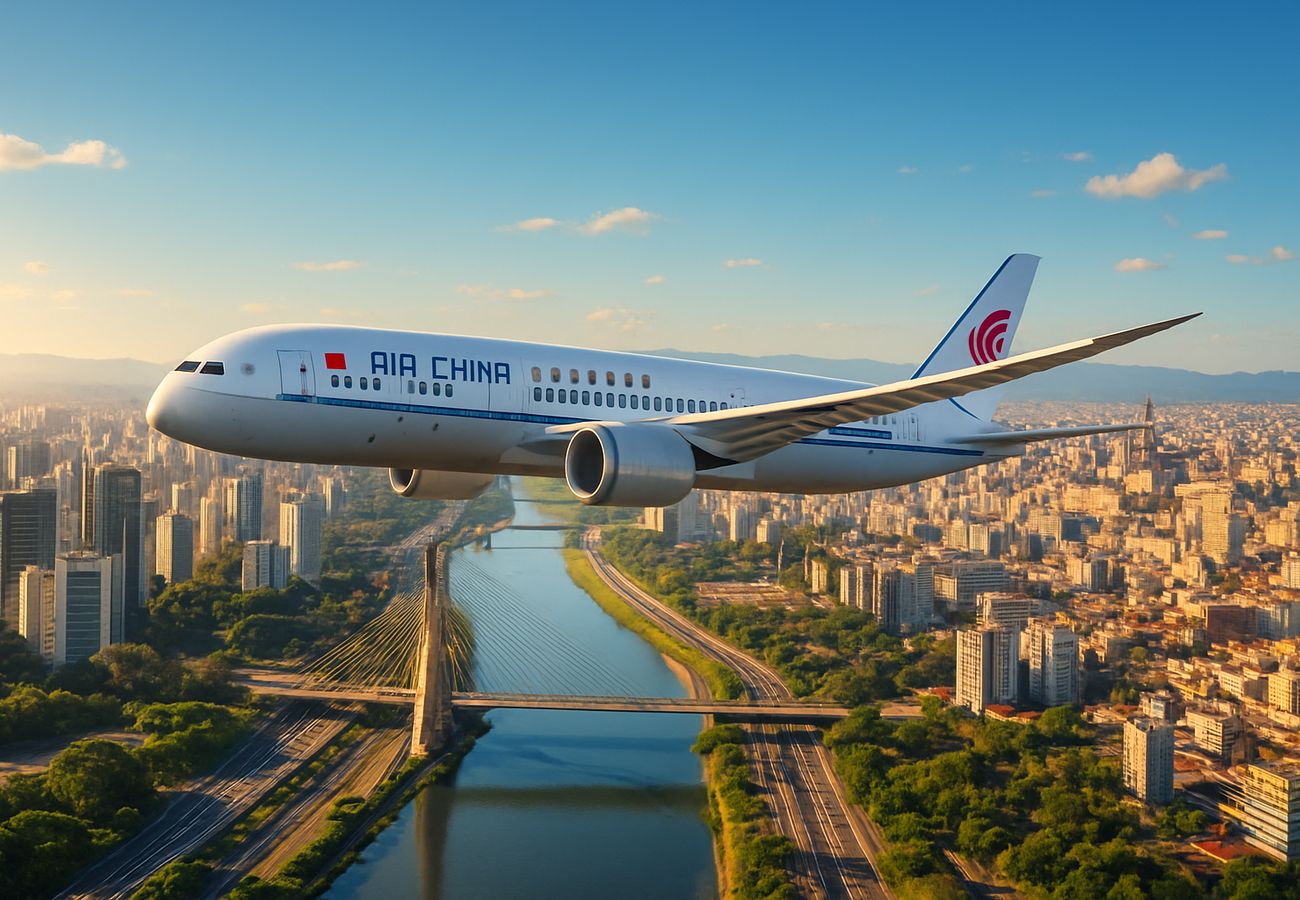
Image generated by AI
A Direct Bridge Across the Atlantic
Flight CA 898 quietly reveals what aviation executives have been hoping to confirm: long-haul travel between South America and Europe isn't just recovering—it's thriving. Air China's new direct connection between São Paulo's GRU International Airport and Madrid's Adolfo Suárez Madrid-Barajas Airport has become more than a logistics route. It's a statement about global connectivity's future.
The numbers tell the story. This Boeing 787-9 Dreamliner carried 228 passengers at 78% occupancy—a figure that would make most long-haul operators celebrate. For perspective, most transcontinental flights struggle to maintain 70% occupancy consistently. This isn't struggle. This is momentum.
Reddit: "Direct flights between South America and Europe are game-changers for business travelers. I'd pay premium fares to avoid hub transfers." — r/travel
Why This Route Matters for Two Continents
São Paulo and Madrid weren't randomly selected. São Paulo remains Brazil's dominant aviation hub, handling over 30 million annual passengers through GRU International. Madrid functions as one of Europe's most critical gateway airports. Until now, connecting these powerhouses required at least one transfer—usually through hubs like Miami, Houston, or Lisbon.
Direct routes compress distance into opportunity. Tourists skip the layover confusion. Business travelers reclaim hours lost to connections. Trade and cultural exchange accelerate when friction disappears from the equation.
Air China positioned CA 898 with surgical precision: departure from São Paulo in the morning, arrival in Madrid shortly after midnight. This timing enables passengers to reach onward European connections or begin their Spanish experience within hours. Every detail reflects strategic scheduling rather than operational convenience.
The Aircraft: Why the 787-9 Matters
Air China didn't deploy a standard widebody for this mission. The Boeing 787-9 Dreamliner represents generational advancement in long-haul aviation.
What separates the 787 from predecessors?
Cabin Comfort: Larger windows with dimming technology, improved humidity control, and pressure systems designed to reduce jet lag. Passengers arrive in Madrid fresher, more energized.
Fuel Efficiency: The 787 burns roughly 20% less fuel than comparable aircraft. For airlines, this means route sustainability. For passengers, it signals environmental responsibility increasingly demanded by modern travelers.
Capacity Design: The 787-9 seats approximately 242 passengers in typical configurations, allowing Air China to balance comfort with volume.
The Dreamliner's deployment on CA 898 signifies confidence. Airlines don't position their newest, most premium aircraft on marginal routes. This aircraft choice reflects Air China's belief in the route's long-term viability.
Occupancy Rates: What 78% Really Signals
Aviation industry observers understand occupancy as the pulse of route health. 78% occupancy on an ultra-long sector (roughly 10.5 flight hours) exceeds industry expectations for emerging routes.
Consider the context: passengers making São Paulo-Madrid journeys face multiple decision points.
Price sensitivity: Intercontinental fares command premium pricing. Only strong demand justifies these costs.
Timing trade-offs: A full transatlantic crossing consumes an entire evening and following day. Convenience must justify the commitment.
Competition: Multiple airlines operate São Paulo-European routes through hub connections. Direct service must compete against established networks.
The 228 passengers boarding this departure represent real choice. They selected Air China, deliberately positioned themselves for the schedule, and validated the route's value proposition through ticket purchases. That's not occupancy. That's endorsement.
Recovery Signals for Global Aviation
The past three years reshaped aviation fundamentally. Route networks contracted. Capacity shrank. Airlines grounded aircraft and reconsidered expansion plans. Recovery began unevenly, market by market.
CA 898's performance suggests intercontinental leisure and business travel have crossed a psychological threshold. Passengers aren't just booking flights again—they're choosing new routes offering direct connectivity at acceptable price points.
This pattern appears across emerging routes: when airlines offer genuine convenience (direct service) with modern aircraft (the Dreamliner advantage) and strategic timing (morning departure, arriving early next morning), passengers respond affirmatively.
For Brazil, the implications are significant. Direct European connectivity traditionally flowed through Miami, Houston, and Caribbean hubs. More options reduce dependency on legacy gateway cities and create competitive pressure benefiting passengers through improved service standards.
The Larger Story Beyond Route Economics
Numbers quantify; stories animate. When 228 people board CA 898, they carry specific narratives.
Some are Portuguese-language journalists visiting Madrid's museums and galleries. Some are Spanish business executives exploring São Paulo's startup ecosystem. Some are families reconnecting after years separated by oceans. Some are students beginning semester-abroad experiences.
Every boarding represents a decision to trust long-distance flight for crucial life moments. That accumulated trust, multiplied across thousands of departures, sustains airlines and shapes global mobility.
The flight's success isn't ultimately about aircraft specifications or occupancy percentages. It's about the gap between São Paulo's energy and Madrid's history becoming traversable in a single night. It's about Brazilian companies hiring Spanish talent and European firms discovering South American opportunities more feasibly.
Air China CA 898 transforms two isolated cities into adjacent possibilities. And passengers have voted with their bookings that this matters.
Direct routes between major continents aren't luxury—they're necessity in a globalized world finally remembering how to move.
Related Travel Guides
Delta TechOps Expands Third-Party MRO Operations Through Strategic LATAM Airlines Brasil Partnership
Global Airport Expansion Surge: 2026 Emerges as Landmark Year for Aviation Infrastructure Overhaul
Disclaimer
This article is for informational and educational purposes only. It does not constitute legal, financial, or professional advice. While we strive to provide accurate and up-to-date information, travel policies, regulations, and conditions change rapidly. Always verify information with official sources before making travel decisions. Nomad Lawyer makes no representations about the accuracy, reliability, completeness, or suitability of the information provided. Readers should consult qualified professionals for advice specific to their circumstances. The views expressed in this article are those of the author and do not necessarily reflect the views of Nomad Lawyer.
Raushan Kumar
Founder & Lead Developer
Full-stack developer with 11+ years of experience and a passionate traveller. Raushan built Nomad Lawyer from the ground up with a vision to create the best travel and law experience on the web.
Learn more about our team →