
Air Canada Flight 1624 to Fort Lauderdale Diverts as Mother and Three Children Face Temporary Travel Ban
A seating dispute on Air Canada Flight 1624 led to a flight diversion at Toronto Pearson Airport and the temporary removal of a mother and her three children.

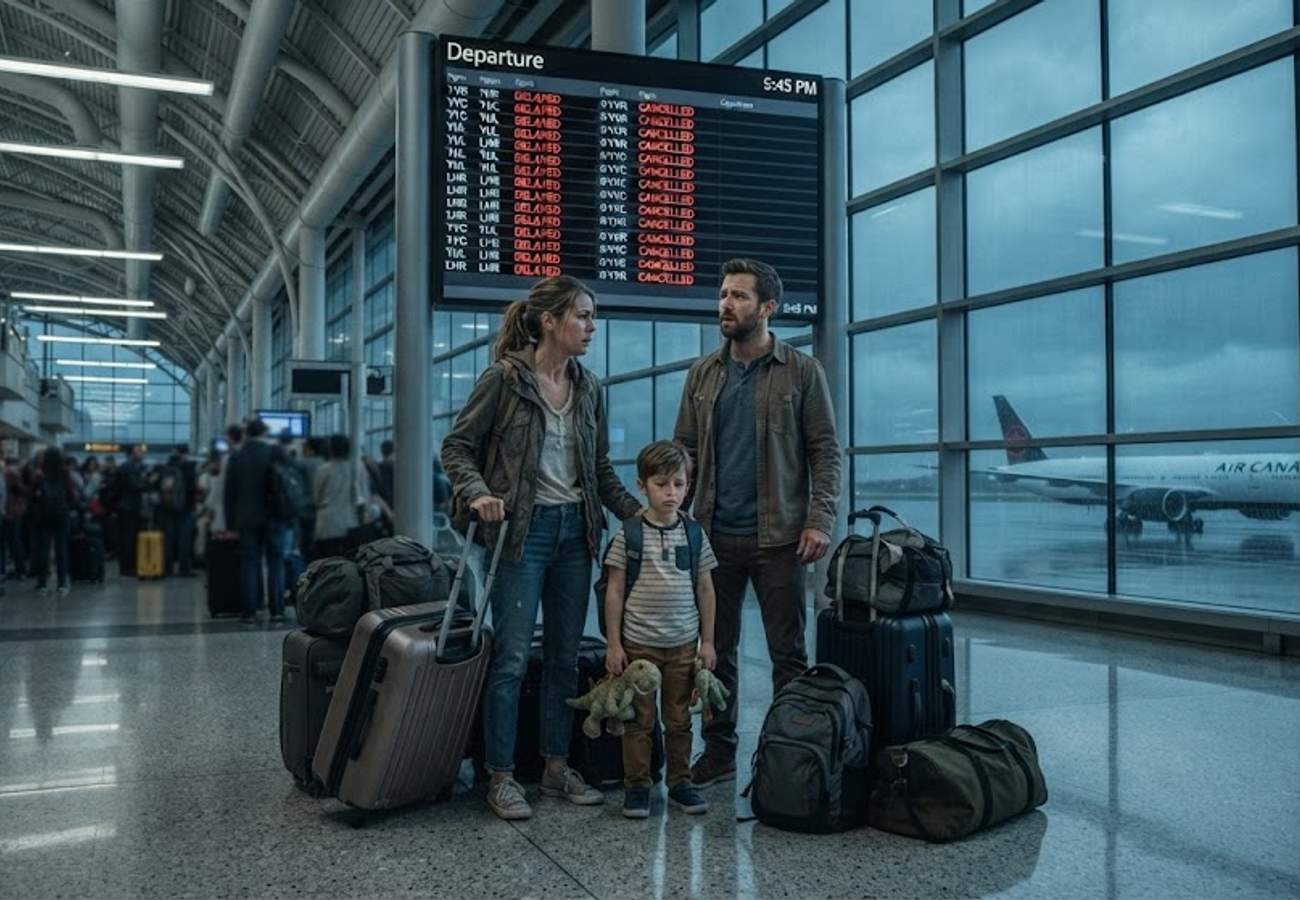
Image generated by AI
[Toronto, July 17] — A scheduled flight from Toronto to Fort Lauderdale ended in a premature return to the gate after a seating conflict resulted in the removal of a mother and her three children. Air Canada Flight 1624 diverted back to Toronto Pearson International Airport in June following an escalation between passengers and crew that nearly resulted in a permanent travel ban for the family.
The incident, which occurred on June 17, highlights the volatile nature of cabin management and the significant role government officials can play in resolving airline-passenger disputes. According to reports, the situation only reached a resolution after the intervention of U.S. Customs and Border Protection (CBP) officers.
Seating Error Triggers Diversion at Toronto Pearson Airport
The conflict began during the boarding process of Air Canada Flight 1624. Passenger Melissa Colalillo, traveling with her three children, arrived at her assigned seats in row 40 only to find two of the positions already occupied by other passengers.
Colalillo reported that she alerted the flight crew to the error immediately. In an effort to avoid conflict and keep her children together, she accepted seating in the row behind row 40. However, this resolution did not satisfy the other passenger in the disputed row. Colalillo stated that she felt unsafe after being threatened by the other passenger, despite her attempts to resolve the seating issue without confrontation.
As the aircraft began its taxiing phase, the situation deteriorated. The Captain and crew eventually made the decision to return the aircraft to the gate. Upon arrival, a supervisor boarded the plane and ordered Colalillo and her children to disembark without providing an immediate explanation.
Supervisor Threatens Travel Ban for Passenger
Following her removal from the aircraft, the experience shifted from a seating dispute to a legal threat. The airline supervisor informed Colalillo that her name would be "flagged" in the system and that she would be banned from all future Air Canada flights.
The sudden removal of a parent and three young children from a flight created a high-stress environment at the gate. Industry observers note that the decision to divert a commercial aircraft back to the gate is a significant operational move, usually reserved for serious safety or security concerns.
U.S. Customs and Border Protection Officers Intervene
The tension was broken when two U.S. Customs and Border Protection officers encountered the family after they had de-boarded. The officers took a proactive role in supporting the family, providing the children with Timbits and providing Colalillo with an iced coffee while assisting her with her luggage.
The officers escorted the family to the airline's service desk to resolve the ticketing issue. Reports indicate that Air Canada operations management initially instructed staff not to rebook the family, citing that the mother was "too emotional."
The CBP officers managed the situation by quietly advising Colalillo to remain silent and calm, effectively acting as mediators between the passenger and the airline staff. Through their intervention, the family was eventually rebooked on a subsequent flight to Fort Lauderdale, which departed nine hours after the original scheduled time.
Air Canada Response to Flight 1624 Incident
Air Canada has formally acknowledged the events of June 17. In a statement, the carrier confirmed that a seating dispute occurred during boarding and escalated after the aircraft had pushed back and was taxiing.
The airline stated: “We understand this was an upsetting experience for the passengers. During boarding, a seating dispute occurred and unfortunately continued to escalate after pushback while the aircraft was taxiing, despite ongoing efforts by the crew to defuse the situation. To avoid further disruption during the flight, the Captain and crew made the decision to return to the gate. The family was rebooked on a subsequent flight to Fort Lauderdale.”
Despite the public statement, Colalillo filed a formal complaint on June 23. Sources indicate that the airline had not contacted the passenger directly as of late last week. The carrier also clarified that the flight in question was not overbooked, suggesting the issue was strictly a clerical or passenger-led seating error.
Industry and Public Reaction to Passenger Removal
The incident has sparked a wider debate among frequent flyers and former airport employees regarding the conduct of Air Canada staff. Some former employees of Toronto Pearson Airport have expressed skepticism toward the airline's version of events, suggesting that such operational failures are not uncommon.
Public sentiment remains divided. Some travelers argue that the crew failed in their primary duty to enforce assigned seating, which would have prevented the escalation. Others have shared similar stories of passengers being removed from flights to Florida for minor questioning or "threatening looks," suggesting a pattern of aggressive passenger management.
| Event Detail | Information |
|---|---|
| Flight Number | Air Canada 1624 |
| Date of Incident | June 17, 2026 |
| Route | Toronto (YYZ) to Fort Lauderdale (FLL) |
| Primary Conflict | Row 40 Seating Dispute |
| Resolution Agent | U.S. Customs and Border Protection (CBP) |
| Final Outcome | Rebooked on flight 9 hours later |
| Formal Complaint Date | June 23, 2026 |
Why This Matters: The Implications of Passenger "Flagging"
This incident serves as a critical case study in the intersection of airline authority and passenger rights. The threat to "flag" a passenger—essentially placing them on an internal no-fly list—is a powerful tool that airlines use to maintain order, but when applied to a seating error, it raises questions about proportionality and due process.
The fact that U.S. government officers had to intervene to secure a rebooking suggests a breakdown in the airline's customer service and conflict resolution protocols. For the aviation industry, this highlights a growing tension: the need for strict security and cabin discipline versus the requirement to handle families and children with empathy. When a seating error—which is fundamentally a failure of the airline's booking software or crew enforcement—is shifted onto the passenger as a behavioral offense, it creates a significant legal and reputational risk for the carrier.
The intervention of federal officers underscores a rare instance where government personnel stepped in to protect consumer interests against corporate policy.
Related Travel Guides
Disclaimer
This article is for informational and educational purposes only. It does not constitute legal, financial, or professional advice. While we strive to provide accurate and up-to-date information, travel policies, regulations, and conditions change rapidly. Always verify information with official sources before making travel decisions. Nomad Lawyer makes no representations about the accuracy, reliability, completeness, or suitability of the information provided. Readers should consult qualified professionals for advice specific to their circumstances. The views expressed in this article are those of the author and do not necessarily reflect the views of Nomad Lawyer.
Kunal K Choudhary
Co-Founder & Contributor
A passionate traveller and tech enthusiast. Kunal contributes to the vision and growth of Nomad Lawyer, bringing fresh perspectives and driving the community forward.
Learn more about our team →