
United Airlines Passenger Forced to Change Offensive Shirt on Flight UA 1152 at Hartsfield-Jackson Atlanta International Airport
A passenger on United Airlines flight UA 1152 was ordered to change clothing at Hartsfield-Jackson Atlanta International Airport after a T-shirt referencing the Israeli-Palestinian conflict was deemed offensive by crew.

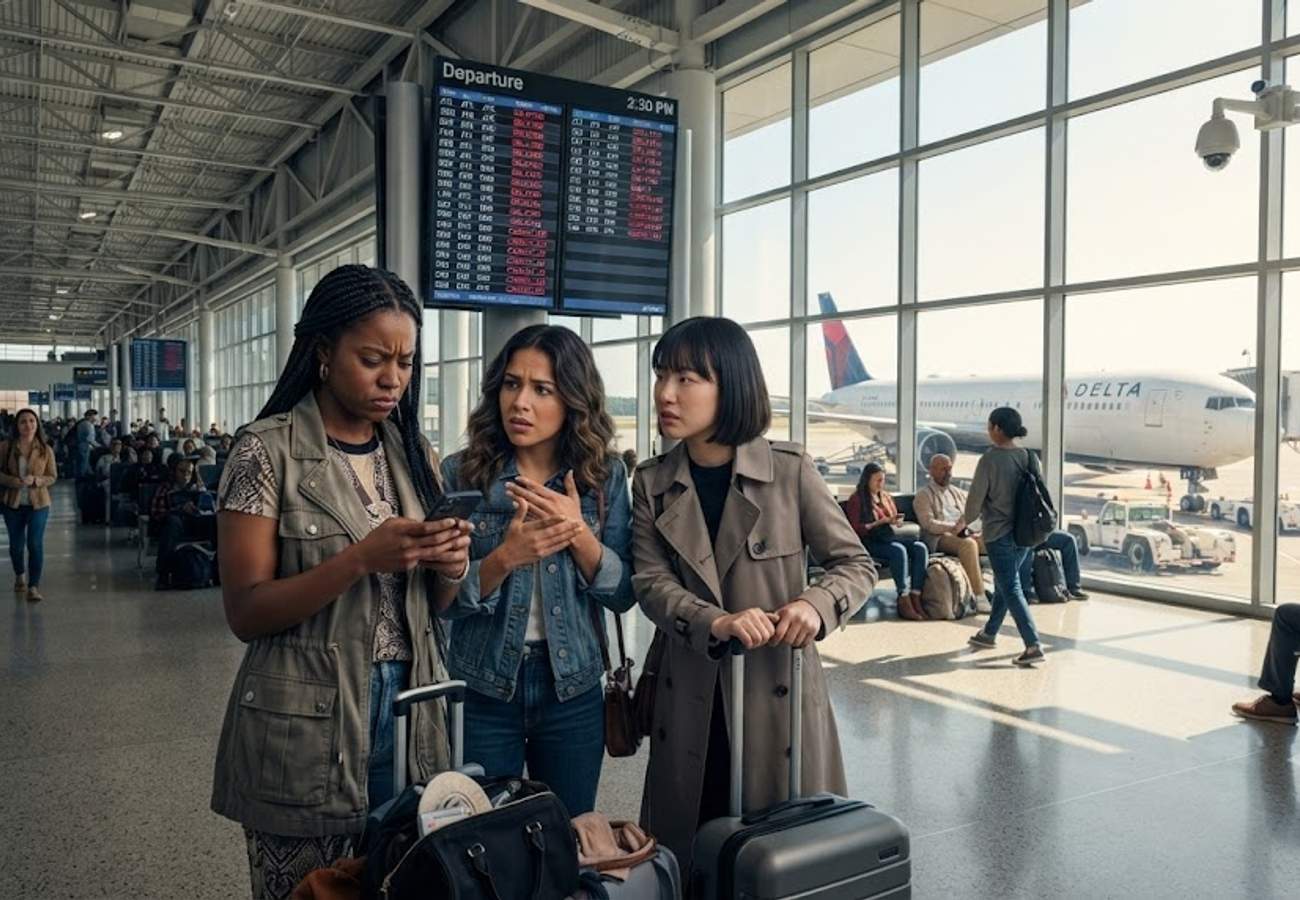
Image generated by AI
A passenger traveling from Atlanta to Newark was denied boarding on a United Airlines flight until he changed his attire, sparking a debate over the enforcement of airline dress codes and free speech.
The incident occurred on June 4, 2026, at Hartsfield-Jackson Atlanta International Airport (ATL). Sam Saadeh, a passenger of Palestinian descent, was boarding flight UA 1152 bound for Newark when he was intercepted by crew members.
The Disruption Details
After boarding the aircraft, Saadeh was approached by a supervisor named Steven and instructed to leave the plane. The directive followed a report from a flight attendant who identified Saadeh's T-shirt—which bore the phrase "Bombing is not self defense"—as offensive.
Saadeh was presented with an ultimatum: change the shirt or be barred from the flight. According to correspondence sent to the clothing brand "Wear the Peace," the supervisor specifically cited the presence of the word "bomb" as the reason for the removal.
Following the flight, a United representative named Cynthia informed Saadeh that other passengers had complained to the crew, stating the messaging made them feel "unsafe." Upon arrival in Newark, airport staff told Saadeh, "You could see how the shirt is offensive... It's 2026."
Flight & Airport Impact Breakdown
- Flight Number: UA 1152
- Route: Hartsfield-Jackson Atlanta International Airport (ATL) to Newark Liberty International Airport (EWR)
- Date of Incident: June 4, 2026
- Primary Conflict: Enforcement of "offensive clothing" policies during the boarding process.
- Outcome: Passenger complied with the dress code change and flew as scheduled.
Passenger Rights & Advisory (Information Gain)
When faced with a demand to change clothing or a denial of boarding based on attire, passengers should be aware of the legal and regulatory framework governing these interactions.
Airline Contract of Carriage Most carriers, including United Airlines, include clauses in their Contract of Carriage allowing them to refuse or remove passengers who are "barefoot, not properly clothed, or whose clothing is lewd, obscene or offensive." Because these are private contracts, airlines have broad discretion in defining "offensive."
Department of Transportation (DOT) Guidelines Currently, the U.S. DOT does not mandate a specific dress code for air travelers. However, airlines are permitted to enforce their own internal policies provided they are not discriminatory.
Actionable Steps for Affected Travelers:
- Request Written Justification: If denied boarding, ask the airline to provide the specific section of the Contract of Carriage being cited.
- Document the Interaction: Record the names and employee IDs of the crew members and supervisors involved.
- File a Formal Complaint: Passengers can file a consumer complaint via the DOT’s Aviation Consumer Protection Division if they believe the airline's policy was applied inconsistently or discriminatorily.
- Seek Rebooking/Refunds: If a passenger is removed and refuses to comply with a dress code change, they are typically not entitled to a refund unless the removal is deemed unlawful or discriminatory.
Industry Analyst View
This incident highlights a growing tension between passenger expression and airline operational security. Since late 2025, following prompts from U.S. Transportation Secretary Sean Duffy regarding "disrespectful" clothing, carriers have tightened enforcement of attire policies.
The operational challenge for airlines lies in "consistent application." Reports indicate a disparity in enforcement; for instance, a passenger wearing a "lesbian as sh*t" shirt was reportedly allowed to fly in June despite crew objections. Such inconsistencies create legal vulnerabilities for carriers, as they may be accused of selective enforcement based on political or religious viewpoints.
From a security perspective, the use of words like "bomb" in an aviation environment triggers immediate red flags for crew trained in threat assessment. However, the shift from security screening (TSA) to behavioral enforcement (airline crew) suggests that "passenger comfort" is becoming a primary driver for removals, often overriding the nuanced context of the messaging.
Saadeh is currently exploring legal options and intends to file a formal complaint with the U.S. Department of Transportation.
Related Travel Guides
Disclaimer
This article is for informational and educational purposes only. It does not constitute legal, financial, or professional advice. While we strive to provide accurate and up-to-date information, travel policies, regulations, and conditions change rapidly. Always verify information with official sources before making travel decisions. Nomad Lawyer makes no representations about the accuracy, reliability, completeness, or suitability of the information provided. Readers should consult qualified professionals for advice specific to their circumstances. The views expressed in this article are those of the author and do not necessarily reflect the views of Nomad Lawyer.
Raushan Kumar
Founder & Lead Developer
Full-stack developer with 11+ years of experience and a passionate traveller. Raushan built Nomad Lawyer from the ground up with a vision to create the best travel and law experience on the web.
Learn more about our team →