
Air Canada Reports Record Fall Revenue Driven by Premium Travel Surge to Europe and Japan in 2026
Air Canada achieves record-breaking fall revenue as high-yield premium travelers shift demand toward Europe and Japan, extending the traditional summer peak into the shoulder season.

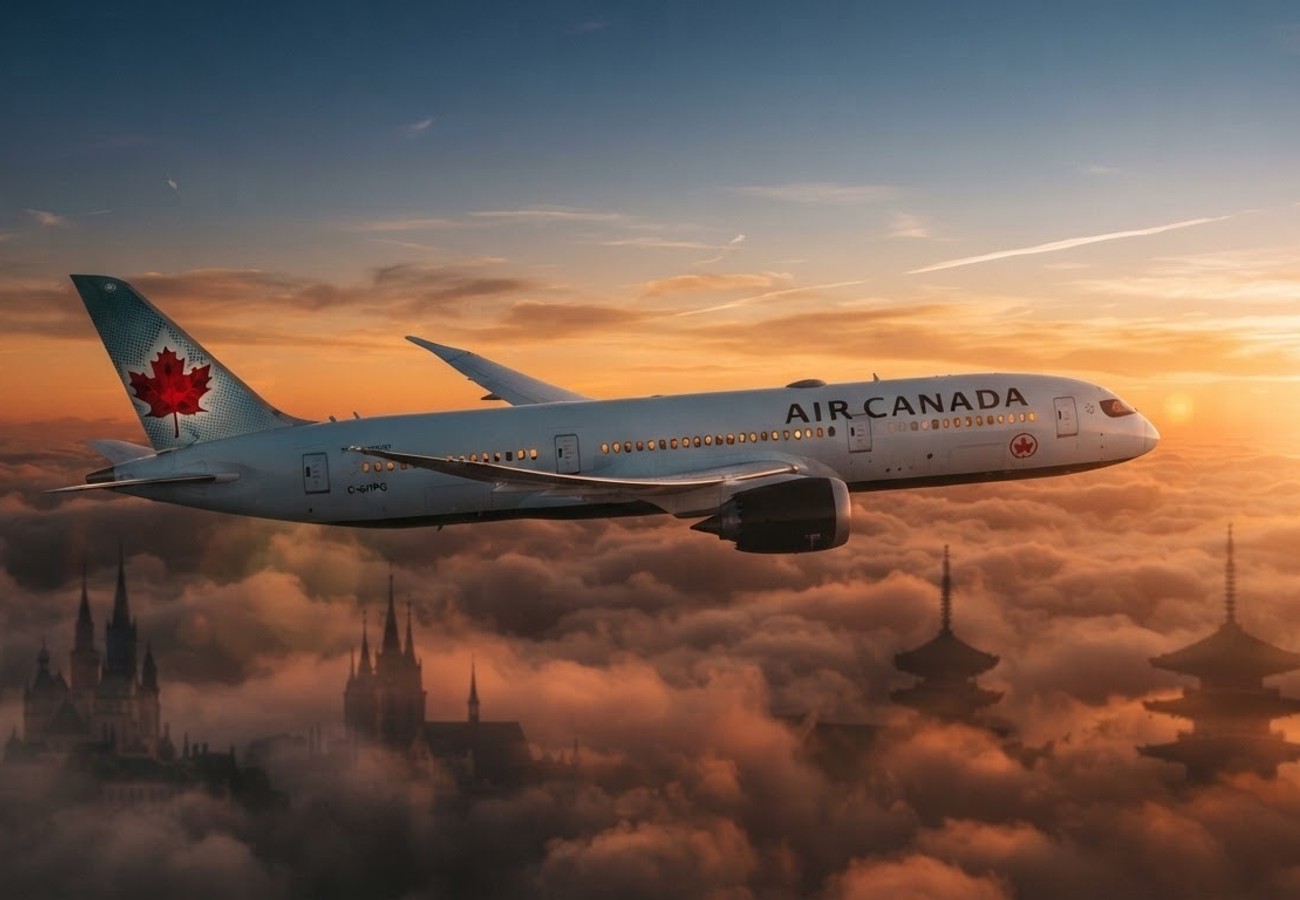
Image generated by AI
Air Canada has secured its strongest fall revenue on record, fueled by a significant increase in premium cabin bookings. High-spending passengers are increasingly bypassing the summer peak in favor of cooler autumn escapes to Europe and expanded routes to Japan.
International Revenue Drivers and Market Shift
Financial disclosures and aviation analyst data indicate that Air Canada has entered the fall period with unprecedented revenue levels. This growth is primarily attributed to long-haul international operations and a strategic increase in the volume of premium seats sold.
While North American domestic markets have experienced yield pressure, systemwide revenue remains bolstered by strong demand on transatlantic and transpacific corridors. Data from the latter half of 2024 and early 2025 show operating revenue maintaining historic highs during the third and fourth quarters—months that typically represent a "shoulder season" slowdown for Canadian carriers.
The airline has intentionally diversified its network to reduce reliance on North American demand. By shifting capacity toward overseas markets, Air Canada has captured a higher concentration of corporate and high-yield leisure travelers who prioritize lie-flat seating and bundled premium perks.
Premium Cabin Demand and "Bleisure" Trends
Management reports highlight a surge in bookings for business class, premium economy, and extra-legroom products. This demand is extending well beyond the traditional July and August peaks, with a notable spike in travel occurring throughout September, October, and November.
Our analysis suggests two primary drivers for this shift:
- Climate Avoidance: Affluent travelers are opting for autumn trips to avoid extreme summer temperatures and overcrowding.
- The "Bleisure" Effect: A rebound in corporate bookings is being layered with leisure travel, where passengers blend professional meetings with extended vacations.
By distributing high-yield demand across the shoulder season, Air Canada has improved aircraft utilization and stabilized year-round frequencies on long-haul routes, reducing the financial impact of seasonal volatility.
Regional Performance Breakdown
Europe: The Autumn Magnet
Europe remains a central pillar of the carrier's international strategy. Following several years of intense summer heatwaves, there is a documented trend of travelers targeting early fall for visits to major European capitals and secondary cultural hubs.
Revenue remains robust across hubs in Toronto, Montreal, and Vancouver. The growth is further supported by a sharp rise in corporate travel between Canada and Europe, driven by diversifying trade and investment ties. This has increased the demand for flexible business-class fares and last-minute premium bookings.
Japan and the Pacific Rebound
In the Pacific region, Air Canada has aggressively rebuilt its network, with Japan emerging as a top performer. The normalization of border policies and favorable exchange rates have spurred a rebound in transpacific traffic.
Key performance indicators include:
- Tokyo Hubs: Strong premium cabin loads on routes to Tokyo, often serving as connection points to Southeast Asia and Oceania.
- Sixth-Freedom Traffic: The carrier is successfully leveraging its Canadian hubs to transport passengers between third-party countries, filling business and premium economy cabins regardless of the season.
Passenger Rights & Advisory: Premium Bookings and Rebooking
For the affected passenger booking premium tiers during this high-demand period, the shift in airline strategy means higher availability of schedules but potentially volatile pricing.
Our analysis of current aviation policies suggests the following for premium travelers:
- Fare Flexibility: Because Air Canada is targeting corporate travelers, many "Premium" and "Business" fares include higher flexibility. Passengers should verify if their ticket is a "Flexible" or "Standard" premium fare, as this dictates the cost of changes during the autumn rush.
- Compensation Rights: For flights departing from the EU to Canada, passengers remain protected under EU261/2004. If a premium flight is canceled or delayed by more than three hours, passengers are entitled to compensation regardless of the cabin class, provided the disruption is not due to "extraordinary circumstances."
- Service Recovery: In the event of a "downgrade" (e.g., paying for Business but being seated in Economy), passengers are entitled to a partial refund of the ticket price, typically ranging from 30% to 75% of the flight segment cost depending on the distance.
Industry Analyst View
Air Canada's transition from a volume-based growth model to a high-yield segment focus represents a strategic pivot in the post-pandemic era. By optimizing the seat mix and investing in cabin upgrades for premium-heavy corridors, the airline is insulating itself from the volatility of the budget leisure market.
The guidance for 2025 and 2026 indicates continued expansion into Europe, Latin America, and Asia-Pacific during the winter and shoulder seasons. This suggests that the "extended season" is no longer a temporary trend but a permanent shift in global travel behavior.
The era of the traditional "off-season" is evaporating as premium travelers redefine the travel calendar.
Related Travel Guides
Disclaimer
This article is for informational and educational purposes only. It does not constitute legal, financial, or professional advice. While we strive to provide accurate and up-to-date information, travel policies, regulations, and conditions change rapidly. Always verify information with official sources before making travel decisions. Nomad Lawyer makes no representations about the accuracy, reliability, completeness, or suitability of the information provided. Readers should consult qualified professionals for advice specific to their circumstances. The views expressed in this article are those of the author and do not necessarily reflect the views of Nomad Lawyer.
Raushan Kumar
Founder & Lead Developer
Full-stack developer with 11+ years of experience and a passionate traveller. Raushan built Nomad Lawyer from the ground up with a vision to create the best travel and law experience on the web.
Learn more about our team →