
Air Canada, Cathay Pacific and British Airways Adjust Middle East Flight Plans Amid Kuwait and Bahrain Security Concerns 2026
Major global carriers including Air Canada and British Airways are modifying flight plans and suspending services across Kuwait and Bahrain as regional security concerns trigger a wider aviation domino effect.

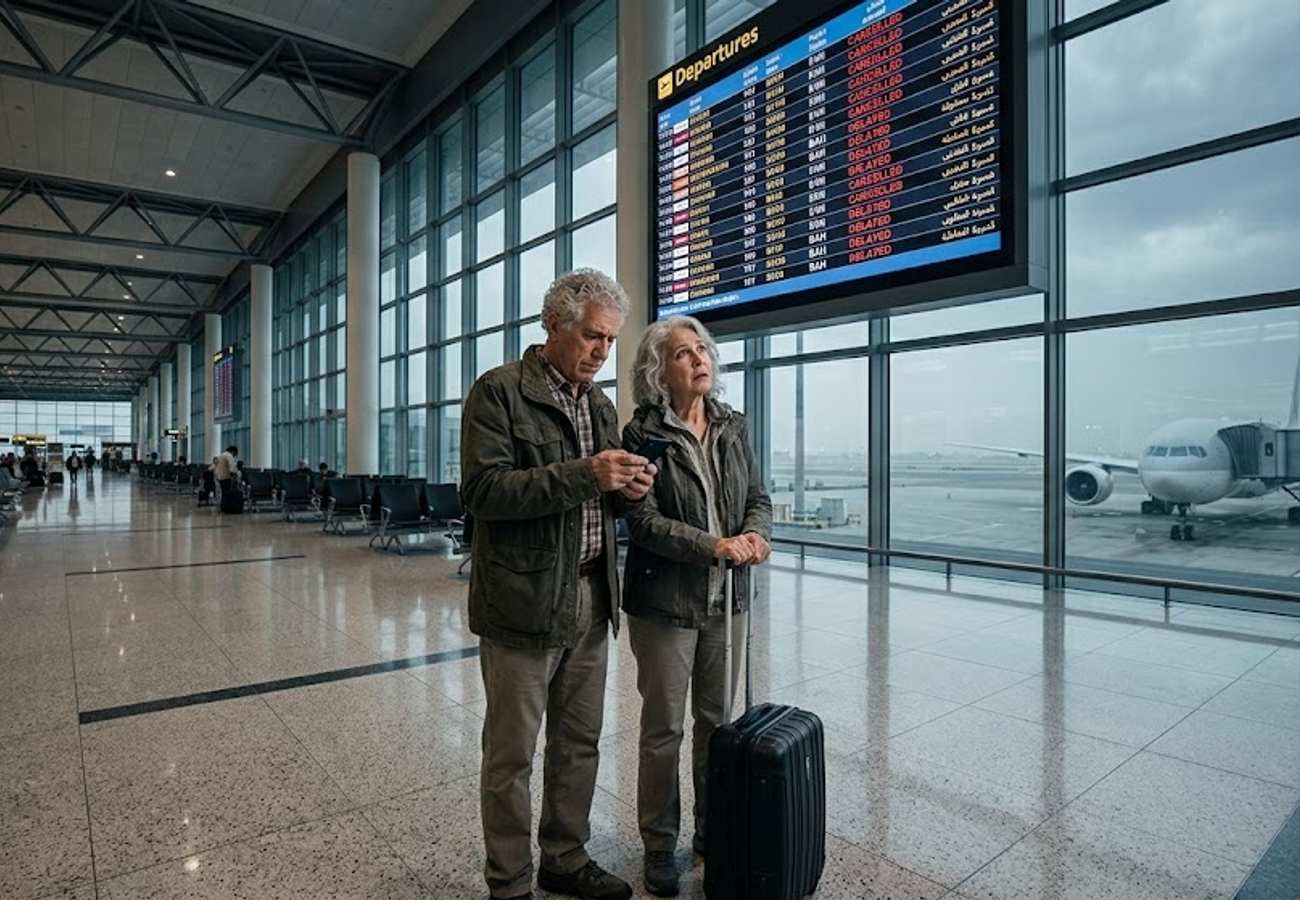
Image generated by AI
Kuwait and Bahrain have emerged as the primary catalysts for a regional aviation domino effect, forcing global carriers to suspend services and reroute flight paths to mitigate security risks.
The instability has extended beyond these two Gulf nations, creating operational friction across the UAE, Qatar, Saudi Arabia, Iraq, and surrounding markets. While primary hubs remain open, the industry is grappling with a surge in cancellations and schedule volatility that threatens the stability of international connectivity in the Middle East.
Regional Pressure Points: Kuwait and Bahrain
Kuwait International Airport has become a critical point of failure in the regional network. The aviation sector here is under significant strain as carriers reduce connectivity with neighboring states, particularly on high-traffic routes linking Kuwait with the United Arab Emirates.
Travelers on these routes are reporting:
- Frequent flight cancellations.
- Unpredictable schedule shifts.
- Extended waiting periods.
- High uncertainty regarding connecting legs.
Similarly, Bahrain International Airport is facing operational headwinds. Given its strategic position between the UAE, Qatar, and Saudi Arabia, even minor disruptions in Bahrain create a bottleneck for regional business and tourism flows. International carriers are currently reassessing the viability of Bahrain-related services based on real-time security monitoring.
Operational Status of Major Gulf Hubs
Despite the volatility, the region's "Big Three" hubs remain operational, though they are not immune to the surrounding instability:
- UAE (Dubai International and Zayed International Abu Dhabi): These airports continue to function as global transit points. However, they are experiencing selected cancellations and longer travel times for regional feeders.
- Qatar (Hamad International Airport): Qatar Airways has been forced to adjust services specifically involving Bahrain, Kuwait, and Erbil, Iraq.
- Saudi Arabia: Operational challenges are most evident in the eastern region, specifically impacting flights to Dammam, Riyadh, and Abha.
High-Risk Zones: Iraq, Iran, Jordan, and Oman
The most severe aviation pressures are concentrated in Iraq and Iran. International carrier confidence in these markets has plummeted, leading to potential flight suspensions and significant route adjustments.
Jordan and Oman are experiencing "indirect pressure." While their airports remain operational, airlines are implementing cautious routing and monitoring the Gulf of Oman airspace more aggressively, which often results in longer flight durations and increased fuel burn.
Global Carrier Response Matrix
International airlines have shifted from standard operations to a cautious, monitoring-based posture.
| Airline | Country / Hub | Flight Changes And Impact |
|---|---|---|
| Air Canada | Canada | Selected Toronto–Dubai adjustments |
| Cathay Pacific | Hong Kong | Middle East route modifications |
| British Airways | UK | Regional service adjustments |
Why This Matters: The Logistical Reality
From a logistical perspective, the Middle East does not operate as a series of isolated markets, but as a tightly woven web. When Kuwait or Bahrain experience security-driven disruptions, it creates a "vacuum" in the network.
For the business traveler, the real impact is the loss of predictability. The reliance on these hubs for connecting journeys means a single cancellation in Kuwait can strand a passenger traveling from Toronto to Mumbai. For the aviation industry, this signifies a shift toward "defensive scheduling," where airlines build in more buffer time and alternative routing, ultimately increasing operational costs and ticket prices for the end consumer.
Industry Outlook
Expect a period of prolonged volatility. Airlines will likely maintain a "wait-and-see" approach, with flight plans being updated in 24-to-72-hour windows rather than monthly schedules. We anticipate a temporary shift in transit volume toward the UAE and Qatar as they attempt to absorb the displaced traffic from Kuwait and Bahrain, potentially leading to congestion at Hamad and Dubai International.
The region's ability to maintain its status as a global transit bridge now depends entirely on the stabilization of these specific security corridors.
Related Travel Guides
Disclaimer
This article is for informational and educational purposes only. It does not constitute legal, financial, or professional advice. While we strive to provide accurate and up-to-date information, travel policies, regulations, and conditions change rapidly. Always verify information with official sources before making travel decisions. Nomad Lawyer makes no representations about the accuracy, reliability, completeness, or suitability of the information provided. Readers should consult qualified professionals for advice specific to their circumstances. The views expressed in this article are those of the author and do not necessarily reflect the views of Nomad Lawyer.
Raushan Kumar
Founder & Lead Developer
Full-stack developer with 11+ years of experience and a passionate traveller. Raushan built Nomad Lawyer from the ground up with a vision to create the best travel and law experience on the web.
Learn more about our team →