
Boeing 787 Dreamliner Dominates Global Long-Haul Routes: Six Carriers Lead Fleet Expansion in 2026
Breaking airline news and aviation industry updates for 2026.

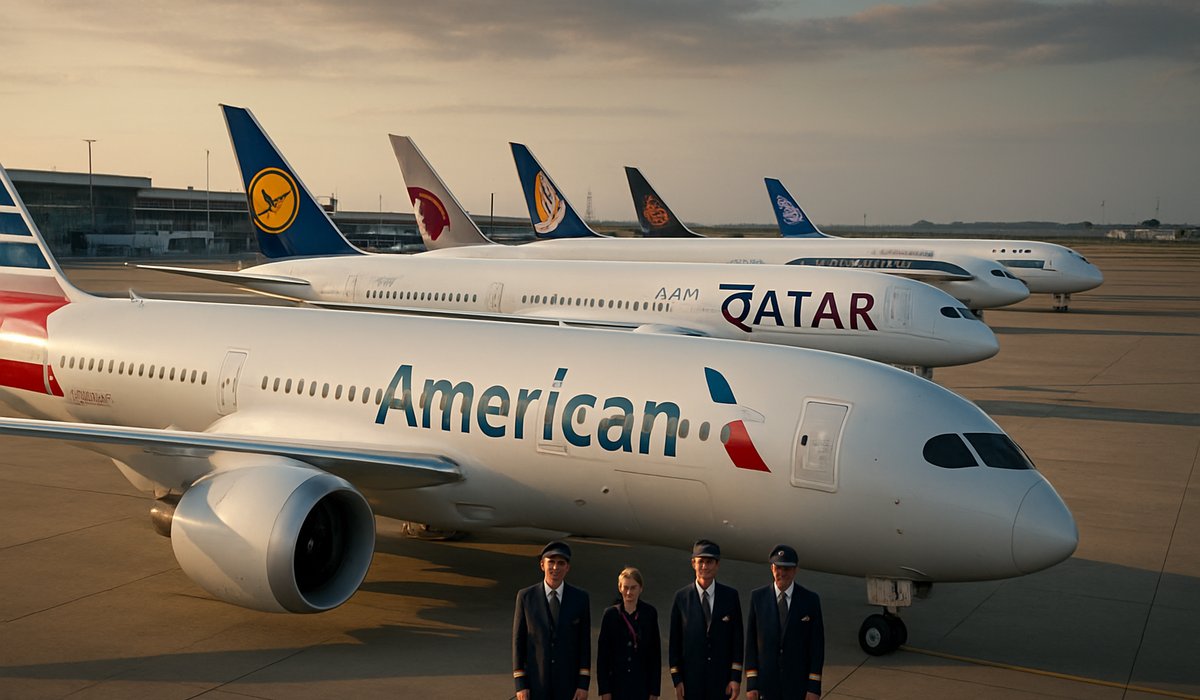
Image generated by AI
Boeing 787 Dreamliner Dominates Global Long-Haul Routes: Six Carriers Lead Fleet Expansion in 2026
As the widebody aircraft becomes aviation's workhorse, major airlines accelerate deployments amid shifting travel demand and fuel efficiency demands
The 787 Becomes Aviation's Most Essential Aircraft
The Boeing 787 Dreamliner has solidified its position as the aviation industry's most widely-operated widebody aircraft, fundamentally reshaping how global carriers approach long-haul and premium short-haul connectivity. With 1,108 aircraft already delivered and another 1,158 remaining on Boeing's substantial order backlog, the twin-engine jet has become the de facto standard for international travel in the post-pandemic era.
The aircraft's versatility across three distinct configurations—the compact 787-8 (200-275 seats), mid-size 787-9 (250-325 seats), and stretched 787-10 (300-375 seats)—has enabled carriers of varying scales to optimize their fleet strategies. This flexibility directly addresses a critical industry priority: maximizing fuel efficiency while maintaining capacity in an environment of volatile jet fuel prices and increasing pressure from environmental regulations.
Market Leadership and Fleet Deployment Trends
Six airlines are positioning themselves at the forefront of 787 deployment strategies heading into 2026, reflecting broader confidence in the aircraft's profitability on competitive international routes. These carriers have recognized that the Dreamliner's superior fuel economy—approximately 20-25% better than comparable widebodies—provides substantial competitive advantages in an era of razor-thin airline margins.
The aircraft's advanced composite construction, improved cabin pressurization systems, and modern engine technology directly translate to lower operating costs per available seat mile (ASM), a critical metric for long-haul profitability. For airlines navigating persistent fuel surcharges and baggage fee pressures, this efficiency gain proves essential to maintaining competitive pricing while preserving margins.
Structural Shifts in International Aviation
The 787's dominance reflects a fundamental restructuring of global aviation networks. Rather than relying exclusively on hub-and-spoke models centered on massive A380s or older 777s, carriers now deploy Dreamliners on point-to-point routes previously considered uneconomical. This strategy reduces connection requirements, improves passenger experience, and strengthens airline revenue resilience.
The aircraft's appeal extends across premium cabin configurations, where airlines have retrofitted 787s with premium economy and enhanced business-class products—premium fare segments that generate disproportionate revenue despite lower passenger volumes.
Looking Ahead: Production Challenges and Market Dynamics
While Boeing's backlog demonstrates sustained demand confidence, supply chain constraints and manufacturing bottlenecks continue to affect delivery schedules. The 787 program's recent ramping challenges underline the broader vulnerability of global aviation infrastructure to operational disruptions—lessons learned acutely during pandemic-related production slowdowns.
For airlines, the strategic imperative remains clear: securing and efficiently deploying 787s represents a fundamental competitive necessity in modern global aviation.
Frequently Asked Questions
Q: Why is the Boeing 787 Dreamliner considered the most efficient widebody aircraft? A: The 787 combines advanced composite airframe technology, modern turbofan engines, and systems optimization to achieve approximately 20-25% better fuel economy than comparable widebodies like the Airbus A330, directly reducing operating costs and airline baggage fee pressures.
Q: How does aircraft fuel efficiency impact passenger ticket prices and airline fees? A: Lower fuel consumption reduces an airline's primary operating cost. This efficiency enables competitive pricing while maintaining margins, though airlines often offset remaining fuel volatility through fuel surcharges and ancillary baggage charges.
Q: What advantages does the 787's three-variant structure provide airlines? A: The 787-8, 787-9, and 787-10 options allow carriers to match aircraft size precisely to route demand, optimizing capacity utilization and profitability on everything from premium long-haul routes to high-frequency short-haul services.
Q: How does the 787's backlog of 1,158 aircraft affect aviation industry capacity? A: The substantial backlog signals sustained airline demand and suggests continued global route expansion over the next 5-7 years, though manufacturing delays could constrain capacity growth timelines.
Q: Are there environmental advantages to 787 deployments? A: Yes—improved fuel efficiency reduces per-passenger carbon emissions by 20-25% compared to older widebodies, supporting airline sustainability commitments and regulatory compliance with emerging aviation emissions standards.
Related Travel Guides
External Resources
Disclaimer
This article is for informational and educational purposes only. It does not constitute legal, financial, or professional advice. While we strive to provide accurate and up-to-date information, travel policies, regulations, and conditions change rapidly. Always verify information with official sources before making travel decisions. Nomad Lawyer makes no representations about the accuracy, reliability, completeness, or suitability of the information provided. Readers should consult qualified professionals for advice specific to their circumstances. The views expressed in this article are those of the author and do not necessarily reflect the views of Nomad Lawyer.
Preeti Gunjan
Contributor & Community Manager
A passionate traveller and community builder. Preeti helps grow the Nomad Lawyer community, fostering engagement and bringing the reader experience to life.
Learn more about our team →