
US Navy's Continued Reliance on Boeing F/A-18 Super Hornet Underscores Cost-Effectiveness Over Next-Generation Fighters
Breaking airline news and aviation industry updates for 2026.

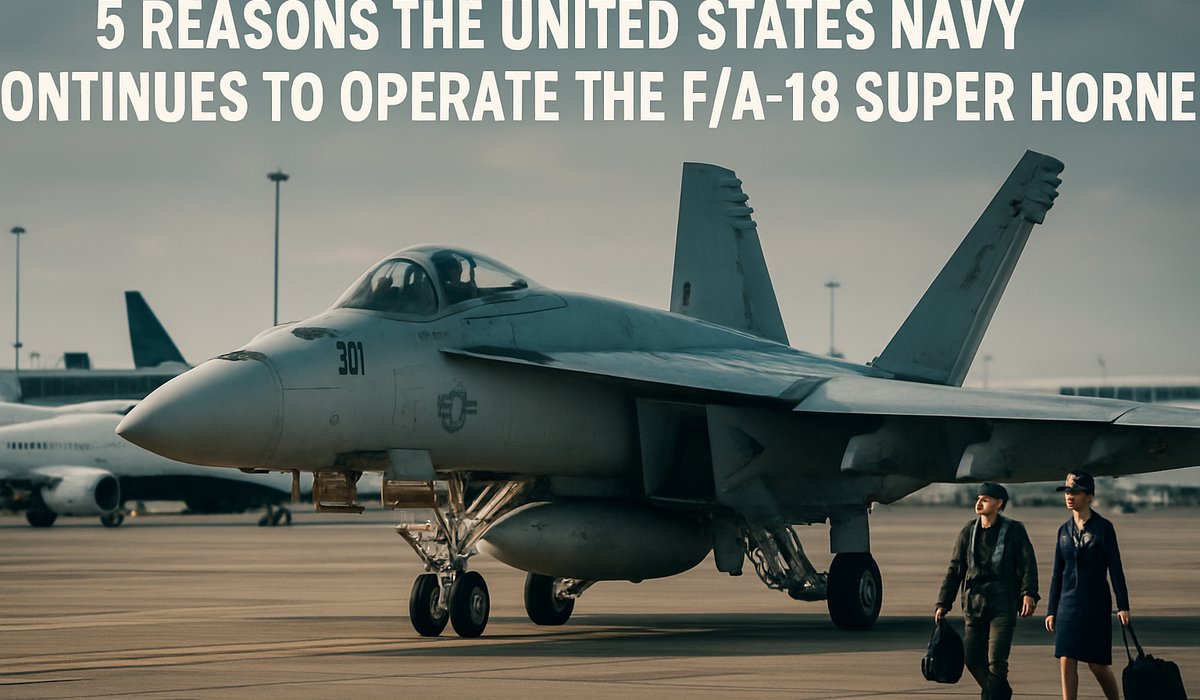
Image generated by AI
US Navy's Continued Reliance on Boeing F/A-18 Super Hornet Underscores Cost-Effectiveness Over Next-Generation Fighters
Despite the introduction of advanced stealth technology, the legacy strike fighter remains central to carrier operations worldwide
The Enduring Appeal of a Proven Platform
The United States Navy shows no signs of retiring its Boeing F/A-18E/F Super Hornet fleet, cementing the aircraft's status as the backbone of modern carrier-based aviation despite decades of service. Military strategists and defense analysts increasingly recognize that the fighter's combination of affordability, operational resilience, and proven combat effectiveness makes it irreplaceable for sustained global naval operations—even as cutting-edge alternatives like the Lockheed Martin F-35C Lightning II assume specialized roles within carrier air wings.
Why Legacy Platforms Outperform Newer Alternatives
The Super Hornet's staying power reflects a fundamental tension in modern defense procurement: advanced capabilities do not always translate to operational necessity or financial prudence. While the F-35C delivers exceptional stealth features and sensor integration that position it as the Navy's tactical advantage in contested environments, the Super Hornet excels in the unglamorous but critical mission of sustained, high-intensity operations across multiple theaters simultaneously.
The aircraft's superior payload capacity, extended range, and legendary mechanical reliability have made it the preferred platform for the demanding tempo of carrier deployments. Maintenance crews praise its straightforward logistics, and pilots value its forgiving handling characteristics during the uniquely challenging environment of carrier deck operations—where equipment margins for error remain razor-thin.
Operational Flexibility and Economic Efficiency
Beyond raw performance metrics, the Super Hornet's operational economics justify its continued deployment. The substantial existing investment in training, maintenance infrastructure, and spare parts ecosystems means that retiring the platform prematurely would consume scarce defense resources without corresponding strategic advantage.
Defense officials acknowledge that while the F-35C represents the Navy's future, the Super Hornet provides the immediate operational mass necessary to maintain global commitments across the Indo-Pacific, Middle East, and European theaters. This pragmatic layering of capabilities—where specialized aircraft handle peak-performance missions while proven workhorses maintain steady-state operations—reflects mature defense strategy rather than technological stagnation.
The Navy's decision reflects broader industry recognition that not every new platform outperforms its predecessors in every operational context, and that legacy systems optimized through decades of refinement often deliver superior real-world performance for conventional mission sets.
FAQ: US Navy Fighter Aircraft Operations
Q: Why doesn't the Navy retire older fighters in favor of next-generation platforms? A: Modern defense operations require layered capabilities balancing cutting-edge performance with proven reliability. Legacy aircraft like the Super Hornet maintain superior payload capacity and operational availability for sustained missions that don't require stealth technology.
Q: What advantages does the F-35C offer over the Super Hornet? A: The F-35C delivers advanced stealth characteristics, integrated sensor networks, and data-sharing capabilities essential for contested airspace, complementing rather than replacing the Super Hornet's mass and endurance.
Q: How long will the Super Hornet remain in active service? A: The Navy maintains Super Hornet fleets indefinitely without announced retirement dates, suggesting continued operational integration throughout the coming decades.
Q: Does maintaining multiple fighter platforms increase military costs? A: While operating multiple platforms requires distinct logistics streams, the cost of premature retirement often exceeds the expense of maintaining parallel systems optimized for different operational demands.
Q: What is the Super Hornet's primary operational role today? A: The aircraft serves as the carrier air wing's primary strike platform, conducting sustained combat air patrols, strike missions, and reconnaissance operations across global theaters.
Related Travel Guides
Flight Delay Compensation Guide 2026
Understanding Airline Route Changes
Airport Security Process Updated (2026)
External Resources
Disclaimer
This article is for informational and educational purposes only. It does not constitute legal, financial, or professional advice. While we strive to provide accurate and up-to-date information, travel policies, regulations, and conditions change rapidly. Always verify information with official sources before making travel decisions. Nomad Lawyer makes no representations about the accuracy, reliability, completeness, or suitability of the information provided. Readers should consult qualified professionals for advice specific to their circumstances. The views expressed in this article are those of the author and do not necessarily reflect the views of Nomad Lawyer.
Raushan Kumar
Founder & Lead Developer
Full-stack developer with 11+ years of experience and a passionate traveller. Raushan built Nomad Lawyer from the ground up with a vision to create the best travel and law experience on the web.
Learn more about our team →