
Six Revolutionary Aircraft That Reshaped Global Airline Economics and Modern Air Travel
Breaking airline news and aviation industry updates for 2026.

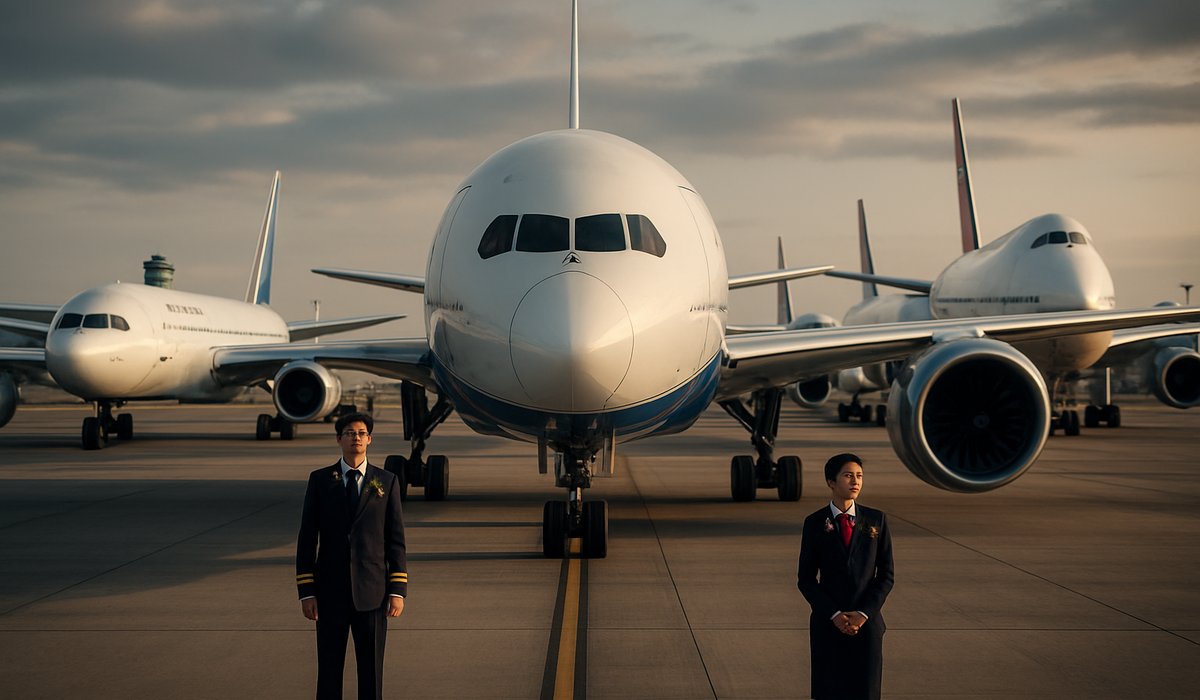
Image generated by AI
Six Revolutionary Aircraft That Reshaped Global Airline Economics and Modern Air Travel
From the Douglas DC-3 to the Boeing 787, these game-changing jets fundamentally transformed how airlines calculate profitability—and what passengers ultimately pay
The Economics Behind Aviation's Greatest Innovations
While aviation history typically celebrates speed records and engineering breakthroughs, the aircraft that genuinely revolutionized the airline industry are those that fundamentally altered the financial calculus of commercial flight. The most transformative jets in aviation history were not necessarily the fastest or largest, but rather those that cracked the code of operational efficiency—slashing unit costs, expanding profit margins, unlocking previously unviable routes, and enabling entirely new business models for carriers worldwide.
Today's competitive airline landscape operates on razor-thin margins determined by a complex interplay of factors: aircraft acquisition costs, fuel consumption rates, maintenance schedules, crew productivity, range capabilities, and passenger-carrying capacity relative to revenue generation. Understanding which aircraft shifted this economic equation reveals why certain planes became industry cornerstones while others faded into obscurity.
The Game-Changers: Aircraft That Redefined Airline Profitability
Several landmark aircraft deserve recognition for fundamentally changing how airlines operate and compete. The Douglas DC-3, which revolutionized passenger transport in the 1930s, introduced unprecedented reliability and passenger comfort that made domestic airline networks economically viable. Later innovations—including the Boeing 707, which established the jetliner as the dominant long-haul aircraft; the Boeing 737, which became the workhorse of short and medium-haul operations; and the Airbus A380, which reshaped thinking about ultra-high-capacity travel—each restructured airline economics in significant ways.
More recently, the Boeing 787 Dreamliner and Airbus A350 have introduced fuel-efficiency gains and range capabilities that enable direct routes previously requiring stops, fundamentally changing network planning and reducing airlines' operating costs per available seat mile.
Why Aircraft Economics Matter to Travelers
The ripple effects of these technological advances directly impact passengers. Reduced fuel consumption translates to lower jet fuel surcharges. Increased capacity per aircraft means airlines can spread fixed costs across more seats. Enhanced reliability decreases maintenance-related disruptions. These economic improvements—or their absence—determine whether airlines can absorb rising jet fuel prices, labor costs, and airport fees, or whether they pass these increases to passengers through higher base fares and expanded baggage charges.
For the aviation industry navigating volatile fuel markets and geopolitical pressures, aircraft choice remains the single most consequential decision an airline can make.
FAQ: Understanding Aircraft Economics and Airline Pricing
How do aircraft fuel efficiency changes affect airline ticket prices? Modern fuel-efficient jets like the Boeing 787 reduce per-seat fuel consumption significantly, allowing airlines to lower fares or absorb rising jet fuel prices without passing full costs to passengers. Conversely, older aircraft with higher fuel burn often correlate with higher baggage fees and surcharges.
Which aircraft types are most profitable for airlines to operate? The Boeing 737 and Airbus A320 family dominate profitability for short and medium-haul routes due to high-density seating, low maintenance costs, and fuel efficiency. Long-haul profitability increasingly depends on aircraft like the 787 and A350.
Why do some airlines retire aircraft earlier than expected? High fuel burn, increased maintenance expenses, and regulatory compliance costs make older aircraft economically unviable when newer, efficient models are available. This drives decisions about fleet modernization.
How does aircraft range capability influence airline route networks? Extended-range aircraft enable point-to-point connections that bypass hub airports, reducing costs and travel time while allowing airlines to serve smaller markets profitably.
What role does aircraft capacity play in determining baggage fees? Airlines operating high-capacity aircraft can spread overhead costs across more passengers, sometimes enabling lower ancillary fees, though pricing strategy varies significantly by carrier and route.
Related Travel Guides
Flight Delay Compensation Guide 2026
Understanding Airline Route Changes
Airport Security Process Updated (2026)
External Resources
Disclaimer
This article is for informational and educational purposes only. It does not constitute legal, financial, or professional advice. While we strive to provide accurate and up-to-date information, travel policies, regulations, and conditions change rapidly. Always verify information with official sources before making travel decisions. Nomad Lawyer makes no representations about the accuracy, reliability, completeness, or suitability of the information provided. Readers should consult qualified professionals for advice specific to their circumstances. The views expressed in this article are those of the author and do not necessarily reflect the views of Nomad Lawyer.
Raushan Kumar
Founder & Lead Developer
Full-stack developer with 11+ years of experience and a passionate traveller. Raushan built Nomad Lawyer from the ground up with a vision to create the best travel and law experience on the web.
Learn more about our team →