
10 Japan Regional Travel Routes Beyond the Golden Route: Tohoku and Hokkaido (Reddit 2026 Guide)
Escape the Tokyo-Kyoto crowds and explore 10 incredible regional Japan travel itineraries across Tohoku and Hokkaido, curated by seasoned Reddit travelers.

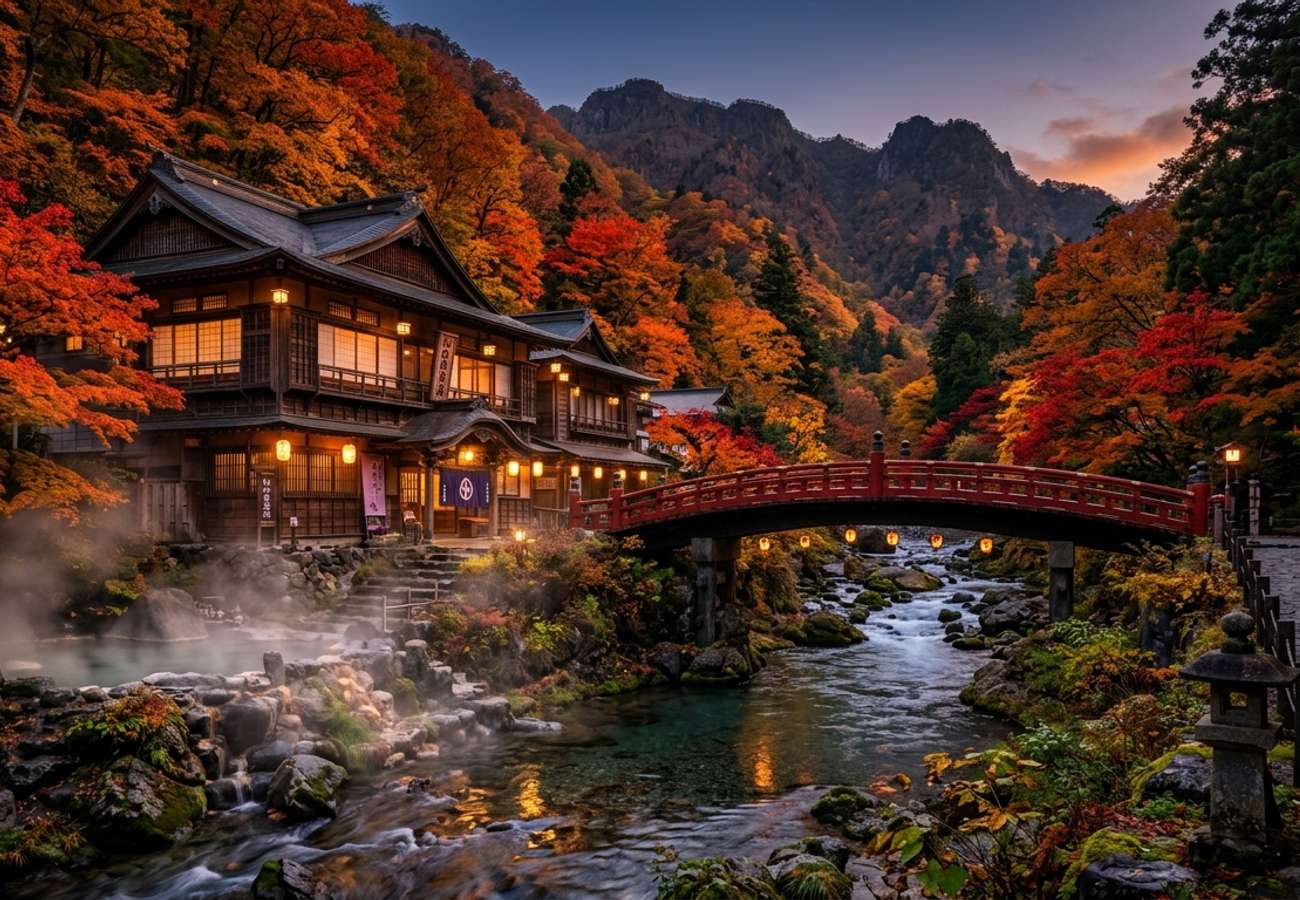
Image generated by AI
With record-breaking international visitor numbers placing immense strain on Tokyo, Kyoto, and Osaka, seasoned travelers on Reddit are overwhelmingly advising first-time and returning visitors to abandon the over-touristed "Golden Route" and venture north into Tohoku and Hokkaido. Across communities like r/JapanTravel, r/solotravel, and r/japantravelplans, travel veterans celebrate Japan's northern prefectures for their mist-veiled volcanic calderas, centuries-old wooden onsen villages, uncrowded Shinkansen corridors, and farm-to-table culinary traditions that remain remarkably affordable despite shifting exchange rates.
Rather than waiting in three-hour queues at Fushimi Inari or Shibuya Crossing, heading north connects travelers with the raw wilderness of UNESCO World Heritage coastlines, alpine gorges, and historic samurai quarters.
Here are the 10 best regional Japan travel routes across Tohoku and Hokkaido, curated from the collective wisdom of Reddit travelers in 2026.
Regional Northern Japan Routes at a Glance
| Route / Itinerary | Primary Prefecture | Key Attraction & Experience | Transit & Access | Best Season |
|---|---|---|---|---|
| 1. Oirase Gorge & Lake Towada | Aomori (Tohoku) | 14 km forested river trail & 14 waterfalls | JR Bus from Aomori or Hachinohe | May – October |
| 2. Ginzan Onsen & Yamadera | Yamagata (Tohoku) | Gas-lit Taisho ryokan & 1,015-step cliffside temple | Yamagata Shinkansen + local bus | Year-round (Winter peak) |
| 3. Shiretoko Peninsula Wilderness | Eastern Hokkaido | Brown bears, fjord boat cruises & drift ice | Flight to Memanbetsu + rental car | June – Sept (Summer) / Feb (Ice) |
| 4. Daisetsuzan & Furano-Biei | Central Hokkaido | Alpine volcanic peaks & rolling flower patchwork | Train to Asahikawa + rental car | July – October |
| 5. Hirosaki & Kakunodate | Aomori & Akita (Tohoku) | Original castle keep & preserved samurai district | Akita/Tohoku Shinkansen lines | April – May & October – Nov |
| 6. Otaru & Shakotan Peninsula | Western Hokkaido | Historic stone canal & coastal "Shakotan Blue" cliffs | Rapid train from Sapporo / local bus | June – September |
| 7. Matsushima Bay & Sanriku Coast | Miyagi & Iwate (Tohoku) | 260 pine islands, fresh oysters & rugged sea cliffs | JR Senseki Line from Sendai | Year-round (Autumn peak) |
| 8. Noboribetsu & Lake Toya | Southern Hokkaido | Volcanic Hell Valley sulfuric springs & caldera rim | JR Muroran Line from Sapporo | Year-round |
| 9. Bandai-Asahi & Goshikinuma | Fukushima (Tohoku) | Five-Color volcanic ponds & thatched Ouchi-juku | Tohoku Shinkansen to Koriyama + car | May – November |
| 10. Iya Valley Remote Gorge | Tokushima (Shikoku Link) | Ancient vine bridges & mist-shrouded thatch homes | JR Dosan Line + rental car | April – November |
1. Oirase Gorge and Lake Towada (Aomori Prefecture)
Tracing the pristine mountain stream flowing from Lake Towada, the 14-kilometer Oirase Mountain Stream Trail in Towada-Hachimantai National Park is universally revered on Reddit as one of Japan's most enchanting walking corridors. The flat, accessible path meanders through dense moss-carpeted virgin beech forests, passing 14 named waterfalls including the roaring Choshi Great Falls.
Renting an electric-assist bicycle at Yakeyama or walking sections between JR bus stops allows travelers to immerse themselves in nature at their own pace. At the southern terminus, Lake Towada—a colossal double-crater volcanic caldera—offers peaceful electric tour boat cruises surrounded by 400-meter forested crater rims.
- Reddit Pro-Tip: "Take the early morning JR Bus from Hachinohe Station (covered by the JR East Tohoku Pass) to beat the day-tripper tour coaches that arrive by 11:00 AM," recommends an
r/JapanTravelmoderator.
2. Ginzan Onsen and Yamadera Mountain Temple (Yamagata Prefecture)
Step back in time to Japan’s Taisho era (1912–1926) along the pedestrian riverbanks of Ginzan Onsen. Lined with three- and four-story traditional wooden ryokans featuring exposed timber framework, gas lanterns, and footbaths fed by thermal sulfur springs, this secluded mountain hollow looks like a scene lifted directly from Studio Ghibli’s Spirited Away.
Combine an overnight ryokan stay with an excursion to Yamadera (Risshaku-ji), where hikers climb 1,015 moss-lined stone steps through towering cedar trees to reach Godaido Hall—an observation platform cantilevered dramatically over sheer mountain cliffs.
- Reddit Pro-Tip: "Ginzan Onsen has capped day-tripper entry with timed tickets in winter. If you want to see the evening gas lanterns illuminating the snow, you must book an overnight ryokan stay 6 to 10 months in advance," notes an
r/travelcontributor.
3. Shiretoko Peninsula: The Edge of the Earth (Eastern Hokkaido)
Designated as a UNESCO World Heritage Site, Shiretoko (derived from the Indigenous Ainu word sir-etok, meaning "the end of the Earth") represents one of the richest subarctic ecosystems in the Northern Hemisphere. Located on the remote northeastern tip of Hokkaido, this roadless peninsula is the realm of the Ezo brown bear, sea eagles, and sperm whales.
In summer, board a small expedition cruise boat from Utoro to view towering sea waterfalls plunging into the Sea of Okhotsk. In midwinter (late January through February), Siberian winds push colossal sheets of ryuhyo (drift ice) onto the coast, where adventurers put on drysuits to hike across the frozen ocean.
- Reddit Pro-Tip: Renting a car from Memanbetsu Airport is essential for exploring the Shiretoko Five Lakes (Goko) and the thermal waterfall pool at Kamuiwakka.
4. Daisetsuzan National Park and the Biei-Furano Scenic Highway (Central Hokkaido)
Known to the Indigenous Ainu people as Kamui Mintara ("Playground of the Gods"), Daisetsuzan is Japan’s largest national park. Centered around Mount Asahidake (2,291 m), the park features active volcanic smoking fumaroles, high-alpine tundra, and wild onsens nestled deep inside river canyons like Sounkyo.
Just south of the mountains, the rolling agricultural hills of Biei and Furano offer panoramic scenic drives along the "Patchwork Road," famous for lavender fields, sunflower terraces, and the ethereal electric-blue waters of Shirogane Blue Pond.
- Reddit Pro-Tip: Daisetsuzan is the very first place in Japan to see autumn foliage, turning brilliant shades of scarlet and amber as early as mid-September.
5. Hirosaki Castle and Kakunodate Samurai Quarter (Aomori & Akita)
For travelers seeking authentic historical architecture without Kyoto's crowd density, this Tohoku rail route links two preserved heritage bastions. Hirosaki Castle in Aomori stands as one of only twelve original castle keeps remaining in Japan, surrounded by triple moats and 2,600 cherry trees.
Heading south into Akita Prefecture via the JR East Railway, Kakunodate preserves an entire district of authentic Edo-period samurai residences (buke-yashiki). Walking between the dark wooden gates, centuries-old weeping cherry trees, and private samurai armor collections feels like stepping into the 17th century.
- Reddit Pro-Tip: Sample Akita's legendary Inaniwa udon and Hinai-jidori chicken hotpot at local family-run eateries tucked behind the samurai district.
6. Otaru Canal and the Shakotan Peninsula Coastal Drive (Western Hokkaido)
Just a 35-minute coastal train ride west of Sapporo, the historic port city of Otaru charmed 19th-century merchants with its stone canal warehouses, gas lamps, and thriving glassblowing workshops. Today, it serves as Hokkaido's seafood capital, where the Sakaimachi Street sushi row serves uni (sea urchin) and king crab fresh off the fishing boats.
Continuing west by rental car takes you along the rugged coast of the Shakotan Peninsula. Hike the windswept headland of Cape Kamui along a narrow spine trail to gaze down at the legendary "Shakotan Blue" ocean water and offshore sea stacks.
- Reddit Pro-Tip: Avoid visiting Otaru on weekend afternoons when domestic day-trippers peak; arrive on an early weekday morning or stay overnight to stroll the illuminated canal in solitude.
7. Matsushima Bay and the Sanriku Coastal Geopark (Miyagi & Iwate)
Ranked for centuries as one of the "Three Great Views of Japan" (Nihon Sankei), Matsushima Bay is dotted with more than 260 pine-crested limestone islets floating in tranquil waters. Located just 30 minutes from Sendai, visitors can tour ancient Zen temples like Zuigan-ji and feast on freshly grilled Matsushima oysters right on the docks.
Travelers with extra days can take the coastal railway north into the Sanriku Reconstruction National Park, exploring the towering 200-meter sea cliffs of Kitayamazaki and witnessing the remarkable ecological resilience of coastal Tohoku fishing villages.
- Reddit Pro-Tip: Rent an electric boat or kayak to weave through the quieter, outer islands of Matsushima away from the large commercial tour ferries.
8. Noboribetsu Jigokudani and Lake Toya Caldera (Southern Hokkaido)
Noboribetsu is Hokkaido's most famous hot spring resort, anchored by Jigokudani ("Hell Valley"). Wooden boardwalks wind through a surreal volcanic wasteland of smoking sulfur vents, bubbling mud pots, and steaming thermal rivers that feed eleven distinct types of mineral onsen water into local bathhouses.
A short drive or train hop west brings you to Lake Toya, an enormous circular volcanic caldera lake that never freezes in winter. Take the Usuzan Ropeway up Mount Usu to stand above the smoking craters formed during its catastrophic 1977 and 2000 eruptions.
- Reddit Pro-Tip: Natural footbaths along the Oyunuma Brook trail allow you to soak your feet directly in a natural warm thermal river surrounded by old-growth forest.
9. Bandai-Asahi National Park and Goshikinuma (Fukushima Prefecture)
Defying outdated stereotypes, Fukushima’s Aizu region is one of Japan's most scenic and culturally rich mountain sanctuaries. Bandai-Asahi National Park is dominated by Mount Bandai, an active volcano whose 1888 eruption created the mystical Goshikinuma (Five-Color Lakes).
A gentle 4-kilometer nature trail weaves past volcanic ponds that display striking shades of cobalt, turquoise, and copper red caused by varying volcanic mineral concentrations and algae. Nearby, the preserved Edo-period post town of Ouchi-juku features thatched-roof merchants along an unpaved main street where locals eat negi-soba (buckwheat noodles eaten with a whole green leek).
- Reddit Pro-Tip: Renting a car from Koriyama Station is the most efficient way to link Mount Bandai, Goshikinuma, and Ouchi-juku in a single seamless itinerary.
10. The Iya Valley Remote Gorge Connection (Tokushima, Shikoku Extension)
For travelers looking to connect northern wilderness with Japan's rugged southern frontier, Shikoku’s Iya Valley offers unmatched rural isolation. Hidden deep in the mist-shrouded gorges of Tokushima, the valley historically served as a mountain refuge for defeated Heike samurai clan warriors.
Cross the historic Kazurabashi—a suspended bridge hand-woven from living mountain vines—and stay in restored 300-year-old thatched farmhouses (kominka) overlooking deep river canyons, soaking in private open-air cedar onsen baths perched on cliff edges.
- Reddit Pro-Tip: Roads in the Iya Valley are narrow and single-lane with frequent blind corners; rent a compact "Kei car" with insurance for easy navigation.
Crucial Regional Japan Transit Tactics from Reddit Overlanders
Navigating Tohoku and Hokkaido differs fundamentally from riding the Tokaido Shinkansen between Tokyo and Kyoto:
- Strategic Regional Rail Passes: While the nationwide JR Pass underwent substantial price hikes, regional passes remain exceptional value. The JR East Tohoku Area Pass offers 5 consecutive days of unlimited Shinkansen and local train travel throughout Aomori, Akita, Iwate, Yamagata, Miyagi, and Fukushima for a fraction of individual point-to-point tickets.
- Embrace Car Rentals for Hokkaido and Rural Gorges: While Shinkansen connects major northern cities like Sendai, Morioka, Aomori, and Hakodate, natural wonders like Daisetsuzan, Shiretoko, and Biei require a car. Japanese rental cars come equipped with English GPS (navigated effortlessly via telephone numbers or mapcodes), and driving on the left is smooth and courteous on northern regional roads.
- Use Luggage Forwarding (Takkyubin): When traveling on regional local trains with limited overhead luggage space, forward your primary suitcases between major hub hotels via Yamato Transport (Black Cat) for roughly 2,000 yen ($13 USD) per bag, traveling light with only a daypack.
- Shoulder Season Advantages: Mid-spring (May) and mid-autumn (October to early November) offer mild weather, stunning foliage, and zero Golden Route overcrowding.
FAQ: Regional Japan Travel Tohoku & Hokkaido 2026
Is it feasible to combine Tohoku and Hokkaido in a 10-day trip?
Yes. Take the Tohoku Shinkansen north from Tokyo through Aomori, cross the undersea Seikan Tunnel on the Hokkaido Shinkansen into Hakodate, and continue to Sapporo or Otaru before flying back to Tokyo from New Chitose Airport.
Do I need an International Driving Permit (IDP) to rent a car in Japan?
Yes. Foreign travelers must obtain an International Driving Permit (1949 Geneva Convention format) in their home country before arriving in Japan. Rental agencies will strictly deny vehicle pickup without it.
Is English widely spoken in regional Tohoku and Hokkaido?
English is less common than in Tokyo or Kyoto. However, station signage is bilingual, Google Translate camera mode translates Japanese menus instantly, and regional hospitality staff are exceptionally welcoming and patient.
How does onsen etiquette work in rural Japanese ryokans?
Wash and rinse thoroughly at the seated shower stalls before entering the communal thermal pools. Do not bring towels into the water, tie up long hair, and confirm tattoo policies with your ryokan in advance (many offer private kashikiri onsen baths).
The soul of Japan is not found in the neon dazzle of Shibuya, but along the quiet cedar paths and bubbling thermal streams of the northern frontier.
Related Travel Guides
Disclaimer
This article is for informational and educational purposes only. It does not constitute legal, financial, or professional advice. While we strive to provide accurate and up-to-date information, travel policies, regulations, and conditions change rapidly. Always verify information with official sources before making travel decisions. Nomad Lawyer makes no representations about the accuracy, reliability, completeness, or suitability of the information provided. Readers should consult qualified professionals for advice specific to their circumstances. The views expressed in this article are those of the author and do not necessarily reflect the views of Nomad Lawyer.
Raushan Kumar
Founder & Lead Developer
Full-stack developer with 11+ years of experience and a passionate traveller. Raushan built Nomad Lawyer from the ground up with a vision to create the best travel and law experience on the web.
Learn more about our team →