
The New Silk and Steel: 10 Best East Asia Rail & Ferry Routes, Smart Ports, and Transit Hacks (Reddit 2026)
Master multimodal transit across East Asia in 2026. Reddit travelers reveal the 10 best high-speed rail and luxury ferry crossings linking Japan, South Korea, Taiwan, and China, along with smart port hacks and dual-pricing guides.

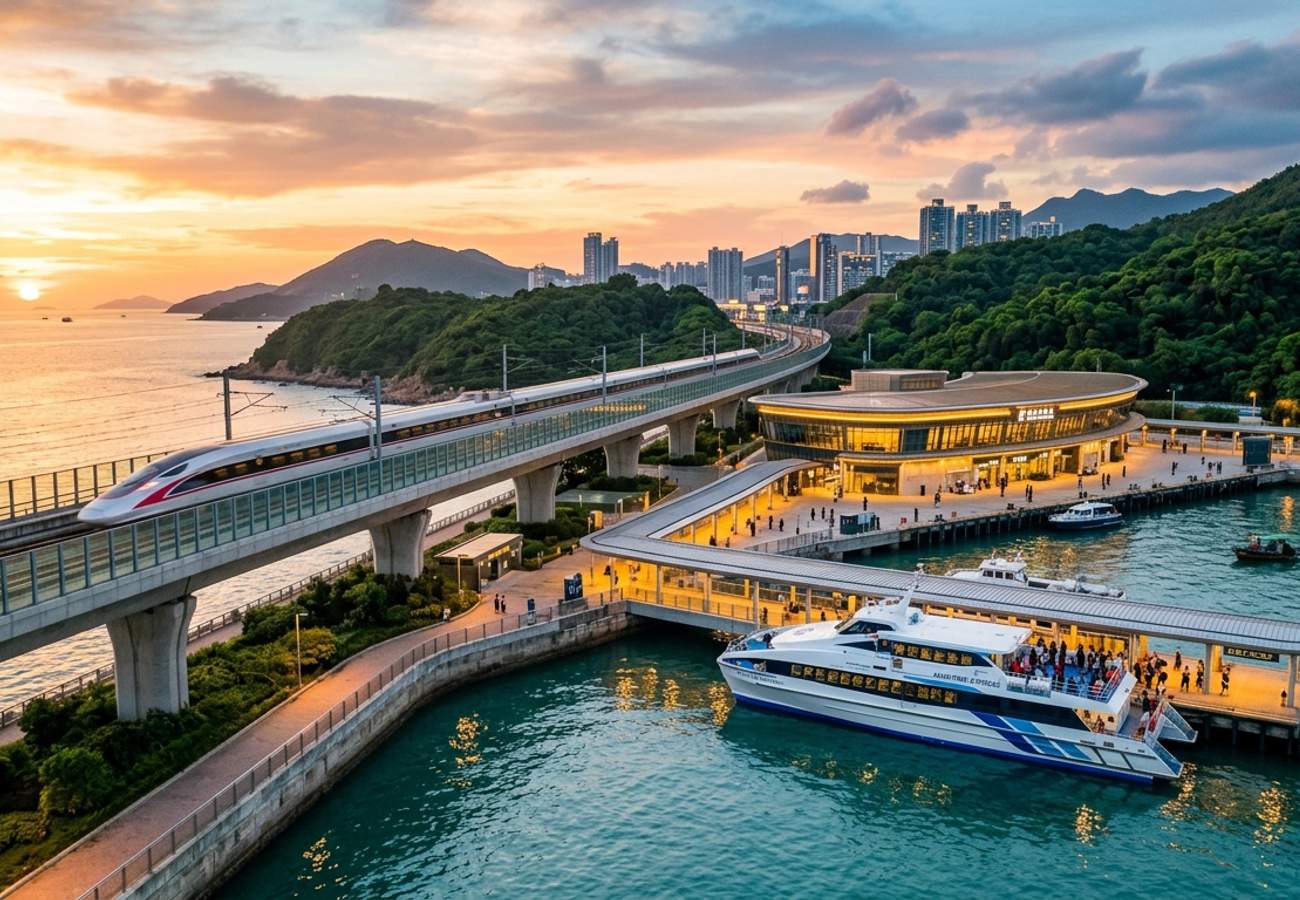
Image generated by AI
For decades, international travelers exploring East Asia relied almost exclusively on short-haul commercial flights to hop between Tokyo, Seoul, Taipei, and Shanghai. In 2026, a quiet infrastructure revolution has turned that playbook on its head. Across Reddit travel hubs like r/travel, r/JapanTravel, r/koreatravel, and r/solotravel, experienced globetrotters are celebrating a superior alternative: "The New Silk and Steel"—a frictionless multimodal matrix of 300+ km/h bullet trains, automated smart passenger ports, and luxury coastal hydrofoils that connect archipelagos and straits without the indignities of airport security lines and baggage surcharges.
By linking state-of-the-art railway networks (Japan's Shinkansen, South Korea's KTX, Taiwan's THSR, and China's Fuxing Hao) directly with biometric ferry terminals across the Korea Strait, the Seto Inland Sea, and the Taiwan Strait, travelers can embark on grand trans-Asian overland itineraries. Along the way, navigating the region's 2026 travel realities—such as smart facial-recognition customs e-gates, municipal dual-pricing structures, and luggage-forwarding logistics—has become the ultimate mark of an insider.
Here is the definitive guide to the 10 best rail-and-ferry routes across East Asia, compiled from veteran Reddit travelers and regional transit analysts in 2026.
East Asia Multimodal Transit Comparison
| Route & Passage | Region / Countries | Key Rail Lines | Ferry / Vessel Type | Typical Transit Time | Reddit Traveler Score |
|---|---|---|---|---|---|
| 1. Korea Strait Link | South Korea ⇄ Japan | KTX + Sanyo Shinkansen | JR Kyushu Beetle / Camellia Line | 3h 40m (Hydrofoil) / Overnight | 9.8 / 10 |
| 2. Seto Inland Sea Hop | Honshu ⇄ Shikoku (Japan) | Tokaido-Sanyo Shinkansen | Ishizaki Super Jet (Hydrofoil) | 68 min water crossing | 9.6 / 10 |
| 3. Taiwan Strait Corridor | Taiwan ⇄ Mainland China | Taiwan HSR + China HSR | Xiamen–Kinmen Catamaran | 30 min water crossing | 9.2 / 10 |
| 4. Yellow Sea Maritime Express | South Korea ⇄ China | KTX Gyeongbu + Fuxing Hao | Weidong Overnight Cruise Ferry | Overnight (14h cruise) | 9.0 / 10 |
| 5. Volcano & Ancient Cedars | Kyushu ⇄ Yakushima (Japan) | Kyushu Shinkansen | Toppy & Rocket Hydrofoil | 1h 50m water crossing | 9.7 / 10 |
| 6. Tsugaru Strait Crossing | Honshu ⇄ Hokkaido (Japan) | Tohoku-Hokkaido Shinkansen | Tsugaru Kaikyo Cruise Ferry | 3h 40m water crossing | 9.4 / 10 |
| 7. Pearl River Delta Matrix | Hong Kong ⇄ Macau / Zhuhai | Guangzhou–Shenzhen–HK HSR | TurboJET / Cotai Water Jet | 55 min catamaran | 9.5 / 10 |
| 8. Korean Peninsula to Jeju | Mainland Korea ⇄ Jeju Island | Honam KTX (to Mokpo) | Queen Mary 2 Car Passenger Ferry | 4h 30m water crossing | 9.1 / 10 |
| 9. East China Sea Passage | Shanghai ⇄ Nagasaki / Kobe | Shanghai Maglev & CR400 HSR | Xinjianzhen Luxury Ferry | 48h maritime voyage | 8.9 / 10 |
| 10. Kerama Blue Coral Circuit | Okinawa Mainland ⇄ Kerama | Naha Yui Rail Monorail | Queen Zamami Express Hydrofoil | 50 min water crossing | 9.6 / 10 |
1. The Korea Strait Link: Busan KTX to Fukuoka (Hakata)
The crown jewel of cross-border Asian overland transit connects the neon metropolis of Seoul to the culinary heart of Kyushu, Japan, without a single airport visit. Travelers board South Korea’s sleek KTX bullet train at Seoul Station, reaching Busan Station in just 2 hours and 15 minutes. From there, a 10-minute walk through an elevated skyway leads directly into the ultra-modern Busan Port International Passenger Terminal.
Passengers clear Korean exit immigration via automated biometric Smart Entry Service (SES) e-gates before boarding either the high-speed Queen Beetle (a custom British-built luxury trimaran operated by JR Kyushu Jet Ferry) or the romantic overnight Camellia Line. In less than four hours by hydrofoil, the vessel slices through the Tsushima Strait and docks at Hakata International Terminal in Fukuoka, placing travelers just minutes from the Hakata Shinkansen terminal.
- Reddit Insider Tip: "Book the Queen Beetle Business Class on the upper deck—you get free-flowing draft beer, private kiosk check-in, and priority disembarkation that beats airport queues by at least two hours," notes an
r/koreatravelfrequent crosser.
2. The Seto Inland Sea Hop: Hiroshima Shinkansen to Matsuyama (Shikoku)
Japan's Seto Inland Sea is revered for its calm waters, terraced citrus orchards, and serene temple islands. Rather than taking a circuitous three-hour train ride around the Seto Ohashi Bridge to reach the island of Shikoku, savvy travelers utilize the Shinkansen-and-Jetfoil shortcut.
After touring Hiroshima Peace Memorial Park or dining on okonomiyaki, passengers hop on the Hiroshima Electric Railway tram down to Hiroshima Port (Ujina). Here, the Ishizaki Super Jet hydrofoil whisks passengers across calm archipelago waters directly to Matsuyama Tourist Port in 68 minutes flat. Upon arrival, a connecting shuttle delivers travelers to Dogo Onsen—one of Japan’s oldest hot spring bathhouses, dating back over a thousand years.
- Reddit Transit Hack: "The Setouchi Area Pass covers both the Sanyo Shinkansen down to Hiroshima AND the Super Jet hydrofoil to Matsuyama. It pays for itself on this single leg," reports an
r/JapanTravelmoderator.
3. The Taiwan Strait Corridor: Taipei HSR to Kinmen and Xiamen
For adventurers seeking a truly historic maritime frontier, the "Mini Three Links" (Xiao San Tong) route provides a unique journey between Taiwan and mainland China. Travelers ride the Taiwan High Speed Rail (THSR) south from Taipei to Taichung or Chiayi, transfer via express bus or regional flight to the granite military-heritage island of Kinmen, and arrive at Shuitou Port.
From Kinmen’s sleek smart terminal, modern twin-hull catamarans cross the narrow stretch of water into Xiamen’s Wutong Ferry Port in Fujian Province in just 30 minutes. Passengers step off into China’s southern high-speed rail corridor, where CR400 Fuxing Hao trains connect directly to Wuyi Mountain, Hangzhou, and Shanghai.
- Reddit Visa Note: "Ensure you have your valid Chinese Visa or Home Return Permit verified before boarding in Kinmen. Foreign nationals utilizing China's 144-hour visa-free transit must confirm whether the maritime port of entry qualifies under current bilateral guidelines," warns an
r/solotravelcontributor.
4. The Yellow Sea Maritime Express: Seoul to Incheon, Weihai, and Qingdao
For travelers who savor slow-travel romance combined with high-speed rail punctuality, the overnight Yellow Sea crossing offers an unforgettable voyage between South Korea and China. Starting from Seoul via the express AREX line, travelers reach the newly expanded Incheon Port International Passenger Terminal 2.
Boarding the passenger cruise ferries operated by Weidong Ferry or Dandong Ferry, travelers enjoy private staterooms, Korean karaoke lounges, duty-free boutiques, and sunset views over the Yellow Sea. The ship docks the following morning at Weihai or Qingdao in Shandong Province, where passengers can savor Tsingtao beer and fresh seafood before boarding China's high-speed rail network towards Beijing (accessible in 3 hours via the Jinan–Qingdao HSR line).
- Reddit Logistics Tip: "Unlike budget airlines, international ferries on this route allow generous baggage allowances (up to 50 kg per passenger), making it the undisputed favorite for digital nomads carrying heavy film gear or relocation luggage."
5. Volcano and Ancient Cedars: Kyushu Shinkansen to Yakushima
Southern Kyushu boasts some of the most dynamic volcanic topography on earth. Travelers catch the Kyushu Shinkansen from Hakata (Fukuoka) or Kumamoto, riding south to its terminus at Kagoshima-Chuo Station. Emerging from the station, travelers are greeted by panoramic views of Mount Sakurajima puffing ash across the bay.
From Kagoshima Port, the Boeing 929 Toppy & Rocket hydrofoil levitates on underwater foils, skimming across open ocean waters at 80 km/h to reach the mystical island of Yakushima in under two hours. Yakushima’s moss-draped ancient cedar forests inspired Studio Ghibli’s masterpiece Princess Mononoke, offering world-class hiking right from the ferry terminal.
- Reddit Weather Advisory: "Typhoon season in late summer can suspend hydrofoil services for 48 hours. Always build a buffer day in Kagoshima and download the JR Kyushu app to track weather-related sailings in real-time."
6. The Dual Tsugaru Strait Route: Seikan Undersea Rail vs. Open Waters
When traveling between Honshu and Hokkaido, travelers face an exhilarating choice between extreme engineering and panoramic maritime cruising. Heading north on the Tohoku-Hokkaido Shinkansen, the Hayabusa bullet train plunges 240 meters below sea level through the 53.85 km Seikan Tunnel—the world's deepest railway tunnel with an undersea section.
However, an increasing number of travelers on Reddit recommend doing the return leg via the Tsugaru Kaikyo Ferry between Hakodate and Aomori. This 3.5-hour crossing offers private viewing tatami lounges, open-air sun decks where passengers frequently spot Pacific white-sided dolphins, and breathtaking views of Mount Hakodate receding into the northern mist.
- Reddit Traveler Insight: "Take the Shinkansen north for the sheer thrill of rocketing under the ocean floor, then take the ferry south at sunset for unbeatable seafood bento boxes and mountain skylines," recommends an
r/JapanTravelenthusiast.
7. The Pearl River Delta Water-Rail Matrix: Hong Kong, Macau, and Zhuhai
The Greater Bay Area (GBA) represents the world’s most interconnected urban transit cluster. Travelers can arrive at Hong Kong West Kowloon Station via high-speed rail from Shenzhen or Guangzhou, clearing both Hong Kong and Mainland Chinese immigration within the same subterranean terminal via co-located border controls.
From Kowloon or Central, travelers transfer to the Hong Kong–Macau Ferry Terminal and board TurboJET or Cotai Water Jet catamarans. Within 55 minutes, passengers arrive at Macau’s Taipa or Outer Harbour Ferry Terminals, enjoying complimentary luxury resort shuttles directly from the piers.
- Reddit Smart Port Hack: "Use the Hong Kong Airport Skypier ferry connection if arriving internationally—you transfer directly from your flight to Macau or Shenzhen ferries without clearing Hong Kong immigration or claiming your luggage."
8. Korean Peninsula to the Island of the Gods: Mokpo KTX to Jeju Ferry
Jeju Island is the world’s busiest domestic aviation corridor (Seoul Gimpo to Jeju), but domestic flights offer zero scenic ambiance and strict luggage limits. Reddit travelers have revitalized the overland-and-sea alternative via the southwestern port city of Mokpo.
Taking the sleek Honam KTX from Seoul’s Yongsan Station through rural Jeolla Province, travelers arrive in Mokpo in just 2 hours and 15 minutes. At Mokpo Port, passengers board the massive Queen Mary 2 or Santa Monica cruise ferries, featuring movie theaters, bakeries, and sleeping cabins. Sailing into Jeju Port provides stunning morning views of Mount Hallasan rising above the volcanic shoreline.
- Reddit Budget & Perks Note: "Arriving by sea allows you to pick up an electric rental vehicle directly at the port. In Jeju, register for the local Tamnadeun digital payment system to receive up to 10% cashback at local indie restaurants and citrus farms."
9. The East China Sea Cultural Voyage: Shanghai to Western Japan
For the adventurous slow-traveler, the international maritime connection between Shanghai and Western Japan (Osaka, Kobe, or Nagasaki) represents an authentic echo of the ancient sea trade routes.
Departing from the futuristic Shanghai International Cruise Terminal or Baoshan Terminal—easily reached via Shanghai Metro or Maglev connections—vessels like the Xinjianzhen provide a leisurely 48-hour ocean journey. Passengers spend two restful days reading, dining on authentic Sichuan and Cantonese meals, and watching the sun set over the East China Sea before waking up to the pine-clad islands of the Japanese coastline.
- Reddit Planning Tip: "These passenger-cargo ferries operate weekly schedules. Cabins range from budget communal tatami spaces to luxurious VIP staterooms with private verandas. Book at least six weeks in advance through authorized maritime agencies."
10. Kerama Blue Coral Circuit: Naha Yui Rail to Zamami and Tokashiki
The subtropical paradise of Okinawa requires no car if you leverage its integrated monorail and express watercraft. Arriving at Naha Airport, visitors board the elevated Yui Rail, gliding above palm-lined boulevards directly to Miebashi Station. A short walk brings you to Tomari Port (Tomarin).
From Tomari Port, the high-speed Queen Zamami catamaran whisks travelers in 50 minutes into the heart of Kerama Shoto National Park. Renowned worldwide for "Kerama Blue" crystal visibility, travelers can snorkel with wild sea turtles and humpback whales directly off the beach just two hours after touching down in Okinawa.
- Reddit Reservation Rule: "High-speed catamarans to Zamami sell out weeks in advance during summer and whale-watching seasons. Reserve online precisely 60 days before your travel date via the Zamami Village official portal."
Navigating East Asia's 2026 Travel Realities: Smart Ports, Dual Pricing, and Luggage Logistics
Overland and maritime travel in East Asia offers unmatched comfort, but navigating modern regulatory frameworks requires a few essential strategies:
1. Smart Ports and Biometric E-Gates
Japan, South Korea, and China have invested billions in digitizing passenger entry:
- Japan: Complete your customs and immigration QR codes on Visit Japan Web before boarding any international ferry. Major ferry terminals in Fukuoka and Shimonoseki feature biometric facial recognition lanes.
- South Korea: Enroll in the automated Smart Entry Service (SeS) at Busan Port or Incheon to bypass manned passport control queues in under 60 seconds.
- China: If entering via international ferries, confirm in advance whether your specific seaport supports electronic arrival card kiosks and mobile payment linking (Alipay/WeChat Pay via foreign credit cards).
2. Dual-Pricing & Tourist Surcharges in 2026
To address overtourism and fund historic infrastructure preservation, several East Asian jurisdictions have instituted tiered pricing:
- Himeji Castle & Heritage Shrines: Non-resident admission tickets now cost significantly more than local resident passes to support long-term timber restoration.
- Kyoto Sightseeing Buses: Express routes EX100/EX101 charge a flat tourist fee of ¥500 to fund luggage-free residential commuter routes.
- Mount Fuji: Climbers taking the Yoshida Trail must pay a mandatory preservation and safety toll of ¥2,000 to ¥4,000 per hiker.
- Jeju Island: Non-resident environmental conservation levies are offset by utilizing regional currency apps (Tamnadeun) for local market purchases.
3. Hands-Free Travel (Luggage Forwarding)
The golden rule of East Asian transit is never lug giant suitcases onto commuter connections:
- In Japan, use Yamato Transport (Black Cat) or Sagawa Express to forward bags between train stations, ferry terminals, and your next hotel for roughly ¥2,000–¥3,000 per bag.
- In South Korea, luggage storage services like T-Luggage at subway stations and Zimcarry at KTX terminals allow you to drop bags in Seoul and have them delivered straight to your Busan hotel or ferry berth.
FAQ: East Asia Rail & Ferry Travel 2026
Can I use the Japan Rail (JR) Pass on international ferries?
No. The standard nationwide JR Pass does not cover international ferries like the Queen Beetle or Camellia Line. However, regional rail passes like the JR Kyushu Rail Pass or Setouchi Area Pass frequently include discounts or partner ferry segments on domestic routes.
How does seasickness compare between high-speed catamarans and overnight ferries?
High-speed hydrofoils (like the Boeing 929 Toppy) ride above the water on foils and experience minimal wave motion, but service is suspended during heavy swells. Large overnight cruise ferries (like the Camellia Line or Weidong) are equipped with massive active fin stabilizers, making roll barely noticeable in moderate seas.
Can I travel with a bicycle on East Asia trains and ferries?
Yes. On ferries, bicycles can generally be rolled aboard as roll-on cargo for a modest fee (¥500–¥1,500). On high-speed trains in Japan, South Korea, and Taiwan, bicycles must be disassembled and packed into a dedicated bike bag (rinko bag) to be carried free of charge as standard carry-on luggage.
Is English widely spoken at maritime passenger terminals?
Yes. Major international terminals in Busan, Hakata, Incheon, Xiamen, and Hong Kong feature comprehensive English, Japanese, Korean, and Chinese signage, along with multilingual ticketing kiosks and tourist information desks.
By stepping off the sterile airport concourse and embracing the rails and waters of East Asia, travelers experience the continent not as distant dots on a flight map, but as a living tapestry of connected cultures.
Related Travel Guides
Disclaimer
This article is for informational and educational purposes only. It does not constitute legal, financial, or professional advice. While we strive to provide accurate and up-to-date information, travel policies, regulations, and conditions change rapidly. Always verify information with official sources before making travel decisions. Nomad Lawyer makes no representations about the accuracy, reliability, completeness, or suitability of the information provided. Readers should consult qualified professionals for advice specific to their circumstances. The views expressed in this article are those of the author and do not necessarily reflect the views of Nomad Lawyer.
Raushan Kumar
Founder & Lead Developer
Full-stack developer with 11+ years of experience and a passionate traveller. Raushan built Nomad Lawyer from the ground up with a vision to create the best travel and law experience on the web.
Learn more about our team →