
Zimbabwe Tourism Revenue Hits US$537 Million as Hotel Investment Surges 229% in 2026
Zimbabwe's tourism sector sees a massive investment spike to US$132.3 million in H1 2026, driving a US$500 million hotel pipeline to prepare Harare for major international events.

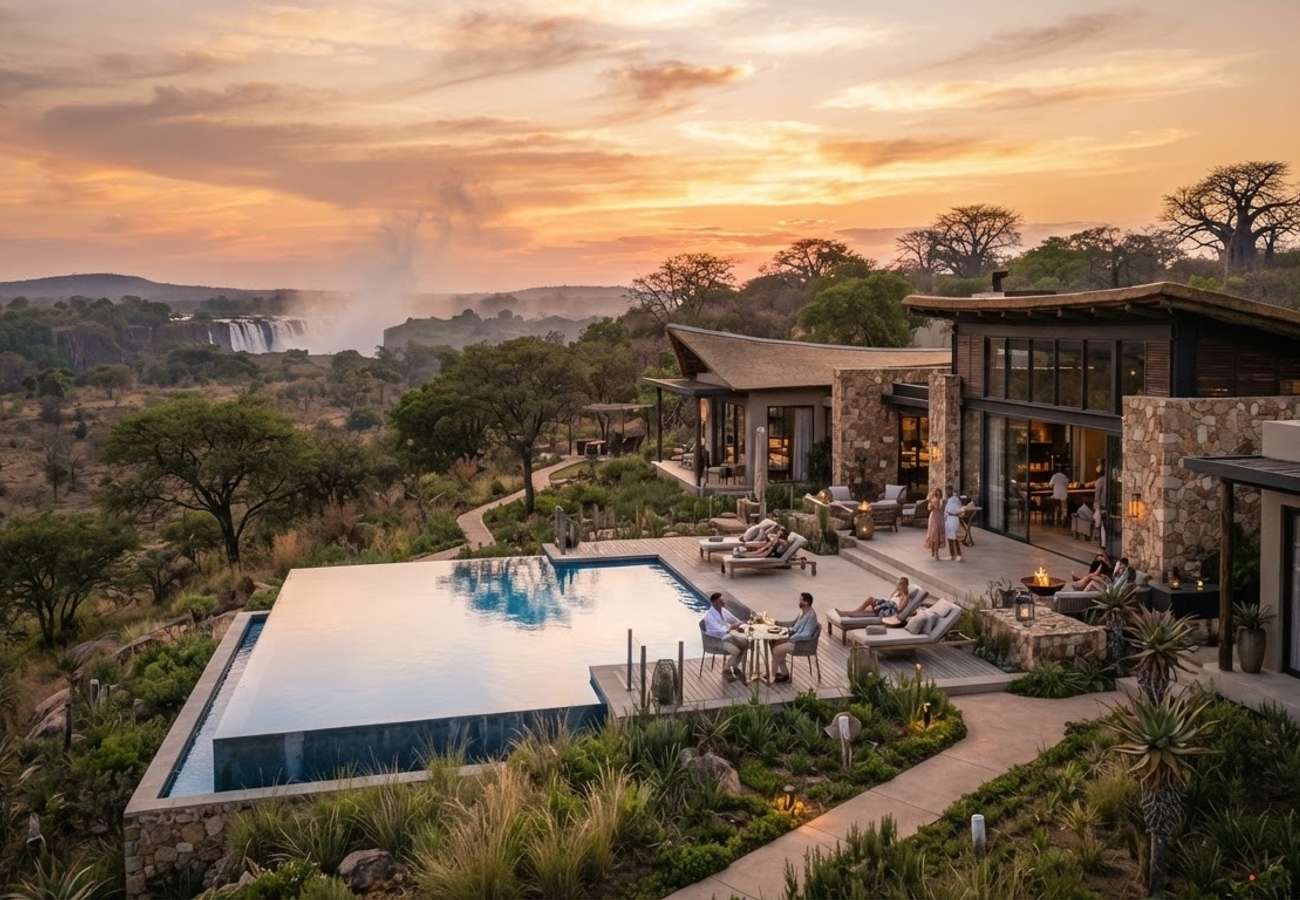
Image generated by AI
US$132.3 million in tourism investment poured into Zimbabwe during the first half of 2026, a staggering increase from the US$40.2 million recorded during the same period in 2025. This capital influx, revealed by Finance, Economic Development and Investment Promotion Minister Professor Mthuli Ncube at the 19th Sanganai/Hlanganani World Tourism Expo in Masvingo, signals a pivot from mere recovery to aggressive infrastructure expansion.
The Shift Toward High-Value Tourism Infrastructure
The financial trajectory of Zimbabwe’s travel sector is moving beyond simple visitor counts toward deeper economic penetration. Tourism receipts for the first six months of 2026 reached US$537 million, marking a 6 per cent climb over the US$508 million generated in the first half of 2025. While the percentage growth in revenue appears modest, the underlying investment data suggests a strategic bet on the country's long-term capacity to host high-spend international travelers and large-scale corporate events.
This surge is not limited to the current year. The investment pipeline showed a steady climb from US$190.5 million in 2024 to US$194.5 million in 2025. However, the first quarter of 2026 witnessed an explosive 438 per cent increase in investment activity, indicating that the conclusion of the National Development Strategy 1 (NDS 1)—which saw US$1 billion in total tourism investment between 2021 and 2025—has acted as a springboard rather than a ceiling.
Capacity Expansion and Market Data
The most aggressive growth is concentrated in the capital, where the government is attempting to hit a critical threshold of 20,000 hotel rooms to make the city viable for major global summits and exhibitions. Current data shows that Harare is rapidly closing this gap through a multi-tiered development strategy.
| Tourism Metric | H1 2025 Data | H1 2026 Data | Variance / Status |
|---|---|---|---|
| Total Tourism Receipts | US$508 Million | US$537 Million | +6% |
| Tourism Investment | US$40.2 Million | US$132.3 Million | +229% |
| Domestic Tourism Trips | ~5 Million | 6.4 Million | +27% |
| Total Tourist Arrivals | Not Specified | 792,000 | N/A |
| Harare Rooms Under Construction | Not Specified | 2,593 | Active |
| Harare Rooms (Tender/Closure) | Not Specified | 2,402 | Pending |
| Harare Greenfield Projects | Not Specified | 2,000 | Planned |
The cumulative effect of these projects would elevate Harare's inventory from 11,854 rooms to approximately 18,849 rooms. This infrastructure push is supported by a broader US$500 million pipeline of hotel projects scheduled for completion by 2030.
Expert Analysis: The Strategic Pivot to MICE Tourism
For the seasoned traveler and the institutional investor, these numbers reveal a calculated shift toward MICE (Meetings, Incentives, Conferences, and Exhibitions) tourism. By targeting a 20,000-room capacity in Harare, Zimbabwe is not merely looking for more backpackers or safari-goers; it is positioning itself as a regional hub for diplomatic and corporate gatherings.
The entry of global powerhouses such as Hilton, Radisson Blu, Four Seasons, Grand Hyatt, and Accor is the strongest validator of this strategy. These brands do not enter markets based on current arrivals alone; they invest based on projected corporate demand and standardized luxury requirements. For travelers booking routes into Harare, the direct consequence will be a sharp increase in standardized luxury accommodation and a likely rise in average daily rates (ADR) as the city pivots toward a premium international clientele.
Furthermore, the 27 per cent jump in domestic tourism—rising to 6.4 million trips—acts as a critical hedge. By fostering a robust internal market, Zimbabwe's hospitality sector reduces its vulnerability to the volatility of international geopolitics. This dual-track growth (international luxury and domestic volume) creates a more resilient economic base, ensuring that hotels remain occupied even during dips in global travel.
Key Takeaways
- Investment Explosion: Tourism investment in H1 2026 hit US$132.3 million, more than triple the US$40.2 million seen in H1 2025.
- Revenue Growth: Tourism receipts rose 6 per cent year-on-year to reach US$537 million in the first half of 2026.
- Harare’s Room Surge: The capital is adding nearly 7,000 rooms through construction, tenders, and greenfield projects to approach a 20,000-room target.
- Domestic Resilience: Domestic travel grew by 27 per cent, with 6.4 million trips recorded in H1 2026.
- Global Brand Validation: Major operators including Accor, Hilton, and Four Seasons are actively expanding their footprint in the Zimbabwean market.
FAQ: Zimbabwe Tourism 2026
Why is Harare building so many new hotels? Harare is aiming for a 20,000-room capacity to attract and host large-scale international conferences and exhibitions, which require a high volume of standardized, high-quality accommodation to be viable.
Is Zimbabwe's tourism growth dependent only on foreigners? No. While international arrivals grew 6.1 per cent in Q2 2026, domestic tourism is a major driver, with trips increasing from 5 million in H1 2025 to 6.4 million in H1 2026.
Which international hotel brands are currently investing in Zimbabwe? The market has seen increased activity from global brands including Hilton, Radisson Blu, Accor, Four Seasons, and Grand Hyatt.
What is the long-term investment goal for Zimbabwe's tourism? The government has a US$500 million pipeline of hotel infrastructure projects slated for completion by 2030, building on the US$1 billion invested during the NDS 1 period (2021-2025).
Zimbabwe is no longer just selling the view of the Falls; it is building the rooms to house the world's boardrooms.
Related Travel Guides
Disclaimer
This article is for informational and educational purposes only. It does not constitute legal, financial, or professional advice. While we strive to provide accurate and up-to-date information, travel policies, regulations, and conditions change rapidly. Always verify information with official sources before making travel decisions. Nomad Lawyer makes no representations about the accuracy, reliability, completeness, or suitability of the information provided. Readers should consult qualified professionals for advice specific to their circumstances. The views expressed in this article are those of the author and do not necessarily reflect the views of Nomad Lawyer.
Raushan Kumar
Founder & Lead Developer
Full-stack developer with 11+ years of experience and a passionate traveller. Raushan built Nomad Lawyer from the ground up with a vision to create the best travel and law experience on the web.
Learn more about our team →