
Zhangjiajie UNESCO Global Geopark Expands Sustainable Geotourism Framework

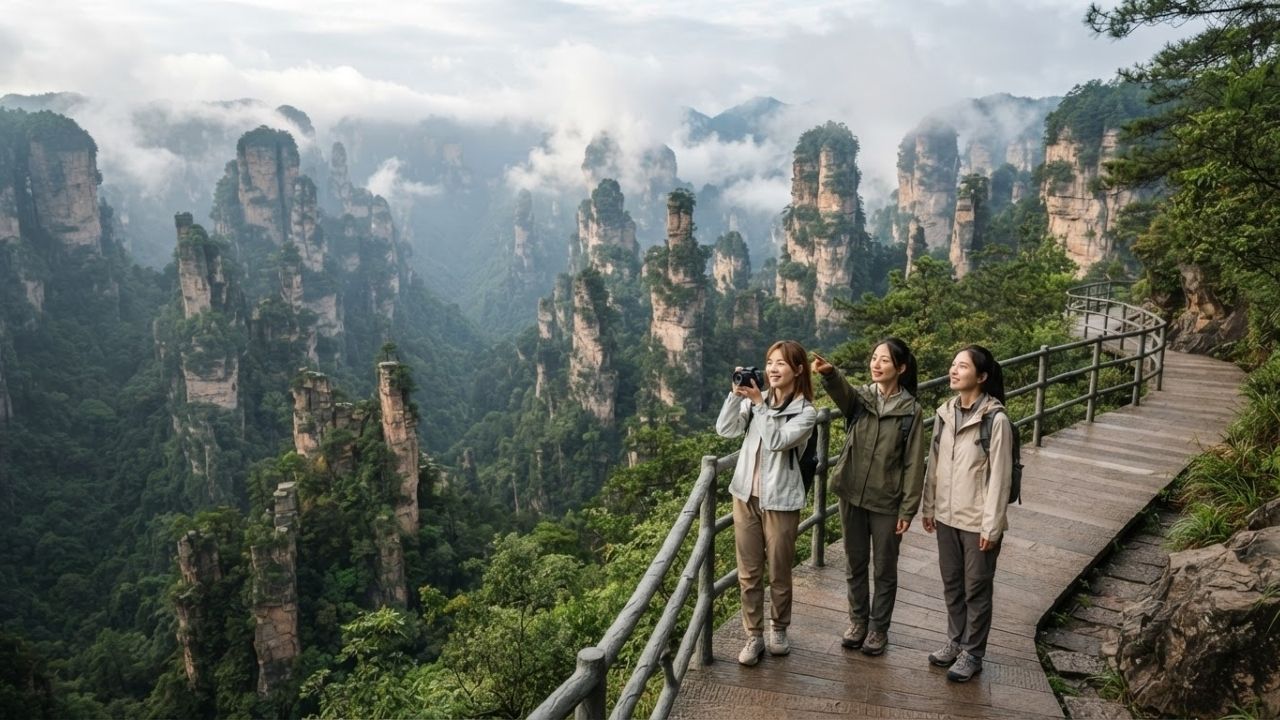
Image generated by AI
China's world-famous Zhangjiajie UNESCO Global Geopark has enhanced its sustainable geotourism model, balancing international visitor capacity with strict conservation protections across its 398-square-kilometer quartz sandstone peak forest.
[ZHANGJIAJIE, China, Sept. 1, 2026] — Located in the Wulingyuan District of Zhangjiajie City in northwestern Hunan Province, the Zhangjiajie UNESCO Global Geopark stands as one of the world's most dramatic geological wonders. Encompassing roughly 398 square kilometers, the park is celebrated globally for its rare quartz sandstone peak forest landforms—a landscape characterized by thousands of towering stone pillars, many rising over 200 meters into the subtropical mist.
Geological researchers highlight that the geopark serves as a natural textbook of earth history. Formed through multi-stage tectonic uplift and physical weathering, these sandstone monoliths differ structurally from traditional karst limestone landscapes. Furthermore, because the area escaped continental glaciation during the Quaternary period, it maintains an ancient subtropical ecosystem that shelters rare relict plants and diverse wildlife species.
Geological Origins: How Tectonic Uplift Shaped 200-Meter Quartz Monoliths
The unique geomorphology of Zhangjiajie is the product of millions of years of complex geological activity.
Key geological features defining the park's landscape include:
- Quartz Sandstone Monoliths: Over 3,000 individual stone spires and pillars, composed of hard quartz sandstone, dominate the skyline, with individual columns exceeding 200 meters in elevation.
- Tectonic & Erosional Forces: Long-term crustal movements created vertical joint fractures, which were subsequently eroded by running water, frost action, and plant root expansion.
- Quaternary Glacial Refuge: By avoiding total ice sheet coverage during the Quaternary period, the deep canyons and microclimates preserved ancient botanical species and endemic wildlife.
- Subterranean Cave Systems: Complex underground networks, including the expansive Huanglong Cave, showcase intricate speleothem formations, subterranean rivers, and multi-tiered caverns.
The towering landscape gained further international prominence after serving as visual inspiration for cinematic floating mountains in global blockbuster films.
Cultural Heritage: The Tujia Ethnic Minority and Stilted Architecture
In addition to its geological significance, Zhangjiajie integrates rich human heritage. The geopark lies within the ancestral homeland of the Tujia ethnic minority people, who have inhabited the Hunan mountain valleys for generations.
Key cultural elements woven into the geotourism experience include:
- Traditional Stilted Houses (Diaojiaolou): Wooden dwellings built on timber stilts along mountain slopes, designed to adapt to humid subtropical terrain and steep topography.
- Folk Traditions & Crafts: Tujia Brocade weaving (Xilankapu), traditional hand-knitted textiles, and expressive folk songs performed during seasonal cultural festivals.
- Community-Based Tourism: Local Tujia villages participate directly in eco-hospitality, guiding, and cultural demonstration centers, ensuring that tourism revenues support indigenous livelihoods.
Policy Shift: Transitioning from Mass Tourism to UNESCO-Aligned Stewardship
Management practices at Zhangjiajie have undergone a fundamental evolution since the park's initial domestic establishment.
During early development phases, local policies prioritized rapid mass-tourism expansion and uncoordinated infrastructure projects. However, following its formal inclusion in international UNESCO heritage networks, regional authorities restructured park operations around environmental sustainability:
- Strict Environmental Impact Assessments: Commercial developments near sensitive geological boundaries were halted or dismantled.
- Dynamic Carrying-Capacity Controls: Electronic ticketing systems and seasonal quota limits regulate daily entry volumes across Wulingyuan access gates to prevent trail congestion and habitat degradation.
- Standardized Conservation Zoning: The geopark operates under core protection zones, buffer zones, and peripheral visitor service zones to safeguard biological corridors.
Comprehensive Data Breakdown: Zhangjiajie Geopark Metrics and Features
The table below outlines key geographical, geological, and ecological data for Zhangjiajie UNESCO Global Geopark:
| Geographic & Geological Parameter | Official Geopark Metric / Description | Environmental & Scientific Significance |
|---|---|---|
| Total Park Area | Approximately 398 square kilometers | Protected UNESCO Global Geopark boundary |
| Location & District | Wulingyuan District, Zhangjiajie, Hunan | Northwestern Hunan Province, China |
| Primary Peak Landform | Quartz sandstone peak forest (>3,000 pillars) | Formed by tectonic uplift & water erosion |
| Pillar Elevation Heights | Many columns exceed 200 meters | Vertical joint weathering & physical erosion |
| Major Cave System | Huanglong Cave subterranean network | Multi-tiered karst caverns & underground rivers |
| Glacial History Status | Escaped Quaternary continental glaciation | Ecological refuge for ancient relict plant species |
The table below details the strategic evolution of park management policies:
| Policy Focus Area | Initial Domestic Tourism Phase | Contemporary UNESCO Stewardship Model |
|---|---|---|
| Development Priority | Unrestricted mass-tourism expansion | Environmental impact assessments & zoning |
| Visitor Flow Management | Unregulated gate entry & trail crowds | Dynamic carrying-capacity quotas & electronic passes |
| Community Integration | External commercial concessions | Tujia ethnic community-based eco-hospitality |
| Scientific Integration | Basic signage & scenic observation | Multilingual earth science education & research |
Why This Matters: Essential Takeaways for Geotourists and Travelers
For international travelers planning a journey to Zhangjiajie UNESCO Global Geopark, these operational frameworks provide practical travel guidance:
- Select Optimal Visiting Seasons: Spring (April to May) and autumn (September to October) offer comfortable walking temperatures, clear mountain views, and reduced rainfall compared to summer monsoons.
- Book Wulingyuan Entry Passes Early: Due to strict daily carrying-capacity limits implemented under UNESCO guidelines, advance reservation of multi-day entry passes is recommended.
- Use High-Speed Rail Connections: High-speed rail lines directly connect major Chinese hubs (such as Changsha and Wuhan) to Zhangjiajie Railway Station, simplifying transit to Wulingyuan entry gates.
- Respect Indigenous Cultural Etiquette: When visiting Tujia ethnic villages or purchasing handwoven craft textiles, follow local guidelines to support sustainable community tourism.
Frequently Asked Questions
Where is Zhangjiajie UNESCO Global Geopark located?
Zhangjiajie UNESCO Global Geopark is located in the Wulingyuan District of Zhangjiajie City, in northwestern Hunan Province, China.
How large is the geopark and what makes its geology unique?
The geopark covers approximately 398 square kilometers and is famous for its quartz sandstone peak forest landform, featuring over 3,000 individual stone pillars exceeding 200 meters in height.
Who are the Tujia people of Zhangjiajie?
The Tujia are an indigenous ethnic minority group in Hunan Province known for traditional stilted wooden architecture (diaojiaolou), handwoven textiles (xilankapu), and rich mountain folk traditions.
How do conservation rules protect the geopark?
Under UNESCO stewardship guidelines, the geopark enforces daily carrying-capacity quotas, strict environmental impact assessments, zoned protection areas, and electronic visitor flow monitoring.
Related Travel Guides
Disclaimer
This article is for informational and educational purposes only. It does not constitute legal, financial, or professional advice. While we strive to provide accurate and up-to-date information, travel policies, regulations, and conditions change rapidly. Always verify information with official sources before making travel decisions. Nomad Lawyer makes no representations about the accuracy, reliability, completeness, or suitability of the information provided. Readers should consult qualified professionals for advice specific to their circumstances. The views expressed in this article are those of the author and do not necessarily reflect the views of Nomad Lawyer.
Raushan Kumar
Founder & Lead Developer
Full-stack developer with 11+ years of experience and a passionate traveller. Raushan built Nomad Lawyer from the ground up with a vision to create the best travel and law experience on the web.
Learn more about our team →