
Fort Simpson Expands Dene Heritage and Wild River Access to Nahanni National Park Reserve
Fort Simpson (Łı́ı́dlı̨ı̨ Kų́ę́) serves as the primary gateway to Nahanni National Park Reserve, featuring 92-meter Virginia Falls and Dene cultural heritage.

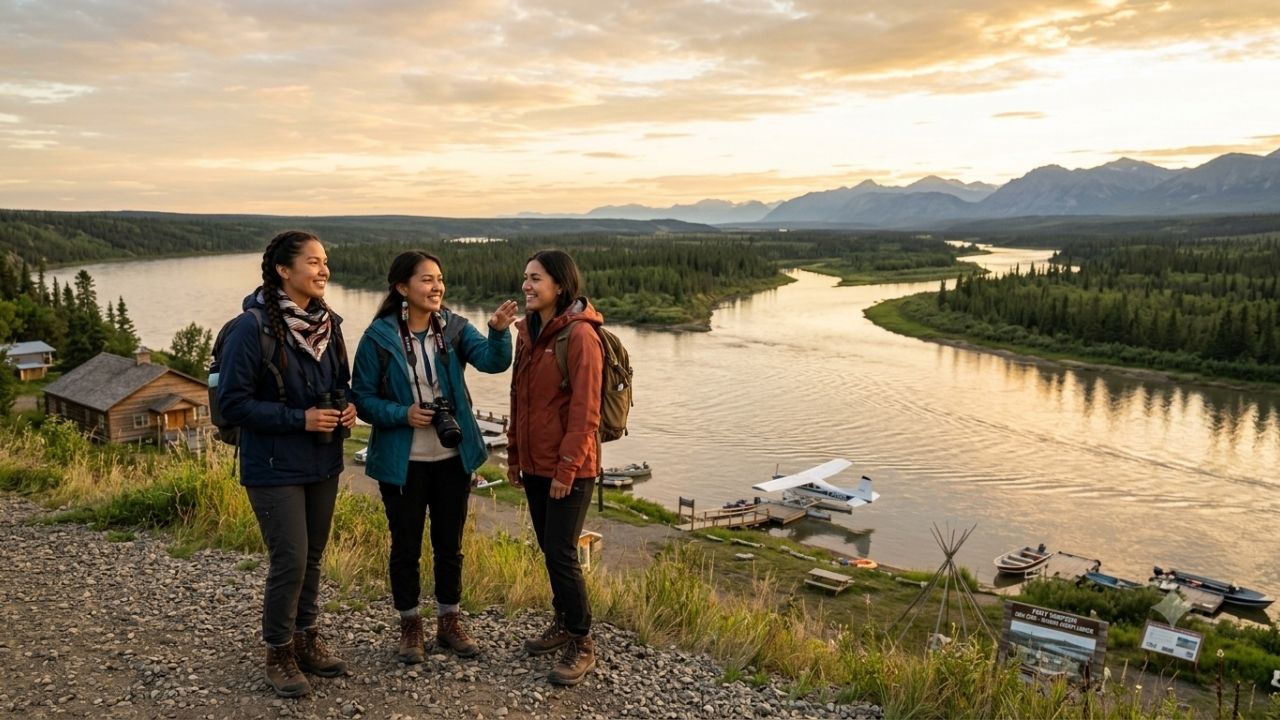
Image generated by AI
Fort Simpson, Northwest Territories, serves as the principal gateway for eco-tourists exploring Nahanni National Park Reserve and Dehcho Indigenous heritage.
[FORT SIMPSON, Canada] — Visitor updates from Parks Canada and Northwest Territories Tourism highlight Fort Simpson (known in Dene as Łı́ı́dlı̨ı̨ Kų́ę́) as a primary eco-tourism hub. Located at the confluence of the Mackenzie (Dehcho) and Liard (Nácháh Dehé) rivers, the community of 1,100 residents provides floatplane charter access to Nahanni National Park Reserve’s 92-meter Virginia Falls (Náįlįcho). Following the 2026 wildfire season, Parks Canada has resumed guided hikes and evening programs at Virginia Falls.
Gateway to Nahanni (Nahʔą Dehé): Virginia Falls and Alpine Canyons
Nahanni National Park Reserve (Nahʔą Dehé), a UNESCO World Heritage Site, encompasses alpine peaks, deep river canyons, and thermal springs across the South Nahanni River basin.
At the heart of the park, Náįlįcho (Virginia Falls) plunges 92 meters over a sheer cliff—nearly twice the height of Niagara Falls—sending mist across the surrounding canyon walls.
Because no public roads exist inside the park reserve, most visitors access Nahanni via chartered floatplanes from Fort Simpson, taking flightseeing tours or multi-day river paddling expeditions.
Nahanni National Park Reserve Technical Baseline:
├── UNESCO Status: World Heritage Site (South Nahanni River basin)
├── Primary Waterfall: Náįlįcho (Virginia Falls) — 92-meter vertical drop
├── Access Mode: Chartered floatplane flights from Fort Simpson
└── 2026 Operational Status: Virginia Falls tours active; Rabbitkettle Lake tufa tours suspended
| Geographical & Cultural Parameter | Specification / Data Value | Operational & Tourist Feature |
|---|---|---|
| Community Name | Fort Simpson (Łı́ı́dlı̨ı̨ Kų́ę́ in Dene) | Capital of the Dehcho region (Pop: 1,100) |
| River Confluence | Dehcho (Mackenzie) & Nácháh Dehé (Liard) | Meeting point of two major northern rivers |
| Primary National Park | Nahanni National Park Reserve (Nahʔą Dehé) | UNESCO World Heritage wilderness site |
| Major Waterfall Feature | Náįlįcho (Virginia Falls) | 92-meter cliff drop on South Nahanni River |
| Historic Cultural Site | Ehdaa Historical Site / Papal Site | Site of Pope John Paul II’s 1987 visit |
| Historic Architecture | Lafferty House (Built 1929) | Squared-log cabin reflecting Métis heritage |
| Ground Camping Park | Fort Simpson Territorial Park | Powered & non-powered riverfront campsites |
| Overland Access Highways | Liard Trail (BC) & Mackenzie Hwy (AB) | Highway driving links to Alberta & BC |
| River Ferry / Ice Road | Liard River Crossing | Summer ferry & winter ice road access |
Indigenous Heritage: Dene Culture and Métis Historic Sites
Fort Simpson’s cultural identity is rooted in thousands of years of Dene occupation along the Dehcho river system.
Cultural landmarks in the village include:
- Ehdaa Historical Site (Papal Site): Commemorates the 1987 visit of Pope John Paul II, featuring a traditional teepee frame, drum-circle pavilion, and four-directions monument.
- Lafferty House: Built in 1929, this preserved squared-log structure highlights the historic role of Métis families in northern fur trading and river transport.
- Fort Simpson Visitor Information Centre: Offers cultural displays, local Dene handcrafts, and community walking tour maps.
Fort Simpson Cultural & Historic Landmarks:
├── Ehdaa Site (Papal Site): Commemorates Pope John Paul II's 1987 gathering (Drum circle & teepee frame)
├── Lafferty House: 1929 squared-log heritage house representing Métis history
└── Visitor Centre: Displays local Dehcho Indigenous artwork, carvings & handcrafts
Transport Routes: Highways, River Ferries, and Aviation Services
Travelers reach Fort Simpson via road and air corridors connecting the Northwest Territories with western Canadian provinces:
- Overland Highways: Drivers access the village via the Liard Trail Highway from British Columbia or the Mackenzie Highway from Alberta.
- Liard River Crossing: Vehicles cross the Liard River via ferry in summer and an ice road in winter, with short closures occurring during spring break-up and winter freeze-up.
- Aviation Services: Scheduled flights connect Fort Simpson with Yellowknife, complementing local floatplane charter services into Nahanni.
Overland & Aviation Access Corridors:
├── Road Access: Liard Trail Highway (from BC) & Mackenzie Highway (from Alberta)
├── Water & Ice Transit: Summer ferry & winter ice road across the Liard River
└── Aviation Links: Scheduled air service from Yellowknife & floatplane charters
2026 Operational Advisory: Wildfire Recovery and Tour Updates
Following the 2026 wildfire season, Parks Canada updated visitor guidelines for Nahanni National Park Reserve:
- Resumed Services: Guided day hikes and evening interpreter programs at Virginia Falls are fully operational.
- Suspended Services: Guided hikes at the delicate tufa mounds of Rabbitkettle Lake remain suspended for the remainder of the 2026 season.
- Trip Registration: Overnight wilderness travelers must complete mandatory registration with the Parks Canada office in Fort Simpson prior to departure.
2026 Parks Canada Operational Guidelines:
├── Virginia Falls: Guided day hikes & interpreter programs resumed
├── Rabbitkettle Lake: Tufa mound guided tours suspended through 2026 season
└── Registration Requirement: Mandatory trip reservation & check-in at Fort Simpson office
Frequently Asked Questions (FAQ)
Q1: How do visitors travel from Fort Simpson to Nahanni National Park Reserve?
A: Because no roads lead into the park, visitors travel via chartered floatplanes departing from Fort Simpson to Virginia Falls and river landing spots.
Q2: How tall is Virginia Falls (Náįlįcho)?
A: Náįlįcho drops approximately 92 meters, making it nearly twice the height of Niagara Falls.
Q3: What are the main cultural sites in Fort Simpson?
A: Key cultural sites include the Ehdaa Historical Site (1987 Papal Site) celebrating Dene traditions and the 1929 Lafferty House reflecting Métis heritage.
Why This Matters for Eco-Tourists, Wilderness Paddlers, and Regional Tourism
Analyzing Fort Simpson's tourism framework provides key traveler insights:
- For Wilderness Paddlers: Booking floatplane charters early secures preferred departure dates for South Nahanni River expeditions.
- For Eco-Tourists: Visiting the Ehdaa Historical Site and Lafferty House provides authentic Indigenous context before wilderness trips.
- For Overland Road Trippers: Checking Liard River ferry operating dates prevents travel delays during spring break-up and winter freeze-up.
Related Travel Guides
Disclaimer
This article is for informational and educational purposes only. It does not constitute legal, financial, or professional advice. While we strive to provide accurate and up-to-date information, travel policies, regulations, and conditions change rapidly. Always verify information with official sources before making travel decisions. Nomad Lawyer makes no representations about the accuracy, reliability, completeness, or suitability of the information provided. Readers should consult qualified professionals for advice specific to their circumstances. The views expressed in this article are those of the author and do not necessarily reflect the views of Nomad Lawyer.
Raushan Kumar
Founder & Lead Developer
Full-stack developer with 11+ years of experience and a passionate traveller. Raushan built Nomad Lawyer from the ground up with a vision to create the best travel and law experience on the web.
Learn more about our team →