
Zerzevan Castle Puts Türkiye at Center of UNESCO Heritage Race
Zerzevan Castle emerges as Türkiye's flagship UNESCO World Heritage candidate in 2026, blending Roman military architecture with Persian religious mysteries on a southeastern plateau.

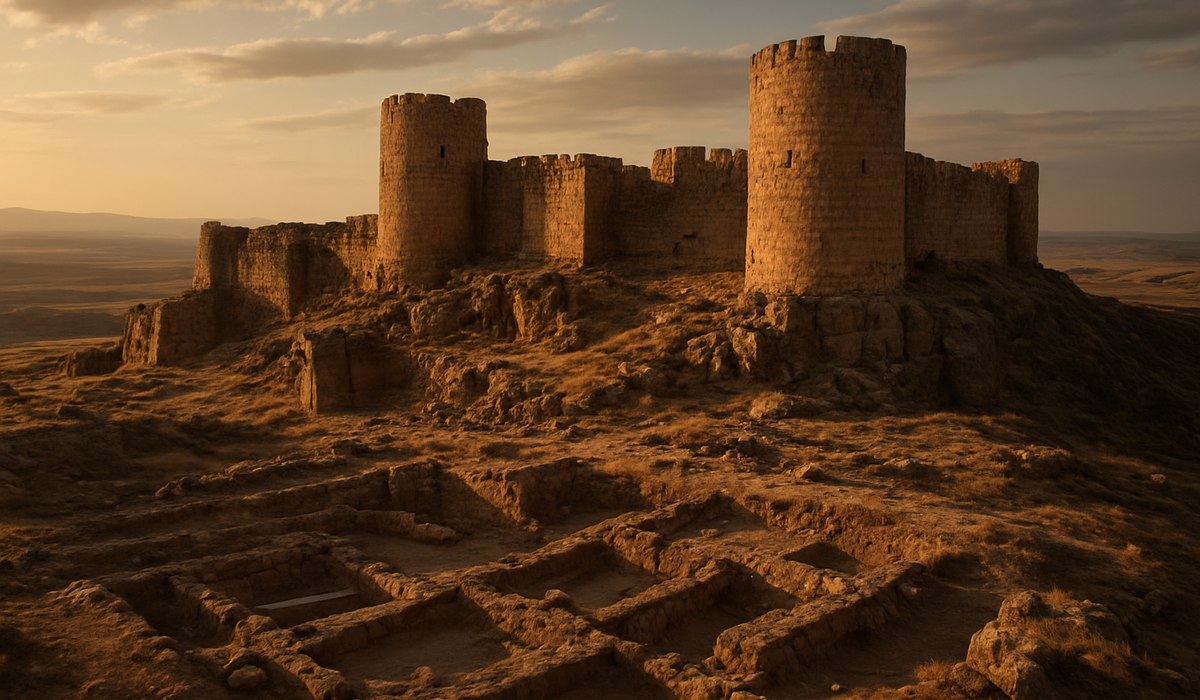
Image generated by AI
Zerzevan Castle Emerges as Türkiye's UNESCO Crown Jewel
Zerzevan Castle has catapulted into global prominence as Türkiye's flagship UNESCO World Heritage candidate, anchoring the nation's strategic bid to reshape international heritage recognition. Perched on a windswept southeastern plateau near Diyarbakır, this Roman frontier fortress merges Imperial military architecture with Persian cult worship, creating an unparalleled archaeological narrative. The 2026 push marks a critical inflection point for the site, which entered UNESCO's Tentative List in 2020 and now benefits from a decade of transformative excavations.
A Roman Frontier Fortress Recast for a Global Audience
The fortress sits on a rocky ridge that once guarded Rome's eastern borders along a strategic corridor connecting ancient cities like Amida, Dara, and Nisibis. Historical records trace human settlement in the area back approximately 3,000 years, though the fortress itself functioned as a crucial Eastern Roman garrison during the Imperial era.
What distinguishes Zerzevan Castle from comparable military sites is how contemporary archaeology reimagines it beyond mere defensive structures. The imposing walls, towers, and gates now serve as anchors for narratives centered on cultural crossroads and contested frontiers. UNESCO documentation recognizes it as one of the best-preserved Roman military complexes globally, featuring dense concentrations of defensive architecture, residential quarters, storage installations, and religious sanctuaries.
Turkish cultural authorities position the fortress as a flagship for Roman heritage in the southeast, complementing Mediterranean-focused destinations and redirecting global heritage conversations eastward. For travelers interested in authentic military archaeology, the site offers unmediated access to frontier life. Learn more through Turkey's official tourism board.
Subterranean Discoveries Reshape Understanding of Military Life
Over the past decade, excavations have fundamentally transformed scholarly understanding of Zerzevan Castle. Archaeologists have identified an extensive network of subterranean spaces—shelters, tunnels, cisterns, and cult chambers—revealing how soldiers, civilians, and religious communities navigated cramped interior conditions.
The 2025 excavation season produced particularly significant finds, including an 1,800-year-old water distribution system. This sophisticated infrastructure network of channels, cisterns, and storage installations demonstrates the logistical complexity required to sustain a garrison and civilian population in an arid environment. Such practical discoveries shift discourse away from purely military narratives toward comprehensive understandings of daily life, resource management, and domestic organization.
These findings underscore how military sites function simultaneously as places of labor, sustenance, family, and faith. The integration of domestic archaeology with structural analysis provides visitors with multidimensional perspectives on Roman frontier existence. For heritage tourists, these revelations mean encountering layered historical narratives rather than simplified military histories.
The Mithras Temple: Bridging Rome and Persia
The underground Mithras temple discovered within Zerzevan Castle has fundamentally transformed the site's international significance. Hewn into living rock and aligned with celestial symbolism, the sanctuary dates to approximately the 2nd or 3rd century CE, during the height of the Mithras mystery cult's circulation through Roman military communities.
This Mithraeum represents the final known Mithras sanctuary identified within a Roman military settlement and ranks among the eastern provinces' best-preserved examples. The temple served as a sacred space where Roman soldiers participated in esoteric rituals derived from Indo-Persian traditions centered on a solar deity. Archaeological analyses of rock-cut benches, altars, and carved symbols reveal sophisticated ritual programming restricted to male soldiers and officers.
The sanctuary's significance extends beyond architectural preservation. It physically embodies the cultural entanglement between Latin military order and Persian religious philosophy. UNESCO increasingly privileges sites demonstrating cross-cultural exchange and "Outstanding Universal Value." Zerzevan Castle exemplifies this criterion by tangibly linking Roman, Greek, and Persian spheres of influence—a rare archaeological advantage that strengthens its World Heritage candidacy. Explore related military heritage sites on TripAdvisor's heritage destination guides.
Türkiye's Strategic Push for UNESCO Recognition
National cultural authorities have deliberately elevated Zerzevan Castle within international heritage frameworks. The 2020 addition to UNESCO's Tentative List under the designation "Zerzevan Castle and Mithraeum" signaled commitment to global recognition. Since then, Turkish heritage agencies have invested substantially in excavation, documentation, and international scholarly engagement.
The fortress now occupies a central position in Türkiye's broader heritage strategy, complementing Mediterranean sites and diversifying the nation's UNESCO portfolio. Regional tourism planners leverage the castle as a showcase for southeastern Roman heritage, positioning it against traditional narratives concentrating on Mediterranean empire representations. For Türkiye's cultural diplomacy, Zerzevan Castle represents both archaeological significance and geopolitical opportunity—asserting the nation's role as custodian of cross-civilizational heritage extending across former Imperial territories.
International media coverage has amplified the site's profile. Recent reporting in heritage publications has highlighted how Zerzevan Castle demonstrates the complexity of frontier life, cultural synthesis, and religious plurality within Roman military structures. This attention accelerates momentum toward full World Heritage Status, potentially achieved within the next evaluation cycles.
Best Time to Visit
Spring (April–May) and autumn (September–October) offer optimal conditions for exploring Zerzevan Castle. During these seasons, temperatures on the southeastern plateau moderate between 15–25°C (59–77°F), enabling comfortable full-day archaeological site visits without extreme heat exposure.
Winter months bring freezing temperatures and occasional snow that can impede access to subterranean spaces and exterior fortification surveys. Summer heat (often exceeding 35°C/95°F) combined with minimal shade makes extended exploration challenging. Visitor facilities, while developing, remain limited; spring and autumn visits align with improved accessibility infrastructure. International heritage conferences often schedule regional visits during these windows, occasionally offering coordinated group excavation observations.
How to Get There
Zerzevan Castle lies approximately 70 kilometers (43 miles) southeast of Diyarbakır, the regional capital accessible via domestic flights from Istanbul and Ankara through Turkish Airlines and regional carriers. The castle sits near the Çınar district (also spelled Cinar), requiring approximately 90 minutes of driving from Diyarbakır city center.
By car: Rent vehicles in Diyarbakır and drive southeast via the D937 highway toward Çınar district. Road conditions are generally serviceable, though gravel approach roads to the fortress require standard vehicle clearance. GPS coordinates (approximately 37.6°N, 40.2°E) ensure reliable navigation.
Guided tours: Several Diyarbakır-based archaeological and heritage tour operators provide scheduled excursions including transportation, site interpretation, and logistical support. Advance booking (2–3 weeks) is recommended during peak spring/autumn seasons.
Public transport: Limited minibus services connect Diyarbakır to Çınar; however, infrequent scheduling necessitates either advance planning or private transport arrangements. Taxi services from Diyarbakır cost approximately 150–200 Turkish Lira for round-trip journey.
Key Archaeological and Visitor Data
| Element | Details |
|---|---|
| Location | Çınar district, Diyarbakır Province, southeastern Türkiye |
| Historical Period | Roman frontier fortress (ca. 2nd–3rd century CE) |
| UNESCO Status | Tentative List (2020); Full Heritage candidacy under evaluation |
| Primary Features | Roman fortification walls, Mithras temple, water distribution system |
| Accessibility | Limited facilities; guided tours essential for comprehensive interpretation |
| Distance from Diyarbakır | ~70 km (43 miles); |
Disclaimer
This article is for informational and educational purposes only. It does not constitute legal, financial, or professional advice. While we strive to provide accurate and up-to-date information, travel policies, regulations, and conditions change rapidly. Always verify information with official sources before making travel decisions. Nomad Lawyer makes no representations about the accuracy, reliability, completeness, or suitability of the information provided. Readers should consult qualified professionals for advice specific to their circumstances. The views expressed in this article are those of the author and do not necessarily reflect the views of Nomad Lawyer.
Preeti Gunjan
Contributor & Community Manager
A passionate traveller and community builder. Preeti helps grow the Nomad Lawyer community, fostering engagement and bringing the reader experience to life.
Learn more about our team →