
Zayed International Airport Bus Guide: Navigating Abu Dhabi Public Transit on a Budget in 2026
A comprehensive guide to using the A1 and A2 bus routes from Zayed International Airport to central Abu Dhabi, including Hafilat card payment systems and luggage rules.

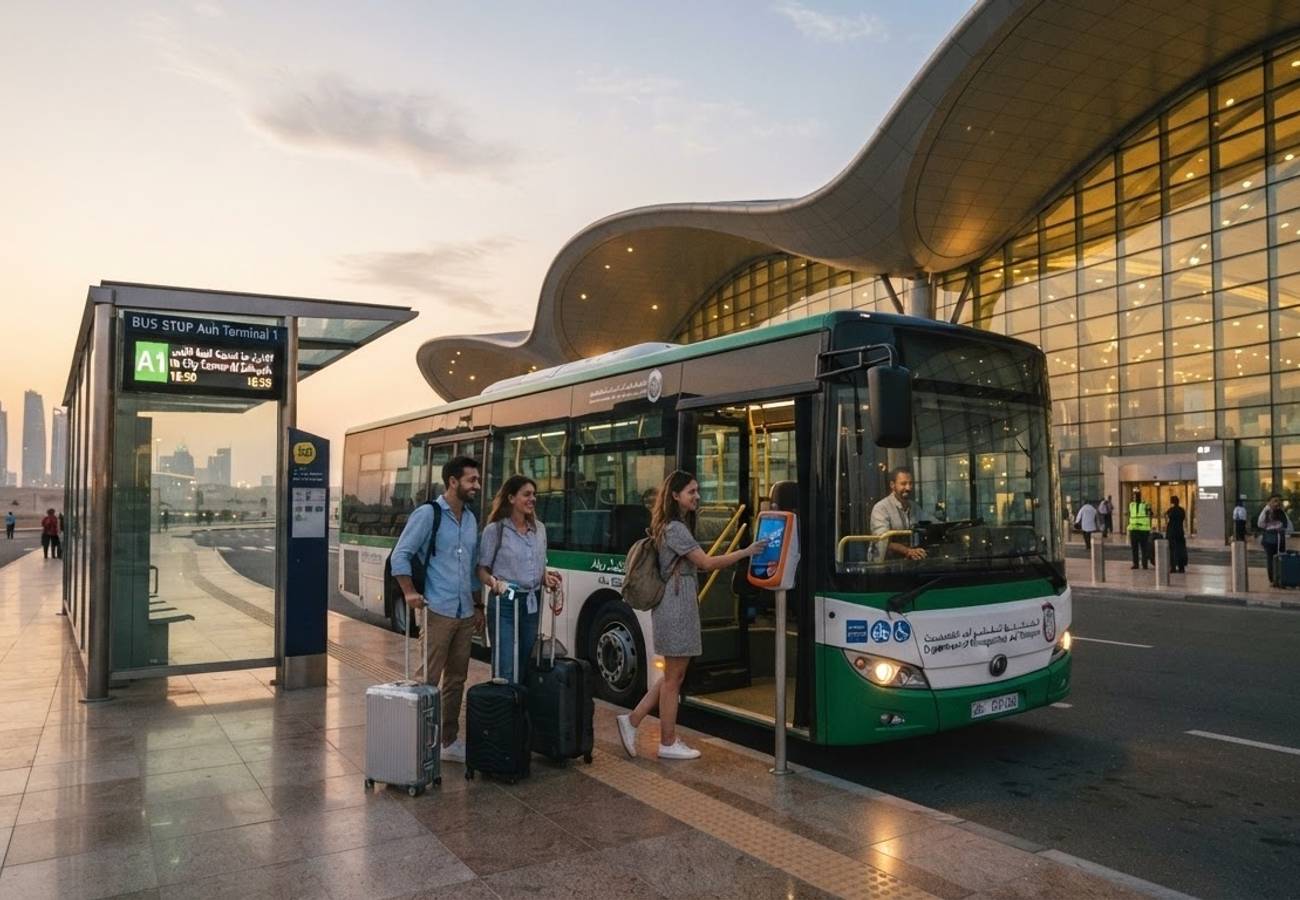
Image generated by AI
Budget-conscious travelers can reach central Abu Dhabi from Zayed International Airport for the approximate cost of a coffee by utilizing the city's 24-hour public bus network.
Zayed International Airport has established itself as a primary Gulf hub, and for those avoiding high-cost private transfers, the Integrated Transport Centre's bus network provides a reliable link to the city's core. The transit system is designed for efficiency, utilizing a smart-card payment model and dedicated airport routes that operate around the clock.
Primary Airport Transit Routes
The airport is situated east of Abu Dhabi Island, typically requiring a 30 to 40 minute drive to the Corniche under light traffic conditions. The most critical routes for international arrivals are the A1 and A2 lines, which serve as the primary arteries into the city.
| Route | Primary Destinations | Service Frequency | Operating Hours |
|---|---|---|---|
| A1 | Al Zahiyah, Tourist Club Area | 20–30 Minutes | 24 Hours |
| A2 | Khalifa Street, Khalidiya | 20–30 Minutes | 24 Hours |
| A10 / N2 | Residential & Commercial Zones | Variable | Scheduled |
For travelers whose accommodation falls outside the main tourist districts, routes A10 and N2 offer expanded connectivity. It is recommended to verify real-time route adjustments via the official Darbi journey-planning app, as roadworks or new developments frequently alter stop locations.
Navigating Arrivals and Boarding
Upon clearing customs and entering the arrivals hall, passengers should follow the signage for public buses. The boarding zones are located on the ground level, a short walk from the terminal exits. These stops are identified by green and white Abu Dhabi bus branding and feature electronic displays indicating the minutes remaining until the next departure.
Before approaching the boarding shelter, passengers must secure a Hafilat card. Ticket machines and top-up kiosks are positioned adjacent to the shelters. These machines provide English and Arabic instructions and accept both bank cards and local currency. Because drivers are prohibited from handling cash or selling tickets on board, the Hafilat card is the only valid method of payment.
The Hafilat Payment System
The Hafilat smart card operates on a "tap-in, tap-out" system similar to those used in Singapore or London. To ensure the correct fare is debited, passengers must tap their card against the reader upon boarding and again when exiting the vehicle. Failure to tap out may result in the system charging the maximum possible journey fare.
For short-term visitors, the anonymous card available at airport kiosks is the most efficient option, as it requires no local identification. These cards are typically sold with a preloaded balance of 20 to 30 dirhams, which is sufficient for several trips across the city network. While weekly and monthly passes exist for long-term residents, pay-as-you-go credit is generally sufficient for tourists visiting the Sheikh Zayed Grand Mosque or Yas Island.
On-Board Logistics and Luggage Policies
The airport routes utilize standard city buses rather than luxury shuttles. While these vehicles are fully air-conditioned with tinted windows—essential for the UAE climate—they do not feature dedicated luggage racks.
Luggage Guidelines:
- Storage: Suitcases and strollers are typically kept in the open area opposite the middle or rear doors.
- Fees: There are no additional baggage fees for standard tourist luggage.
- Restrictions: Extremely bulky items (e.g., surfboards or oversized sports equipment) may be denied boarding during peak commuter hours.
- Seating: The front section of the bus is reserved for women and families. Solo male travelers are expected to use the mixed seating area in the rear.
The transit time to downtown typically ranges from 40 to 60 minutes. During late-evening hours, the A1 route often operates with fewer stops, providing a faster trajectory toward Al Reem Island and the Tourist Club.
Traveler Logistics Guide: Expert Transit Advice
From a ground-level perspective, the best way to navigate this transition is to handle all digital and financial requirements before leaving the terminal.
Optimal Connection Strategy: If your final destination is a specific hotel in the city center, do not attempt to take the bus the entire way if the stop is more than a 10-minute walk from your lobby. The most efficient method is to take the A1 or A2 to the nearest major hub (like Khalifa Street) and then execute a "short taxi hop" for the final kilometer. This balances budget savings with the necessity of transporting heavy luggage.
Digital Transit Integration: Download the Darbi app before landing. In a city where road layouts can shift due to rapid infrastructure growth, relying on static maps is a mistake. The app provides the most accurate data on bus timings and stop changes.
When to Avoid the Bus: While the A1 and A2 are cost-effective, they are not ideal for groups of three or more with large suitcases. In such cases, the cost-per-person of a ride-hailing service (Uber or Careem) often becomes comparable to the bus fare when factoring in the convenience and direct door-to-door transport.
Regional Infrastructure Impact
The integration of high-frequency bus routes directly into the Zayed International Airport terminal reflects Abu Dhabi's broader strategy to reduce reliance on private vehicles and enhance the accessibility of the city's tourism core. By providing 24-hour connectivity to Al Zahiyah and Khalidiya, the city ensures that budget travelers and late-night arrivals have a safe, regulated, and affordable alternative to premium transport.
Efficient transit is the backbone of a seamless arrival experience.
Related Travel Guides
Disclaimer
This article is for informational and educational purposes only. It does not constitute legal, financial, or professional advice. While we strive to provide accurate and up-to-date information, travel policies, regulations, and conditions change rapidly. Always verify information with official sources before making travel decisions. Nomad Lawyer makes no representations about the accuracy, reliability, completeness, or suitability of the information provided. Readers should consult qualified professionals for advice specific to their circumstances. The views expressed in this article are those of the author and do not necessarily reflect the views of Nomad Lawyer.
Raushan Kumar
Founder & Lead Developer
Full-stack developer with 11+ years of experience and a passionate traveller. Raushan built Nomad Lawyer from the ground up with a vision to create the best travel and law experience on the web.
Learn more about our team →