
Decoding American Life: 10 Everyday Customs That Most Surprise International Visitors to the US

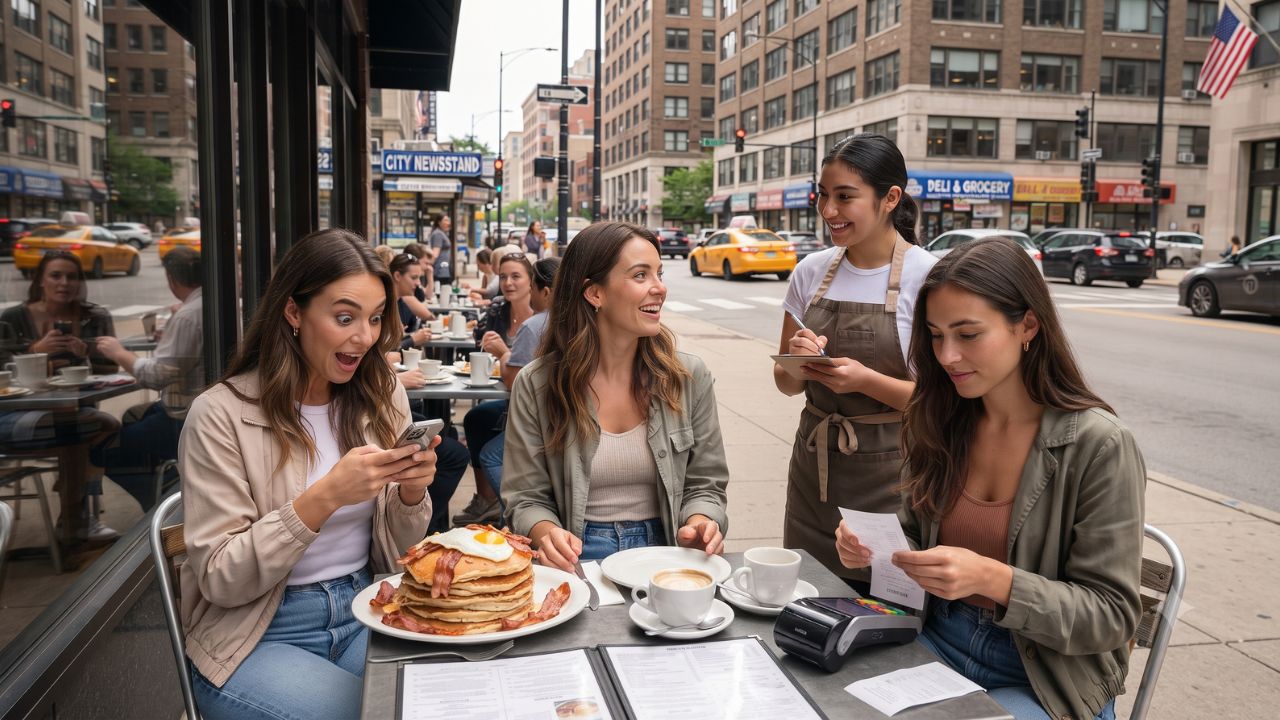
While international tourists flock to the United States to marvel at the Grand Canyon or wander Manhattan, empirical analysis of global traveler discussions reveals that the single biggest shock for overseas visitors is not an attraction, but the unexpected enthusiasm of American small talk. Drawing on social research published in August 2026 by digital platform BC Game, which tracked thousands of discussions across Reddit alongside hundreds of millions of media references, the casual question "How are you doing today?" generated 216 dedicated forum threads and over 221 million global media mentions—frequently startling travelers who mistakenly treat the routine social greeting as a literal inquiry requiring a detailed personal update.
Understanding the unspoken social codes, financial structures, and transit realities of everyday American life transforms a confusing trip into an enriching journey. Supported by national travel resources from Brand USA, overseas visitors who prepare for regional etiquette, unbundled register pricing, and dining customs can explore the country with confidence.
The 10 Cultural Contrasts Defining Everyday Travel in the United States
Moving beyond traditional tourist landmarks exposes international visitors to daily routines that locals take entirely for granted. The August 2026 study organized the most frequent cross-border observations into ten primary categories, highlighting how everyday logistics and social norms diverge from European, Asian, and Latin American standards.
The primary cultural surprises identified across the research include:
- Conversational Warmth and Casual Greetings: Strangers greeting one another on sidewalks, elevators, or supermarket aisles with upbeat pleasantries ranked as the number one social surprise.
- Substantial Food Portions and the To-Go Box Culture: Restaurant main courses routinely yield enough food for two full meals, making the doggie bag an essential fixture of dining out.
- Unbundled Gratuity Systems: Unlike destinations where service charges are incorporated directly into menu prices, American dining relies on post-meal gratuities calculated at 18% to 22% of the pre-tax total.
- Urban Sprawl and Car Reliance: Outside dense transit corridors like New York City, Chicago, Washington D.C., and San Francisco, pedestrian access and intercity passenger rail remain scarce, requiring rental cars or rideshares.
- Socioeconomic Visibility in Major Metropolises: Visible homelessness and sidewalk encampments in wealthy technological hubs such as San Francisco and Los Angeles create sharp contrasts for international visitors.
- Direct-to-Consumer Pharmaceutical Advertising: Television broadcasts featuring prescription drug commercials with rapid-fire side-effect disclaimers stand out to visitors from countries where medical marketing is strictly prohibited.
- Visibility of Firearms and Armed Security: Varying state firearm regulations and the visible presence of armed guards or holstered weapons in public spaces present an unfamiliar sight for travelers from low-firearm nations.
- Civic Displays and Flag Flying: The prevalence of national flags on private residences, commercial car dealerships, and municipal buildings, alongside school traditions like the Pledge of Allegiance, reflects a distinct form of public patriotism.
- Sweetened Formulations in Everyday Staple Foods: High levels of added sugars and high-fructose corn syrup in everyday supermarket items, including sliced sandwich bread, pasta sauces, and salad dressings.
- Unlisted Sales Taxes at Checkout: Shelf prices and restaurant menus display pre-tax costs, leaving buyers to calculate state, county, and municipal sales taxes added at the cash register.
Quantifying the American Cultural Experience
Evaluating online discourse volume and global search interest provides a clear hierarchy of what catches foreign travelers off guard. The table below details the top ten cultural shocks, their research metrics, and practical guidance for incoming international travelers:
| Culture Shock Category | Reddit Discussion Volume | Global Media Mentions | Practical Traveler Takeaway |
|---|---|---|---|
| 1. Casual Small Talk with Strangers | 216 forum comments | 221.0 million mentions | Respond with a brief friendly greeting rather than a detailed health update |
| 2. Supersized Dining Portions | 198 forum comments | 184.0 million mentions | Share entrees or request a to-go box (takeout container) for next-day meals |
| 3. Complex Tipping Expectations | 192 forum comments | 291.0 million mentions | Tip 18%–20% for sit-down table service; tipping at fast-food counters is optional |
| 4. Car Dependence & Low Walkability | 119 forum comments | 94.7 million mentions | Budget for rental vehicles or rideshare apps outside major East Coast transit hubs |
| 5. Visible Urban Homelessness | 117 forum comments | 14.7 million mentions | Understand distinct neighborhood safety boundaries in cities like SF and LA |
| 6. Prescription Drug TV Commercials | 114 forum comments | 15.4 million mentions | Reflects commercial healthcare structures unique to the US media market |
| 7. Gun Ownership & Armed Security | 111 forum comments | 55.0 million mentions | Regulations vary drastically between rural Southern states and urban coastal cities |
| 8. Pervasive National Flags & Patriotism | 102 forum comments | 81.8 million mentions | Common across front lawns, commercial car lots, and sporting events |
| 9. Processed & Sweetened Foods | 99 forum comments | 38.3 million mentions | Shop at local farmers markets, co-ops, or specialty grocers for low-sugar staples |
| 10. Sales Tax Added at Checkout | 87 forum comments | 1.3 million mentions | Add 6% to 10% to shelf prices to estimate your final register total accurately |
What Makes Everyday Logistics Different Across American Regions
The physical scale of the United States means that cultural norms and physical environments change dramatically between regions. A traveler navigating the subway system of Boston encounters an entirely different urban pattern than someone driving across sprawling suburban districts in Phoenix or Orlando.
Several subtle household and hospitality differences frequently surprise first-time visitors:
- The Missing Electric Kettle: Unlike European, British, or Australian hotel rooms that furnish electric kettles as standard equipment, most American hotel rooms provide drip coffee makers or single-serve pod machines, leaving tea drinkers to heat water via microwave or request specialized amenities from the front desk.
- Ice Water by Default: American restaurants serve large glasses of water filled to the brim with crushed ice without being asked, regardless of whether it is mid-summer in Texas or freezing mid-winter in Minnesota.
- Public Restroom Door Gaps: The design of public restroom stalls features noticeable gaps between the doors and dividing partitions, an intentional architectural choice aimed at facilitating cleaning and safety monitoring.
- Casual Church and Faith Integration: In many Southern and Midwestern communities, references to religious congregations and weekend church activities are naturally woven into everyday civic conversations.
Visitor Insider Tips
Preparing for practical interactions across retail, dining, and transportation environments prevents awkward situations and protects your travel budget:
- Calculate Gratuities Accurately on Pre-Tax Subtotals: At sit-down restaurants, standard service warrants a tip of 18% to 20% on the pre-tax food and beverage total. Check your itemized receipt carefully before adding money, as some tourist-heavy dining establishments in Miami, New York, or Las Vegas automatically include an 18% auto-gratuity for parties of six or more.
- Verify Public Transit Reach Before Booking Accommodation: Suburban hotels located near highway interchanges may offer attractive nightly rates, but lack pedestrian sidewalks to nearby restaurants or metro stations. If traveling without a rental car, base yourself in central urban cores served by transit authorities like the MTA in New York or CTA in Chicago.
- Budget an Additional 8% to 10% for Register Taxes: State and local sales taxes are not uniform across the country. While Delaware, Montana, New Hampshire, and Oregon charge 0% state sales tax, states like California, New York, and Tennessee add 7% to 10% in combined state and local taxes at the cash register.
- Embrace the Takeaway Culture: Never hesitate to ask your server for a box (to-go container) at the end of a meal. American portion sizes are deliberately generous, and packing half your meal for lunch the following day is standard dining etiquette across all restaurant tiers.
- Consult Park Access Rules Early: When exploring natural monuments managed by the National Park Service, secure vehicle entry reservations and timed passes months in advance for high-demand locations like Yosemite, Glacier, and Zion.
Cultural and Environmental Context
The distinct habits of American commerce and transportation carry broader environmental and social implications. Heavy reliance on personal automobiles drives extensive suburban road networks and elevated carbon emissions per capita, prompting urban planners in progressive cities to invest in protected bike lanes, light rail expansions, and pedestrianized main streets.
In the culinary sector, the widespread culture of oversized restaurant portions has sparked growing awareness regarding commercial food waste and packaging sustainability. Many independent farm-to-table restaurants and regional cooperatives now offer flexible half-portions, compostable takeout containers, and locally sourced ingredients that celebrate regional agricultural biodiversity over mass-processed commercial supply chains.
By understanding the historical, economic, and social roots behind American cultural habits, international visitors can engage respectfully with local communities, navigate daily commerce with ease, and appreciate the warm hospitality that defines everyday interactions across the United States.
FAQ: Everyday Travel in the United States 2026
How much should international visitors tip at restaurants in the US?
For full table service, the standard tip is 18% to 20% of the pre-tax bill. Tipping at self-service fast-food counters or convenience stores is entirely optional.
Why is sales tax not included on price tags in American stores?
Sales tax rates vary widely across individual states, counties, and cities, leading retailers to display base pre-tax prices and calculate specific local taxes at the checkout register.
Can I travel around the United States without renting a car?
Major cities like New York, Boston, Washington D.C., Chicago, and San Francisco have robust transit networks, but exploring smaller towns, national parks, and suburban areas requires a vehicle.
Is the question "How are you?" an invitation to a full conversation?
No. In most retail and casual interactions, it functions as a polite greeting equivalent to "Hello." A simple response like "Good, thank you! How are you?" is all that is expected.
Behind the oversized portions and friendly elevator chats lies a culture built on directness and generous spirit, waiting to be discovered one conversation at a time.
Related Travel Guides
Disclaimer
This article is for informational and educational purposes only. It does not constitute legal, financial, or professional advice. While we strive to provide accurate and up-to-date information, travel policies, regulations, and conditions change rapidly. Always verify information with official sources before making travel decisions. Nomad Lawyer makes no representations about the accuracy, reliability, completeness, or suitability of the information provided. Readers should consult qualified professionals for advice specific to their circumstances. The views expressed in this article are those of the author and do not necessarily reflect the views of Nomad Lawyer.
Raushan Kumar
Founder & Lead Developer
Full-stack developer with 11+ years of experience and a passionate traveller. Raushan built Nomad Lawyer from the ground up with a vision to create the best travel and law experience on the web.
Learn more about our team →