
Boeing 737 MAX's Persistent Nose-Up Tendency Confirmed: What Pilots Have Long Suspected
Breaking airline news and aviation industry updates for 2026.

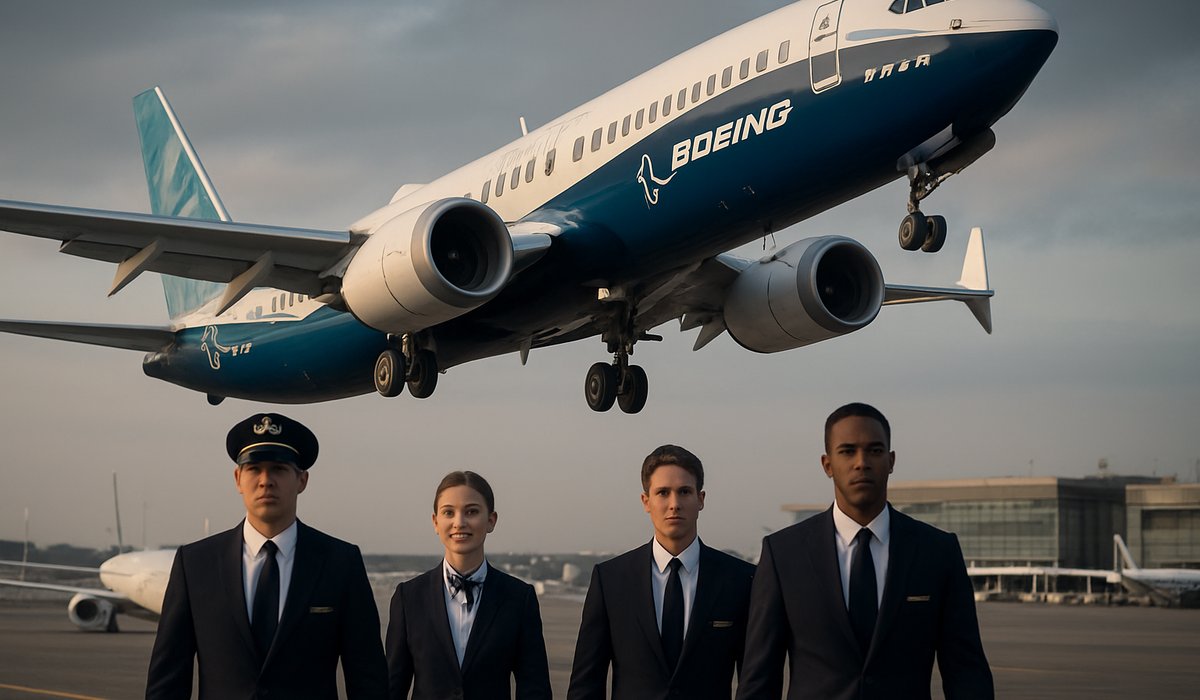
Image generated by AI
Boeing 737 MAX's Persistent Nose-Up Tendency Confirmed: What Pilots Have Long Suspected
Experienced aviators vindicated as aeronautical analysis reveals design characteristic in aircraft that revolutionized modern commercial aviation
The Issue Pilots Couldn't Ignore
For nearly a decade, the Boeing 737 has been the backbone of global commercial aviation, ferrying millions of passengers across continents with a reputation for reliability that few aircraft can match. Yet when the manufacturer introduced its latest iteration—the 737 MAX—to commercial service in 2017, something felt distinctly different to seasoned flight crews operating the aircraft. What began as casual pilot observations has evolved into a confirmed aeronautical phenomenon: the aircraft exhibits a measurable tendency to pitch its nose upward during normal operations.
What initially appeared to be a minor quirk, easily managed through manual flight control adjustments, has sparked renewed scrutiny within aviation circles regarding the aircraft's design specifications and operational characteristics. The finding validates concerns long raised by experienced pilots who have operated the MAX variant since its commercial debut.
Pilot Observations Meet Technical Analysis
Flight crews operating the 737 MAX have consistently reported the aircraft's pronounced nose-up behavior, a characteristic distinct from previous 737 generations. Rather than dismissing these observations as pilot error or misunderstanding, aeronautical engineers and independent aviation analysts have now substantiated these claims through technical examination.
The nose-up pitch tendency, while not classified as a critical safety hazard requiring immediate intervention, represents a notable deviation from the aircraft's predecessors. Pilots have developed workaround procedures, managing the characteristic through manual control inputs during flight operations—a solution that transforms an engineering trait into an operational management issue rather than a design flaw requiring comprehensive remediation.
Broader Implications for Aviation Safety and Design
This confirmation underscores the evolving relationship between aircraft design innovation and real-world operational feedback. The 737 MAX represents Boeing's ambitious modernization of its most successful aircraft platform, yet the aeronautical adjustments introduced in the redesign have produced unexpected handling characteristics that extend beyond theoretical specifications.
The incident highlights how commercial aviation's safety culture continues to validate frontline operator expertise. Pilots remain among aviation's most critical sensors, identifying discrepancies between design intentions and actual performance that laboratory testing may not fully capture.
FAQ: Understanding the 737 MAX's Flight Characteristics
Q: Is the Boeing 737 MAX's nose-up tendency a safety threat? A: No—regulatory authorities and Boeing have confirmed the characteristic presents no immediate safety risk, though it requires pilot management during operations.
Q: Do all 737 MAX aircraft exhibit this behavior? A: Yes, the nose-up pitch is inherent to the MAX variant's aerodynamic design and affects the entire fleet.
Q: How do pilots compensate for this tendency? A: Experienced crews manage the characteristic through standard manual flight control adjustments during routine operations.
Q: Why wasn't this identified before the aircraft entered service? A: The characteristic emerged during actual operational conditions, demonstrating the importance of real-world flight testing versus laboratory analysis.
Q: Has Boeing issued guidance to airlines regarding this issue? A: Airlines and operators have integrated management procedures into standard training protocols for 737 MAX pilots.
Related Travel Guides
Flight Delay Compensation Guide 2026
Understanding Airline Route Changes
Airport Security Process Updated (2026)
External Resources
Disclaimer
This article is for informational and educational purposes only. It does not constitute legal, financial, or professional advice. While we strive to provide accurate and up-to-date information, travel policies, regulations, and conditions change rapidly. Always verify information with official sources before making travel decisions. Nomad Lawyer makes no representations about the accuracy, reliability, completeness, or suitability of the information provided. Readers should consult qualified professionals for advice specific to their circumstances. The views expressed in this article are those of the author and do not necessarily reflect the views of Nomad Lawyer.
Raushan Kumar
Founder & Lead Developer
Full-stack developer with 11+ years of experience and a passionate traveller. Raushan built Nomad Lawyer from the ground up with a vision to create the best travel and law experience on the web.
Learn more about our team →