
Why The World's Fastest Military Interceptor Never Took Flight: Cold War Aviation's Greatest What-If
Breaking airline news and aviation industry updates for 2026.

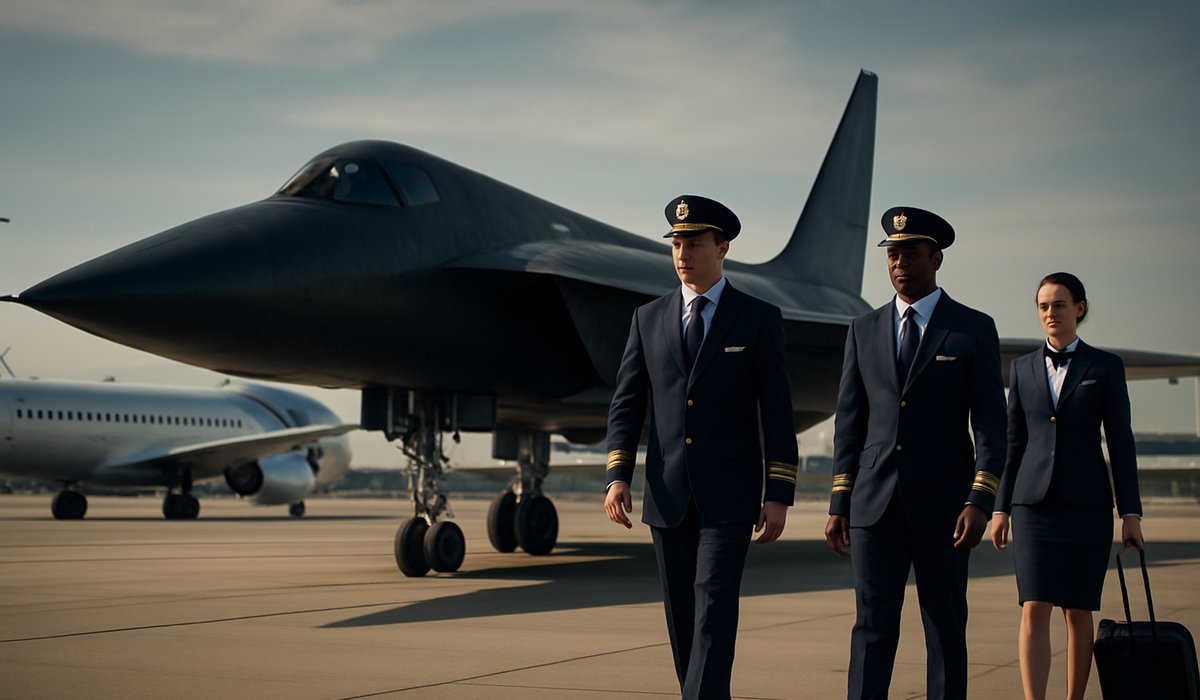
Image generated by AI
Why The World's Fastest Military Interceptor Never Took Flight: Cold War Aviation's Greatest What-If
A revolutionary aircraft designed to dominate the skies remained grounded, revealing the hidden complexities of Cold War defense strategy
The Ambition That Never Materialized
In the decades following World War II's conclusion, the United States and Soviet Union embarked on an unprecedented technological arms race that would reshape global geopolitics. Among the most ambitious—and ultimately tragic—casualties of this era was a supersonic interceptor aircraft engineered to become the fastest military warbird ever constructed. Despite its revolutionary capabilities and enormous investment, the aircraft never progressed beyond the prototype stage, becoming one of aviation history's most compelling lost opportunities.
Engineering Excellence Meets Cold War Realities
The post-war landscape presented unprecedented challenges for defense strategists on both sides of the Iron Curtain. Fearful of Soviet advancement and determined to maintain technological supremacy, American military planners green-lit increasingly audacious aircraft programs designed to outpace rival capabilities. The advanced interceptor represented the pinnacle of this ambition—a machine engineered to achieve speeds and performance characteristics that seemed almost science-fictional for its era.
Yet despite engineering excellence and substantial government resources, the program encountered insurmountable obstacles that ultimately sealed its fate.
The Collapse of Cold War Priorities
The fundamental challenge proved less technical than strategic. As geopolitical tensions ebbed and flowed throughout the 1950s and 1960s, military procurement priorities shifted dramatically. Budget allocations favored alternative weapons systems and defense strategies deemed more operationally viable or cost-effective. The interceptor program, once considered essential to national security, gradually lost momentum within Pentagon corridors and congressional budget committees.
Additionally, the rapid evolution of missile technology fundamentally altered air-combat doctrine. What once seemed an essential manned interceptor increasingly appeared redundant as unmanned weapons systems and surface-to-air missiles promised more efficient deterrence capabilities.
Legacy of an Aircraft That Never Was
The story of this unrealized warbird illuminates a crucial period in aviation history—when engineering capability and national ambition collided with budgetary constraints, shifting strategic priorities, and technological obsolescence. The aircraft symbolizes Cold War excess: enormous resources devoted to weapons systems that ultimately served their purpose through deterrence alone, never seeing operational deployment.
Today, aviation historians regard the program as a cautionary tale about how even the most advanced engineering cannot guarantee a military project's survival in an unpredictable geopolitical climate.
FAQ: Cold War Aviation and Military Aircraft Development
Q: Why did advanced Cold War aircraft programs fail despite superior technology? A: Strategic priorities, budget constraints, and rapid shifts in military doctrine often superseded technological achievement, rendering even revolutionary aircraft obsolete before operational deployment.
Q: How did missile technology impact manned interceptor programs? A: Surface-to-air missiles and unmanned weapons systems offered cost-effective alternatives to expensive manned interceptors, fundamentally changing air-defense strategy.
Q: What other advanced military aircraft remained grounded during the Cold War? A: Several supersonic and hypersonic programs experienced cancellation due to similar budgetary, technical, or strategic factors.
Q: How did Cold War competition influence aviation innovation? A: The U.S.-Soviet rivalry accelerated development cycles and pushed manufacturers to pursue increasingly ambitious designs, though not all reached service.
Q: What lessons did modern defense acquisition learn from these programs? A: Contemporary military planners emphasize operational flexibility and cost-efficiency over pure performance specifications when evaluating weapons systems.
Related Travel Guides
Flight Delay Compensation Guide 2026
Understanding Airline Route Changes
Airport Security Process Updated (2026)
External Resources
Disclaimer
This article is for informational and educational purposes only. It does not constitute legal, financial, or professional advice. While we strive to provide accurate and up-to-date information, travel policies, regulations, and conditions change rapidly. Always verify information with official sources before making travel decisions. Nomad Lawyer makes no representations about the accuracy, reliability, completeness, or suitability of the information provided. Readers should consult qualified professionals for advice specific to their circumstances. The views expressed in this article are those of the author and do not necessarily reflect the views of Nomad Lawyer.
Raushan Kumar
Founder & Lead Developer
Full-stack developer with 11+ years of experience and a passionate traveller. Raushan built Nomad Lawyer from the ground up with a vision to create the best travel and law experience on the web.
Learn more about our team →