
Yellowstone National Park Bison Attacks Target Vehicles and Tourists During 2026 Rut Season
A series of aggressive bison encounters in Yellowstone National Park, including a vehicle tire puncture and a severe pedestrian attack, highlight the dangers of the 2026 mating season.

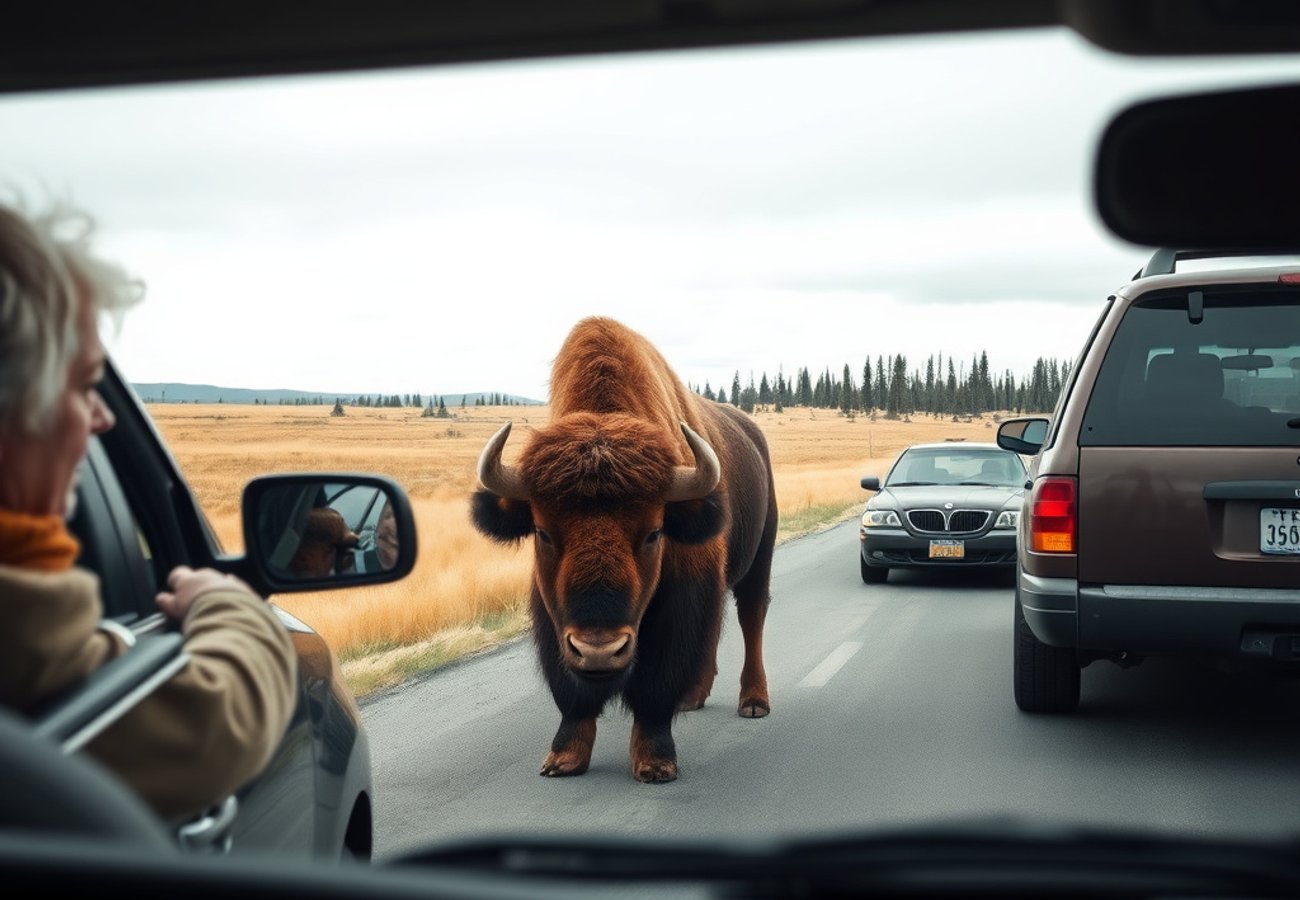
Image generated by AI
[Yellowstone, July 28, 2026] — A surge in aggressive wildlife behavior has put Yellowstone National Park visitors on high alert after a bison punctured a tourist's vehicle tire and another animal tossed a man into the air. These incidents coincide with the start of the annual bison mating season, a period when the park's 5,300 bison become significantly more unpredictable and volatile.
The volatility of the park's wildlife has gained global attention through viral footage, reminding travelers that the "right of way" on national park roads belongs exclusively to the animals. Industry reports indicate that the combination of increased summer crowds and biological mating triggers has created a precarious environment for those unfamiliar with bison behavior.
Vehicle Punctures and Roadside Confrontations
On July 20, a video uploaded to TikTok by user @tonya_names documented a tense encounter during a typical "bison jam." The footage shows several vehicles stopped or slowed as a bison navigated the roadway. In a sudden display of aggression, the animal approached a car that appeared to be obstructing its path. The bison swung its head with enough force to catch the front passenger tire with its horn, puncturing the rubber before calmly continuing its journey.
While no injuries were reported inside the vehicle, the event serves as a stark warning about the physical power of these animals. Bison can weigh up to 2,000 pounds and are capable of reaching speeds of 30 mph, meaning a punctured tire is a relatively mild outcome compared to a direct collision.
The National Park Service (NPS) has reiterated that visitors should remain patient when herds block traffic. Official guidance mandates that drivers stay inside their vehicles, drive slowly, and wait for animals to vacate the road without the use of horns or aggressive maneuvering.
Severe Pedestrian Attack at Bridge Bay Campground
The vehicle incident follows a far more critical encounter that occurred on July 10 at the Bridge Bay Campground. Carl Isom-McDaniel, 65, was walking with his 13-year-old grandson near a parking area after dinner when a bison, which had initially appeared docile, launched a sudden charge.
In a rapid attempt to protect his grandson, Isom-McDaniel directed the youth toward safety and tried to escape through a nearby cluster of trees. The bison pursued him and used its horns to toss the man into the air. The impact resulted in broken bones and required subsequent surgery.
Witnesses noted that Isom-McDaniel had not been crowding or provoking the animal, marking a deviation from typical "touron" incidents where visitors ignore safety buffers. Further evidence showed the same bison acted aggressively toward other vehicles and pedestrians during the same episode. Despite the violence of the attack, Yellowstone officials confirmed the animal would not be euthanized or removed from the park.
Understanding the 2026 Bison Rut Season
The timing of these attacks is not coincidental. Late July marks the onset of the bison rut, the mating season that extends through August. During this window, mature bulls compete for females, exhibiting dominance through bellowing, wallowing, and physical combat with other bulls.
The social dynamics of the herds also shift during the summer months. Winter groups, which typically average around 20 animals, swell to roughly 200 during the summer. During the breeding peak, gatherings can reach as many as 1,000 animals. With a total population estimate of nearly 5,300 bison divided between the northern and central herds, the likelihood of human-wildlife conflict increases as animals become more territorial.
Critical Safety Protocols for Yellowstone Visitors
To mitigate the risk of injury, the NPS enforces strict distance requirements. Visitors must maintain a minimum of 25 yards from bison and other large wildlife. For high-risk predators, such as wolves, cougars, and bears, the required buffer increases to 100 yards.
The following table outlines the official response protocols for various bison encounters:
| Bison Encounter Scenario | Official Safety Guidance |
|---|---|
| Bison beside or on the road | Slow down and remain inside the vehicle |
| Herd blocks traffic | Wait patiently for animals to move |
| Bison walks closer to you | Back away when possible to maintain 25 yards |
| Animal shows warning behavior | Leave immediately and create distance |
| Bison charges while you're outside | Run away and seek cover behind trees or vehicles |
| You're driving through a bison jam | Do not honk or drive aggressively toward the animals |
Park officials warn that "warning behaviors"—such as head bobbing, staring, pawing the ground, raising the tail, or bellowing—are immediate indicators that a charge is imminent. In these moments, visitors are advised to seek cover or distance immediately rather than attempting to stand their ground.
Navigating "Bison Jams" and Roadway Etiquette
Because bison frequently utilize the park's road network, visitors often find themselves surrounded by herds regardless of their intent. The NPS emphasizes that while the 25-yard rule is critical for pedestrians, the safest place to observe these animals is from within a locked vehicle.
However, officials caution against stopping in the middle of the road for photography. Those wishing to observe wildlife should utilize designated pullouts and ensure all four tires are completely to the right of the white line to avoid creating hazardous bottlenecks that could provoke the animals.
For the modern traveler, these incidents underscore a vital reality: in the wilderness, human convenience is secondary to animal instinct.
Related Travel Guides
Disclaimer
This article is for informational and educational purposes only. It does not constitute legal, financial, or professional advice. While we strive to provide accurate and up-to-date information, travel policies, regulations, and conditions change rapidly. Always verify information with official sources before making travel decisions. Nomad Lawyer makes no representations about the accuracy, reliability, completeness, or suitability of the information provided. Readers should consult qualified professionals for advice specific to their circumstances. The views expressed in this article are those of the author and do not necessarily reflect the views of Nomad Lawyer.
Raushan Kumar
Founder & Lead Developer
Full-stack developer with 11+ years of experience and a passionate traveller. Raushan built Nomad Lawyer from the ground up with a vision to create the best travel and law experience on the web.
Learn more about our team →