
Japan Car Rental Bookings Surge 119% as Self-Drive Travel Peaks

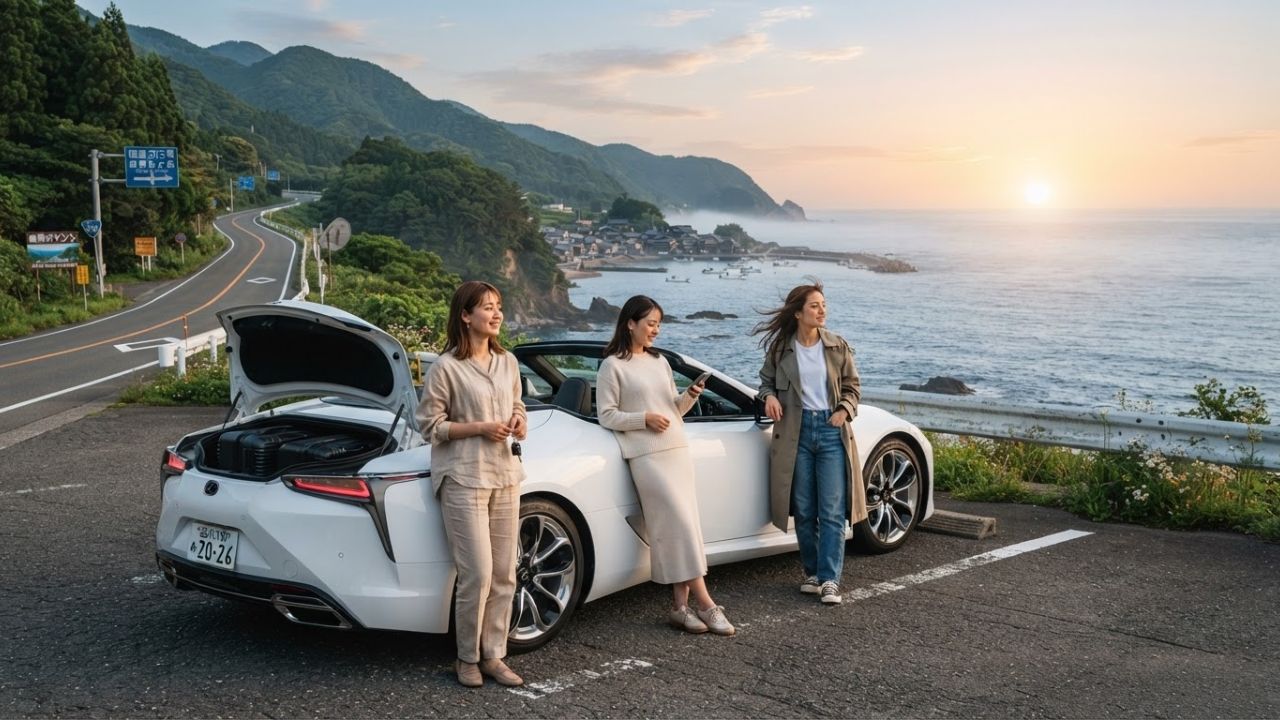
International rental car reservations across Japan surged by 119% year-on-year according to booking data released on August 27, 2026, establishing the nation as the world's leading destination for independent self-drive holidays. Spurred by exponential demand in gateway hubs—with Tokyo soaring 156% and Sapporo jumping 129%—overseas motorists are increasingly combining high-speed rail lines with rental vehicles to explore regional hot springs, coastal peninsulas, and rural agricultural communities beyond traditional Golden Route itineraries.
This dramatic road trip expansion coincides with record-setting foreign visitor expenditure, which reached ¥2.5 trillion during the April–June 2026 quarter (the highest second-quarter total ever recorded, up 0.2% year-on-year) across 3.15 million international arrivals in June. As global self-drive bookings expanded 81% worldwide, Japan’s 119% spike outpaced key markets including Australia (+74%), Thailand (+59%), and the United States (+54%), while South Korea logged a 148% growth rate. To manage this influx, Japan’s Ministry of Land, Infrastructure, Transport and Tourism (MLIT) has introduced targeted infrastructure safeguards across major regional airport corridors.
The Local Trend Revealed: Regional Road Dispersal and Vehicle Demographics
The transition toward self-drive travel signals an evolution in how international travelers navigate Japan, bridging metropolitan rail nodes with regional secondary roads:
- Top Gateway Booking Accelerations:
- Tokyo (+156%): Rapidly expanding as an airport pickup hub for road trips into the Mount Fuji Five Lakes, Hakone, Izu Peninsula, and the Japanese Alps of Nagano.
- Sapporo (+129%): Powered by New Chitose Airport, providing access to Hokkaido's lavender fields in Furano, Biei's rolling patchwork hills, and Daisetsuzan National Park.
- Fukuoka (+88%): Serving as the primary launchpad for Kyushu's volcanic onsen routes through Beppu, Yufuin, Mount Aso, and Kurokawa.
- Okinawa (+87%): Centered around Naha Airport, facilitating independent coastal exploration of the main island and the Yanbaru subtropical rainforest.
- Traveler Demographics and Booking Patterns:
- Independent motorists aged 25 to 44 account for the majority of self-drive bookings.
- Families traveling with young children represent more than half of all family road-trip bookings, favoring vehicular flexibility over navigating train transfers with luggage and strollers.
- Automatic transmission vehicles dominate the market at 95% of reservations.
- Fleet choices favor sedans (52%), followed by SUVs (29%) and passenger vans (17%).
- Travelers are planning further in advance, with booking lead times extending by roughly one week and insurance policy add-on orders surging by 131%.
| Region / Metric | 2026 Booking Growth | Primary Airport Gateway | Key Scenic Driving Corridors |
|---|---|---|---|
| Tokyo | +156% Year-on-Year | Haneda (HND) / Narita (NRT) | Mount Fuji Five Lakes, Izu Peninsula, Chichibu |
| Sapporo | +129% Year-on-Year | New Chitose Airport (CTS) | Furano flower fields, Biei hills, Shiretoko Peninsula |
| Fukuoka | +88% Year-on-Year | Fukuoka Airport (FUK) | Mount Aso caldera, Kurokawa Onsen, Nichinan Coast |
| Okinawa | +87% Year-on-Year | Naha Airport (OKA) | Kouri Island bridge, Cape Manzamo, Yanbaru Forest |
| National Average | +119% Year-on-Year | Nationwide Network | Regional Michi-no-Eki and national scenic bypasses |
Cultural & Environmental Value: Rural Economic Dispersal and Highway Safety Reforms
The self-drive boom directly underpins the Japanese government’s revised Tourism Nation Promotion Basic Plan, approved on March 27, 2026, which targets 60 million annual foreign visitors and ¥15 trillion in visitor spending by 2030:
- Revitalizing Rural Townships: Independent motorists disperse foreign currency directly into family-run ryokan (traditional inns), roadside agricultural markets (Michi-no-Eki), craft pottery workshops in rural valleys, and secluded hot spring villages that fall outside the Shinkansen bullet train grid.
- Mitigating Overtourism in Urban Epicenters: Shifting tourist footprints away from saturated urban centers like Kyoto and central Tokyo protects local living environments while spreading visitor foot traffic across lesser-visited prefectures.
- Proactive Government Road Safety Initiatives: With traffic incidents involving overseas rental car drivers rising from 47 cases in 2020 to 212 cases in 2025, MLIT launched a major safety program on July 17, 2026. Authorities installed high-visibility multi-lingual road markings, colored intersection pavement, and flexible roadside guide posts around New Chitose, Fukuoka, and Naha airports. On September 7, 2026, the Hokkaido Transport Bureau initiated an on-site safety awareness campaign at New Chitose Airport in partnership with local police, Hokkaido Airports, and the Japan Automobile Federation (JAF) following serious summer road incidents.
Visitor Insider Tips: Essential Rules for Driving in Japan
- Secure the Correct International Driving Permit: Japan strictly enforces driver licensing regulations. Drivers from most nations must possess a physical International Driving Permit (IDP) issued under the 1949 Geneva Convention prior to departure. Travelers holding licenses from Switzerland, Germany, France, Belgium, Monaco, or Taiwan require an official Japanese translation issued by the Japan Automobile Federation (JAF) or their embassy. Domestic licenses alone or non-1949 convention permits are rejected at rental counters.
- Master Electronic Toll Collection (ETC): Request an ETC card from your rental agency upon pickup. Japan’s expressway system is extensively tolled; having an ETC card allows you to cruise through automated purple highway toll lanes without stopping for cash payments, while qualifying for discounted weekend and late-night highway rates.
- Explore Michi-no-Eki Rest Stops: Take full advantage of Japan's roadside stations (Michi-no-Eki). These clean public rest facilities offer 24-hour free parking, pristine restrooms, regional craft exhibitions, and farm-to-table dining serving hyper-local specialties:
- In Hokkaido, sample soft-serve ice cream made from rich Tokachi dairy and sweet roasted Furano corn.
- In Kyushu, savor steaming bowls of tonkotsu ramen and regional citrus sweets featuring local kabosu and yuzu.
- Strict Traffic Norms and Zero Alcohol Tolerance:
- Vehicles drive on the left side of the road.
- Japan enforces an absolute zero-tolerance policy for driving under the influence of alcohol (BAC limit 0.00%). Passengers and bartenders who serve alcohol to a driver are also subject to severe criminal penalties.
- You must come to a complete, full stop before crossing any railway track, regardless of whether barriers are lowered or signals are active.
- Book Mountain-Ready Vehicles in Shoulder Seasons: If driving through Hokkaido, Tohoku, or the Japan Alps between late October and April, explicitly reserve winter snow tires (studless tires) in advance, as sudden alpine snowfall can make passes impassable for standard all-season rubber.
Tourism Outlook for Japan's Self-Drive Sector
The surge in international car rental reservations demonstrates that global visitors are evolving into seasoned, autonomous travelers who desire immersive cultural journeys beyond well-trodden urban paths. By harmonizing localized infrastructure upgrades and targeted safety education with rural tourism promotion, Japan is effectively transforming its secondary prefectures into world-class road trip destinations while progressing steadily toward its 2030 economic milestones.
Related Travel Guides
Disclaimer
This article is for informational and educational purposes only. It does not constitute legal, financial, or professional advice. While we strive to provide accurate and up-to-date information, travel policies, regulations, and conditions change rapidly. Always verify information with official sources before making travel decisions. Nomad Lawyer makes no representations about the accuracy, reliability, completeness, or suitability of the information provided. Readers should consult qualified professionals for advice specific to their circumstances. The views expressed in this article are those of the author and do not necessarily reflect the views of Nomad Lawyer.
Raushan Kumar
Founder & Lead Developer
Full-stack developer with 11+ years of experience and a passionate traveller. Raushan built Nomad Lawyer from the ground up with a vision to create the best travel and law experience on the web.
Learn more about our team →